
Tree peony
Also known as: Tree peony, Moutan peony, Chinese tree peony
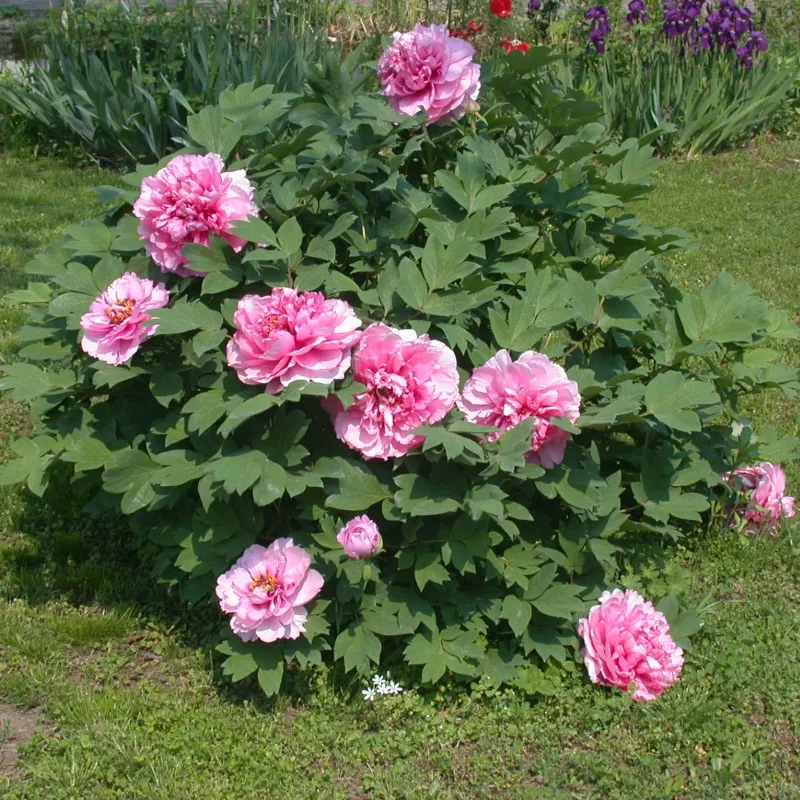
Tree peony is a deciduous shrub growing 1.5-2.5m tall with erect, woody stems. The compound leaves are dark green, divided into leaflets, providing a lush backdrop. In late spring, it produces enormous, bowl-shaped flowers up to 25cm across in shades of white, pink, red, purple, and yellow, often with a central boss of golden stamens. The blooms may be single, semi-double, or double, and many cultivars are fragrant. This plant is highly valued for its spectacular floral display and architectural form in the garden.
Scientific classification
- Species
- Tree peony (Paeonia suffruticosa)
- Genus
- Paeonia
- Family
- Paeoniaceae
- Order
- Saxifragales
- Class
- Magnoliopsida
- Phylum
- Magnoliophyta
- Non-toxic to humans and pets, though ingestion of large quantities of plant material may cause mild digestive upset.
- Toxicity
- Shrubs
- Plant type
- 1.5 - 2.5 metres
- Height
- 1.5 - 2.5 metres
- Spread
- Deciduous
- Foliage
- Upright · Bushy
- Habit
- Spring
- Season of interest
- Full sun
- Sunlight
- 15 – 25 °C
- Ideal temperature









Tree peony pictures
Distribution of Tree peony
Distribution map
Central and western China (Sichuan, Gansu, Shaanxi, and Henan provinces)
Toxicity
Non-toxic to humans and pets, though ingestion of large quantities of plant material may cause mild digestive upset.
Tree peony care guide
- Water when soil is dry to the touch
- Watering
- Full sun
- Sunlight
- 15 – 25 °C
- Ideal temperature

Watering
Water when soil is dry to the touch
Fertilizing
 Fertilizing
Apply organic fertilizer before flowering in spring and again in autumn
Pruning
 Pruning
Prune in late winter or early spring before new growth begins. Remove dead, diseased, or crossing branches, and cut back any weak or spindly growth to a strong outward-facing bud. Tree peonies require minimal pruning; just maintain shape and remove spent flowers after blooming.
Propagation
 Propagation
Propagate by layering in spring or by grafting onto herbaceous peony rootstocks in late summer. Seed propagation is slow and may not come true to type; professional growers often use grafting to maintain cultivars. Division is not practical for tree peonies as they have a woody crown.
Growing
 Growing
Plant in deep, fertile, humus-rich, well-drained soil in full sun or light dappled shade. Shelter from strong winds to protect the large flowers. Water regularly during dry spells, especially in spring and early summer when buds are forming, but avoid waterlogging. Apply a balanced fertilizer in early spring and a potash-rich feed after flowering to promote next year's blooms. Mulch annually with well-rotted manure or compost. In colder regions, provide winter protection with a dry mulch over the crown.
Common pests and diseases
Diseases
Tree peonies can be susceptible to botrytis blight (grey mould), especially in wet springs, and leaf blotch caused by the fungus Alternaria. Ensure good air circulation and avoid overhead watering to reduce disease pressure.
Pests
Common pests include aphids, scale insects, and red spider mites. Regular inspection and, if necessary, treatment with horticultural oil or insecticidal soap can keep infestations under control.
Explore the plant health library →




