
Amaryllis
Also known as: Amaryllis, Barbados Lily, Knight's Star Lily
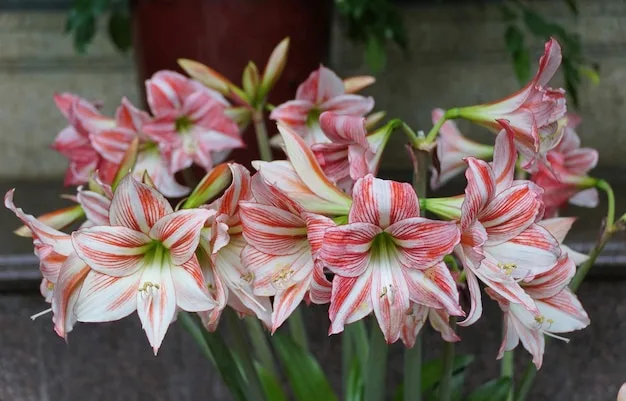
Hippeastrum hybrids, commonly known as Amaryllis, produce large, trumpet-shaped flowers in shades of red, pink, white, orange, and bicolors atop sturdy hollow stems. The strap-shaped, dark green leaves emerge after flowering or simultaneously in some cultivars. Each bulb typically sends up one or two flowering stalks, each bearing 2-6 blooms. The plant has a bold, upright habit and makes a dramatic display indoors during winter and early spring.
Scientific classification
- Species
- Amaryllis (Hippeastrum hybrid)
- Genus
- Hippeastrum
- Family
- Amaryllidaceae
- Order
- Asparagales
- Class
- Liliopsida
- Phylum
- Magnoliophyta
- Toxic to humans and pets if ingested, containing alkaloids that cause vomiting, diarrhea, and salivation.
- Toxicity
- Bulbs · Houseplants
- Plant type
- 0.3 - 0.6 metres
- Height
- 0.2 - 0.3 metres
- Spread
- Deciduous
- Foliage
- Upright
- Habit
- Winter · Spring
- Season of interest
- Bright indirect light
- Sunlight
- 15 – 25 °C
- Ideal temperature









Amaryllis pictures
Distribution of Amaryllis
Distribution map
Central and South America (tropical regions)
Toxicity
Toxic to humans and pets if ingested, containing alkaloids that cause vomiting, diarrhea, and salivation.
Amaryllis care guide
- Water thoroughly when soil surface is dry, reduce in dormancy
- Watering
- Bright indirect light
- Sunlight
- 15 – 25 °C
- Ideal temperature

Watering
Water thoroughly when soil surface is dry, reduce in dormancy
Fertilizing
 Fertilizing
Every 2 weeks during growth
Pruning
 Pruning
Remove spent flower stalks by cutting them down to the base once blooming has finished. Remove yellowing or dead leaves as needed, but leave healthy green foliage to photosynthesize and nourish the bulb.
Propagation
 Propagation
Propagate by offsets (bulblets) that develop around the main bulb after flowering. Remove offsets during the dormant period and pot them up individually, keeping them in a warm, bright position. Seeds are rarely used for hybrids as they do not come true; if attempting, sow fresh seed in spring and keep at 21°C, but flowering may take 3-5 years.
Growing
 Growing
Plant bulbs in autumn with the neck above the soil surface in a pot just slightly larger than the bulb. Use a well-drained, loam-based compost. Water sparingly until growth appears, then increase watering to keep the compost moist but not waterlogged. Apply a balanced liquid fertilizer every two weeks during active growth. After flowering, cut off the spent flower stalk and continue watering and feeding until leaves yellow. Allow a dry rest period of 6-8 weeks in late summer to encourage next season's blooms. Keep at 15-20°C during growth; avoid temperatures below 5°C. Repot every 2-3 years.
Common pests and diseases
Diseases
Susceptible to red blotch (Stagonospora curtisii), which causes reddish spots on leaves and flower stalks. Also prone to basal rot (Fusarium) and powdery mildew under poor air circulation.
Pests
Common pests include aphids, mealybugs, spider mites, and narcissus bulb fly (larvae). Regular inspection and appropriate controls are recommended.
Explore the plant health library →




