
Tick-trefoil
Also known as: Tick-trefoil, Three-flowered ticktrefoil, Beggarweed
Desmodium triflorum is a low-growing, mat-forming perennial herb with trifoliate leaves and small, pink to purple flowers that appear in summer. The stems root at the nodes, allowing it to spread rapidly and form a dense, carpet-like ground cover. It is valued for its ability to suppress weeds and its delicate, pea-like blooms.
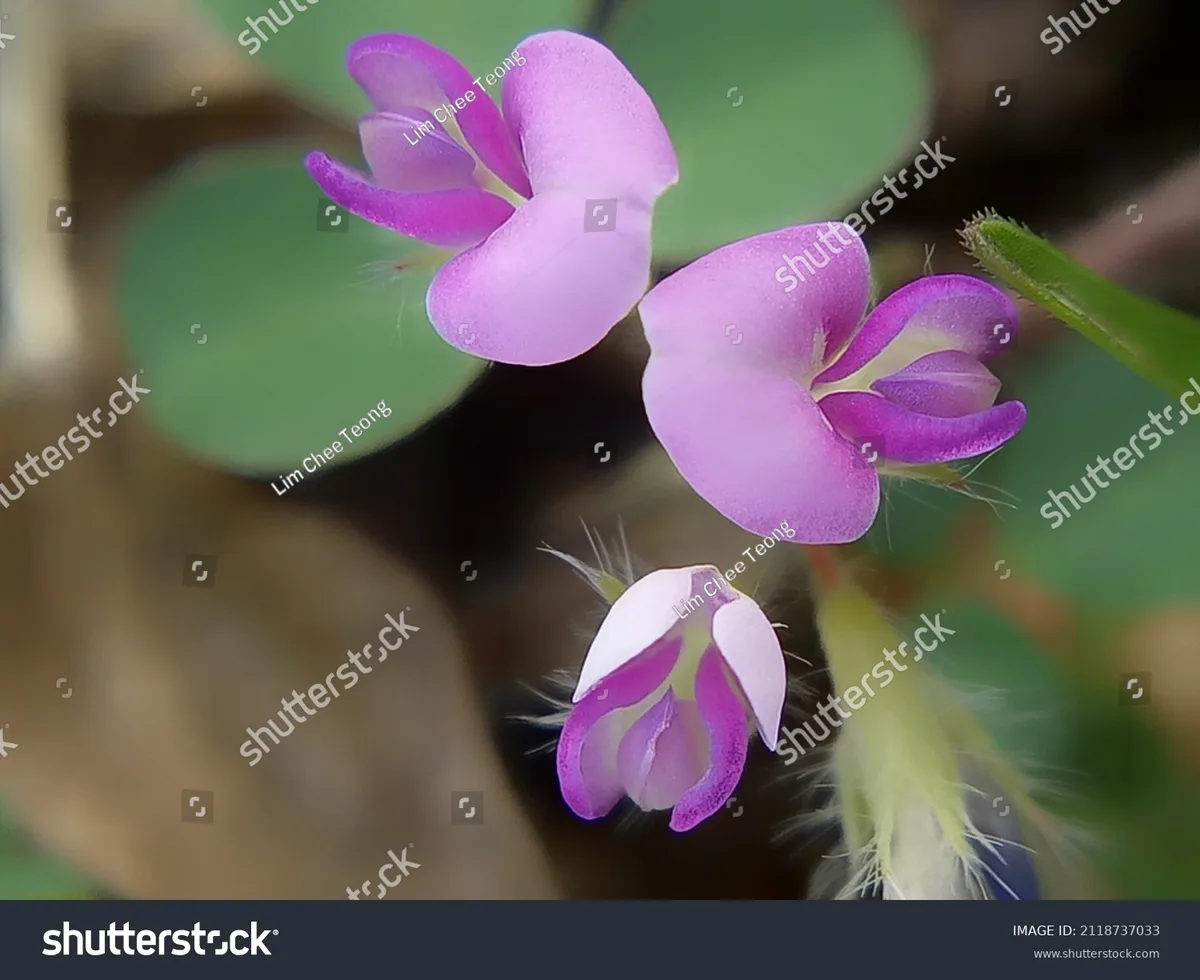
Scientific classification
- Species
- Tick-trefoil (Desmodium triflorum)
- Genus
- Desmodium
- Family
- Fabaceae
- Order
- Fabales
- Class
- Magnoliopsida
- Phylum
- Magnoliophyta
- Non-toxic
- Toxicity
- Herbaceous Perennial
- Plant type
- 0.1 - 0.3 metres
- Height
- 0.3 - 0.6 metres
- Spread
- Evergreen
- Foliage
- Spreading · Matforming
- Habit
- Summer
- Season of interest
- Full sun · Partial shade
- Sunlight
- 20 – 30 °C
- Ideal temperature









Tick-trefoil pictures
Distribution of Tick-trefoil
Distribution map
Tropical and subtropical regions worldwide
Toxicity
Non-toxic
Tick-trefoil care guide
- Water moderately, allowing soil to dry between waterings
- Watering
- Full sun · Partial shade
- Sunlight
- 20 – 30 °C
- Ideal temperature

Watering
Water moderately, allowing soil to dry between waterings
Fertilizing
 Fertilizing
Rarely needed; apply light fertilizer in spring if needed
Pruning
 Pruning
Prune lightly in early spring to remove dead or damaged stems. Cut back to control spread if necessary, as it can be vigorous.
Propagation
 Propagation
Propagate by seed sown in spring at 20-25°C, or by division of rooted stems in spring or early summer. Stem cuttings root easily in moist sand or perlite.
Growing
 Growing
Plant Desmodium triflorum in well-drained loam or sandy soil in full sun to partial shade. Water moderately during the growing season, allowing the soil to dry slightly between waterings. It is drought-tolerant once established but performs best with regular moisture. In colder regions, protect from frost or grow as a summer annual. Fertilize lightly in spring with a balanced fertilizer.
Common pests and diseases
Diseases
Generally disease-free, but may be susceptible to root rot in poorly drained soils.
Pests
Occasionally attacked by aphids and spider mites, especially in dry conditions.
Explore the plant health library →




