
Snake Plant
Also known as: Snake Plant, Mother-in-law's tongue, Viper's bowstring hemp
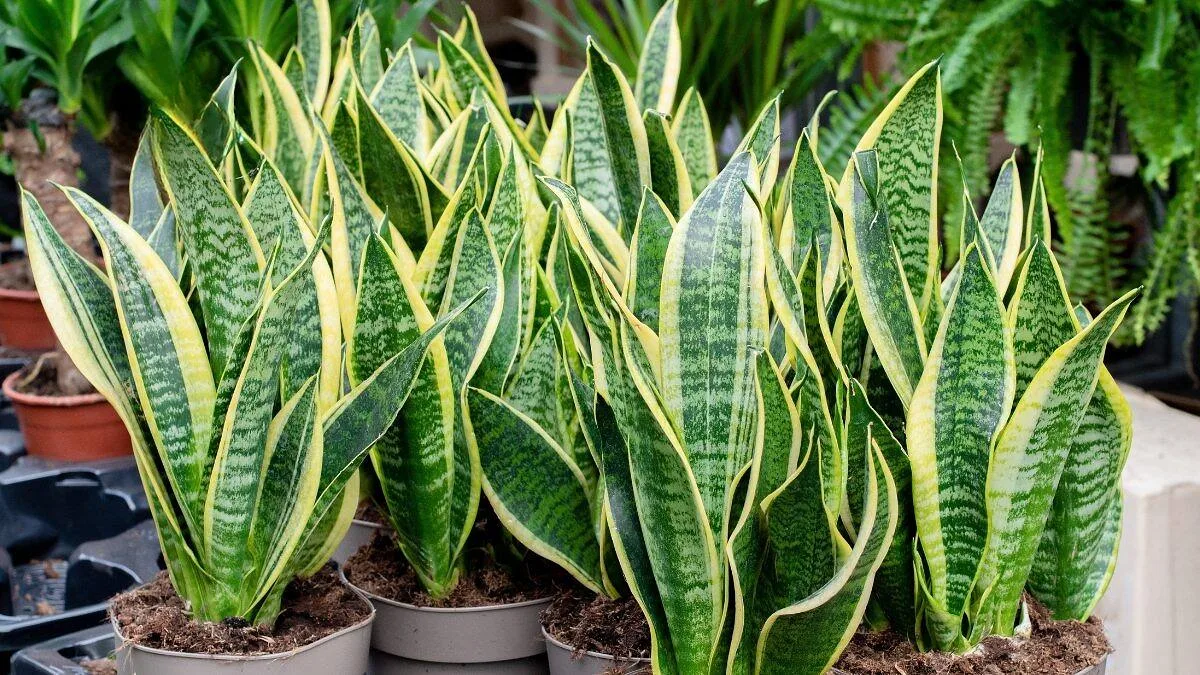
Dracaena trifasciata, commonly known as snake plant, is a clump-forming succulent with stiff, upright, sword-shaped leaves that are dark green with light gray-green horizontal bands and yellow margins. Mature plants may produce tall spikes of fragrant, greenish-white flowers in summer. Its architectural form and striking variegation make it a popular ornamental for both modern and traditional interiors.
Scientific classification
- Species
- Snake Plant (Dracaena trifasciata)
- Genus
- Dracaena
- Family
- Asparagaceae
- Toxic to humans and pets if ingested; leaves contain saponins that may cause nausea, vomiting, and diarrhea.
- Toxicity
- Succulent · Foliage · Houseplants
- Plant type
- 0.6 - 1.2 metres
- Height
- 0.3 - 0.6 metres
- Spread
- Evergreen
- Foliage
- Upright · Clump forming
- Habit
- Spring · Summer
- Season of interest
- Bright indirect light · Partial shade
- Sunlight
- 18 – 27 °C
- Ideal temperature









Snake Plant pictures
Distribution of Snake Plant
Distribution map
West Africa
Information to be completed
Culture
Information to be completed
Toxicity
Toxic to humans and pets if ingested; leaves contain saponins that may cause nausea, vomiting, and diarrhea.
Quick identification of Snake Plant
Information to be completed
Snake Plant care guide
- Allow soil to dry completely between waterings
- Watering
- Bright indirect light · Partial shade
- Sunlight
- 18 – 27 °C
- Ideal temperature

Watering
Allow soil to dry completely between waterings
Fertilizing
 Fertilizing
Monthly during growing season
Pruning
 Pruning
Remove any yellowed or damaged leaves at the base using clean secateurs. Cut off spent flower stalks after blooming. Pruning is rarely needed except to maintain tidy appearance.
Propagation
 Propagation
Divide clumps in spring or early summer when repotting – separate rooted offsets and pot individually. Alternatively, leaf cuttings: cut a healthy leaf into 5–8 cm sections, insert upright in moist sandy compost, and keep at 20–25°C (68–77°F) in bright indirect light until roots develop (4–8 weeks).
Growing
 Growing
Grow in well-drained potting mix (loam-based or cactus compost) in bright, indirect light; tolerates lower light but growth slows. Water sparingly, allowing the soil to dry completely between waterings – overwatering causes root rot. Fertilize monthly during the growing season (spring to summer) with a balanced liquid fertilizer at half strength. Keep temperatures above 10°C (50°F) – avoid cold drafts. Reduce watering in winter.
People also ask
Information to be completed
Common pests and diseases
Diseases
Susceptible to root rot and crown rot if overwatered; fungal leaf spots may occur in poor ventilation. Ensure good drainage and avoid wetting foliage to minimize risk.
Pests
Mealybugs, spider mites, and scale insects can infest plants, especially when air is dry. Wipe leaves occasionally and treat infestations with insecticidal soap or neem oil.
Explore the plant health library →




