
Hobbit Jade
Also known as: Hobbit Jade, Gollum Jade, Finger Jade
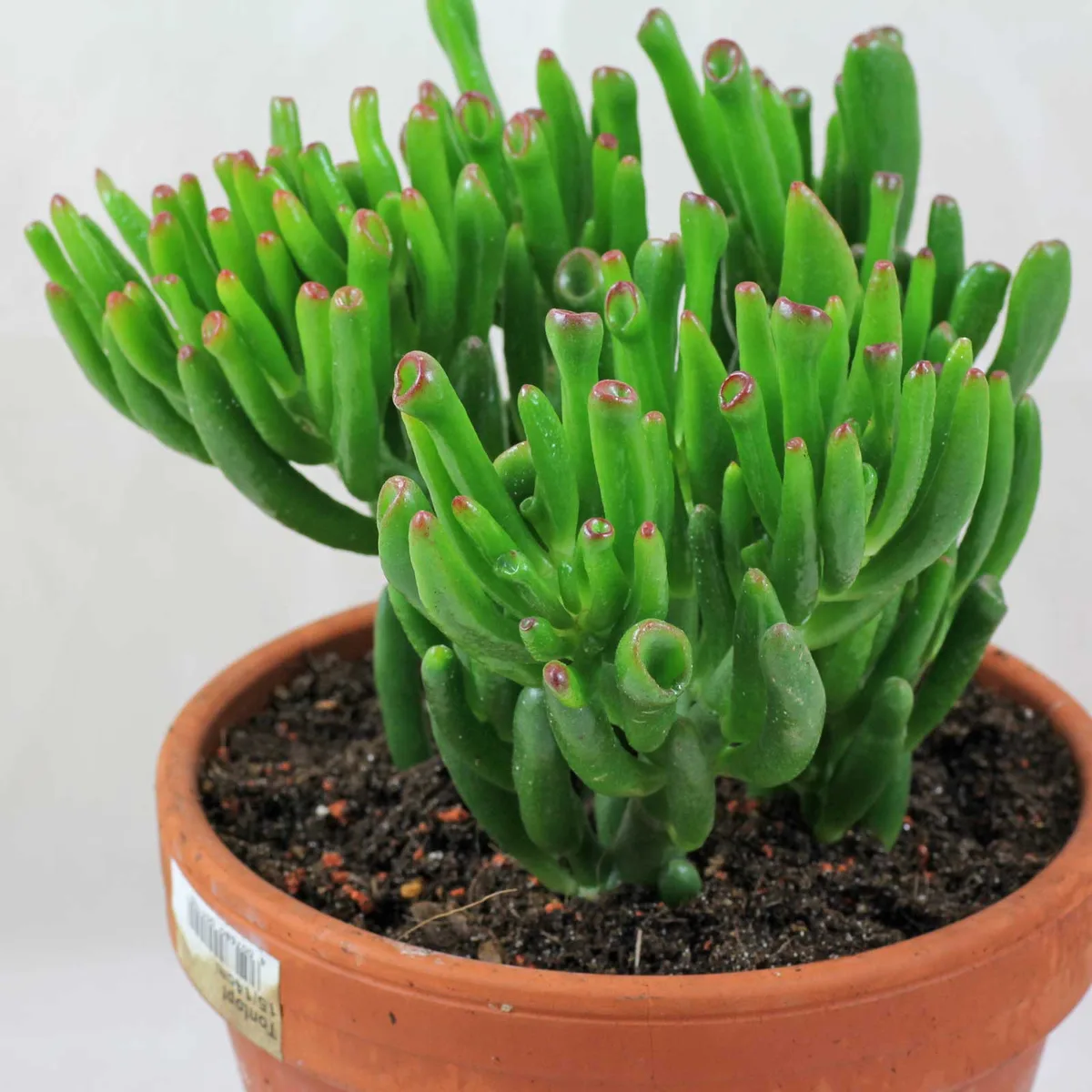
Crassula ovata 'Hobbit' is a compact, slow-growing succulent with distinctive tubular leaves that curl inward, resembling small green trumpets or Hobbit ears. The leaf tips often blush red in bright light, adding ornamental interest. It develops a thick, woody stem over time, forming a small tree-like structure ideal for containers or indoor displays. Its star-shaped white or pale pink flowers appear in clusters during late winter to spring under optimal conditions.
Scientific classification
- Species
- Hobbit Jade (Crassula ovata 'Hobbit')
- Genus
- Crassula
- Family
- Crassulaceae
- Order
- Saxifragales
- Class
- Magnoliopsida
- Phylum
- Tracheophyta
- Toxic if ingested; may cause vomiting, diarrhea, and lethargy in pets and humans.
- Toxicity
- Succulent · Houseplants
- Plant type
- 0.3 - 0.6 metres
- Height
- 0.3 - 0.6 metres
- Spread
- Evergreen
- Foliage
- Upright · Bushy
- Habit
- Spring · Summer
- Season of interest
- Bright indirect light
- Sunlight
- 18 – 28 °C
- Ideal temperature









Hobbit Jade pictures
Distribution of Hobbit Jade
Distribution map
South Africa (Eastern Cape)
Toxicity
Toxic if ingested; may cause vomiting, diarrhea, and lethargy in pets and humans.
Hobbit Jade care guide
- Water thoroughly when soil is dry, allow to drain
- Watering
- Bright indirect light
- Sunlight
- 18 – 28 °C
- Ideal temperature

Watering
Water thoroughly when soil is dry, allow to drain
Fertilizing
 Fertilizing
Monthly during growing season
Pruning
 Pruning
Prune lightly in spring to maintain shape or remove leggy growth. Use clean, sharp scissors and allow cuts to callous before watering.
Propagation
 Propagation
Easily propagated from stem cuttings or individual leaves in spring or early summer. Take a 5-8 cm stem cutting, remove lower leaves, and let it dry for 2-3 days to callous. Insert into moist succulent compost and keep in bright indirect light; roots usually form within 2-4 weeks. Leaf cuttings can be laid flat on soil and will produce small plantlets from the base.
Growing
 Growing
Plant in very well-drained cactus or succulent compost, ideally with added grit or perlite. Water thoroughly only when the soil has dried out completely, reducing frequency in winter to prevent root rot. Provide bright, indirect light; some direct morning sun is beneficial but avoid harsh afternoon rays. Fertilize once a month during the growing season (spring to summer) with a balanced liquid feed diluted to half strength. Keep above 10°C in winter and protect from frost.
Common pests and diseases
Diseases
Susceptible to root rot and stem rot if overwatered or grown in poorly draining soil; ensure proper drainage and avoid waterlogging.
Pests
May be attacked by mealybugs, scale insects, and spider mites, especially when stressed or in dry indoor air. Wipe leaves with alcohol or use insecticidal soap.
Explore the plant health library →




