



Planting and Growing Hobbit Jade

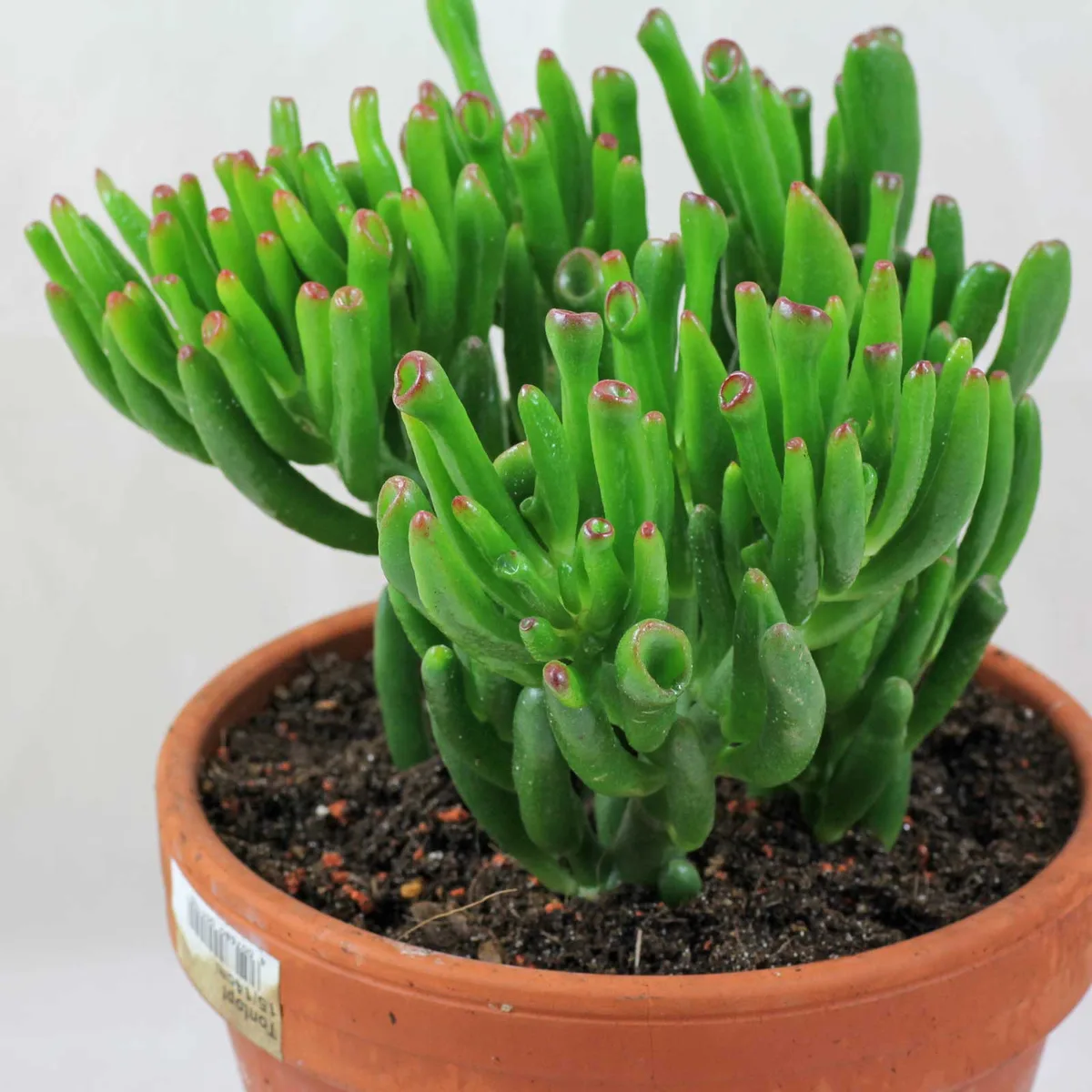
| Care difficulty | 2 / 5 |
|---|---|
| Watering schedule | Water thoroughly when soil is dry, allow to drain |
| Sunlight requirements | Bright indirect light |
| Ideal temperature | 18 – 28 °C |
| Soil type | Sand · Loam |
| Soil pH | Neutral |
| Soil moisture | Well-drained · Dry between watering |
| Fertilizing | Monthly during growing season |
| Toxicity | Toxic if ingested; may cause vomiting, diarrhea, and lethargy in pets and humans. |
How to Water Hobbit Jade?
Jade plant 'Hobbit' thrives in arid conditions, reflecting its origins in the dry regions of South Africa. This succulent is well-adapted to environments with infrequent rainfall, storing water in its thick, fleshy leaves to endure periods of drought. A balance between hydration and drought tolerance is key; overwatering can be detrimental. Watering should occur once every three weeks, allowing the soil to dry out completely between sessions. Typically grown indoors due to its sensitivity to cold, jade plant 'Hobbit' benefits from a well-draining soil mix that mimics its native gritty terrain, preventing root rot and supporting healthy growth.
Learn more →What Are the Sunlight Requirements for Hobbit Jade?
Generally speaking, jade plant 'Hobbit' needs sufficient scattered light which should be bright and transparent. If there is not sufficient sunlight for a long time, the plant will be spindling, the tissue will become brittle, and the original color will fade slowly, as a result, the plant will grow into a loose shape, the color will turn green and yellow, and the resistance will decline. Strong sunlight in summer may burn its leaves and stems. When exposed to the sun, it tends to grow slowly or even stop growing, its leaves grow compactly and internodes shorten, which results in shorter plant. For some succulent plants, their old leaves wither in summer and new leaves tend to be short and compact, showing a bare rod shape as a whole. In summer, you can set up a sunshade for it or move the potted plant indoor.
Learn more →What Is the Ideal Temperature Range for Hobbit Jade?

The jade plant 'Hobbit' demonstrates notable resilience to temperature variations, tolerating cold down to 0℃ (32℉) and heat up to 41℃ (106℉). Such versatility implies that jade plant 'Hobbit' can thrive in diverse environments but requires protective measures during temperature extremes. Cold conditions may lead to leaf drop or discoloration, while excessive heat can cause wilting or sunburn. In case of overcooling, relocating the plant to a warmer spot and minimizing water can help. For overheating, ensure adequate shading and hydration. Understanding jade plant 'Hobbit''s temperature tolerance is essential for effective care, ensuring its health and longevity in various climates.
Learn more →What Soil Is Best for Hobbit Jade?
Jade plant 'Hobbit' thrives in well-draining, aerated soil mix. Use a commercial succulent & cactus soil or mix two parts potting soil with one part perlite or pumice for a homemade version. Ensure potting mix is loose to enhance drainage and prevent water-logging. For growth, periodically add a balanced, water-soluble fertilizer at quarter strength during the growing season.
- Soil type
- Sand · Loam
- Soil pH
- Neutral
What Are the Moisture Requirements for Hobbit Jade?
Well-drained · Dry between watering
Learn more →How to Fertilize Hobbit Jade?

Fertilize jade plant 'Hobbit' every 3-4 months with succulents and cacti food, enhancing vigor and promoting lush growth. During the growing season, spring through fall, increase frequency to monthly. Use half the recommended rate to prevent root burn; this slow-release approach ensures vital nutrients without overwhelming jade plant 'Hobbit'. Withhold fertilizer in winter when jade plant 'Hobbit''s growth slows. Always water jade plant 'Hobbit' thoroughly before and after applying fertilizer to support absorption and reduce the risk of chemical buildup.
Learn more →How to Prune Hobbit Jade?

In order to keep beautiful shape, some large succulent plants may need pruning. For example, in California, for echeveria planted in the garden, some redundant branches and branches that are too dense need to be cut off in spring and autumn. This depends on what you think and what the succulent plant is used for. Tools for pruning mainly include knife, scissors, and some medicines (such as sulfur powder). In order to propagate new plants, we can also cut some leaves in spring and autumn for cutting. Stout stems with 5-6 leaves are often selected: cut it off with a knife, then smear the wound with sulfur powder, and plant it after the wound is healed. At this time, it is recommended to use a watering can to slightly wet the soil used for cutting.
Learn more →How to Propagate Hobbit Jade?

A succulent with a distinctive appearance, jade plant 'Hobbit' can be effectively propagated through stem or leaf cuttings. To encourage successful root development, cuttings should be taken from healthy parent plants, using a sharp, clean instrument to prevent infection. After removal, allow the cutting to form a callous for several days before placing it in well-draining soil. A mixture containing sand and potting mix is ideal, as it provides the aeration and moisture retention required for jade plant 'Hobbit' to thrive. Regular but moderate watering promotes root growth without risking rot.
Learn more →How to Transplant Hobbit Jade?
The optimal time to transplant jade plant 'Hobbit' spans from the warmth of late spring into the balmy days of late summer, taking advantage of robust growth cycles. Select a spot with bright, indirect light and ensure well-draining soil. A gentle touch goes a long way when relocating jade plant 'Hobbit'.
Learn more →How to Plant Hobbit Jade?
When planting, you can first add the soil of the lower hydrophobic layer to the flowerpot, and then add a small amount of soil of the planting layer. Then spread out the root system of the plant and put them in. Cover the plant root with planting soil slowly, then add the top deco soil, and finally pour water once. If it is planted in the garden, you need to dig a pit 1.5-2 times the size of the root system first, and then follow the above steps. In order to make it grow better and faster, or if the roots are too dense or unhealthy, it needs to be repotted. It is recommended to repot in spring and autumn. Before repotting, stop watering a few days in advance, after the soil is dried, you can gently knock the pot outside. Or you can use a knife to separate the soil from the pot. When pulling the plant up slightly, you can easily take out the plant, and then follow the steps described in the previous paragraph. It should be noted that, though you can plant different colors of succulent plants together, it is better to avoid planting succulent plants with different growth habits together. Some succulent plant growing in summer needs water, while other succulent plant in dormancy period does not need water. If they are planted together, the succulent plant in dormancy period will become sick due to excessive watering, while the succulent in growing period will wither due to insufficient water.
Learn more →Common Pests & Diseases

Diseases
Susceptible to root rot and stem rot if overwatered or grown in poorly draining soil; ensure proper drainage and avoid waterlogging.
Pests
May be attacked by mealybugs, scale insects, and spider mites, especially when stressed or in dry indoor air. Wipe leaves with alcohol or use insecticidal soap.
Explore the plant health library →Troubleshooting
Soft Basal Rot or Splitting Leaves vs. Wrinkled Dehydration
Hobbit Jade (Crassula ovata 'Hobbit') stores water in fleshy leaves or stems and depends on sharply drained mineral compost; excess moisture in cool or dormant periods quickly causes rot or split tissues.
| What you notice | Possible explanation | What to check next |
|---|---|---|
| Base of stem or lower leaves turns dark brown/black, soft, and translucent while soil stays damp | Root or stem rot from overwatering, heavy compost, or watering during dormancy | Check pot drainage holes, inspect lower soil wetness, and test base firmness gently |
| Fleshy leaves or stems look wrinkled, deflated, or limp while gritty soil is bone dry during active growth | Underwatering as the plant draws on stored tissue moisture | Check deep soil dryness and confirm seasonal growth activity |
- Pot in a sharply drained cactus/succulent compost (amended with pumice, coarse sand, grit, or perlite) in a container with open drainage holes.
- Follow seasonal moisture cues: Water thoroughly when soil is dry, allow to drain.
- If rot develops at the base, cut away healthy upper stems or offsets with a sterilized blade, let cut ends dry and callous for several days, and root in fresh gritty mix.
Stop watering immediately if soft black rot spreads from the base, and discard rotted tissues and wet old soil.
Etiolated Growth or Mealybugs, Scale, and Spider Mites
Insufficient direct sunlight stretches new growth and dulls natural coloration in Hobbit Jade (Crassula ovata 'Hobbit'), while mealybugs, root mealybugs, and scale often shelter in leaf axils or roots.
| What you notice | Possible explanation | What to check next |
|---|---|---|
| New growth stretches pale green with wide internodes instead of staying compact and richly colored | Insufficient bright light | Evaluate daily hours of direct or bright filtered light at the current site |
| White cottony tufts, sticky honeydew, or hard brown bumps along stems, leaf bases, or roots | Sap-sucking pests (May be attacked by mealybugs, scale insects, and spider mites, especially when stressed or in dry indoor air. Wipe leaves with alcohol or use insecticidal soap.) | Inspect stem junctions, leaf undersides, and the soil line closely |
- Acclimate gradually to bright indirect light so new growth develops compact form and natural coloration without sudden sunburn.
- Isolate infested plants and dab visible mealybugs or scale with rubbing alcohol on a cotton swab, or apply insecticidal soap per label directions.
- Protect frost-tender plants indoors or under cover before freezing weather arrives.
Already stretched stems will not shrink back, though compact healthy growth will resume once bright light is restored.
The Toxicity of Hobbit Jade
Toxic if ingested; may cause vomiting, diarrhea, and lethargy in pets and humans.