
Marble Queen Pothos
Also known as: Devil's Ivy, Money Plant, Silver Vine
Epipremnum aureum 'Marble Queen' is a popular variegated cultivar of the species, with heart-shaped leaves marbled in shades of green, white, and cream. It grows as a climbing or trailing vine, often used as a houseplant. The striking foliage provides year-round ornamental value, and its ability to thrive in low light makes it a versatile choice.
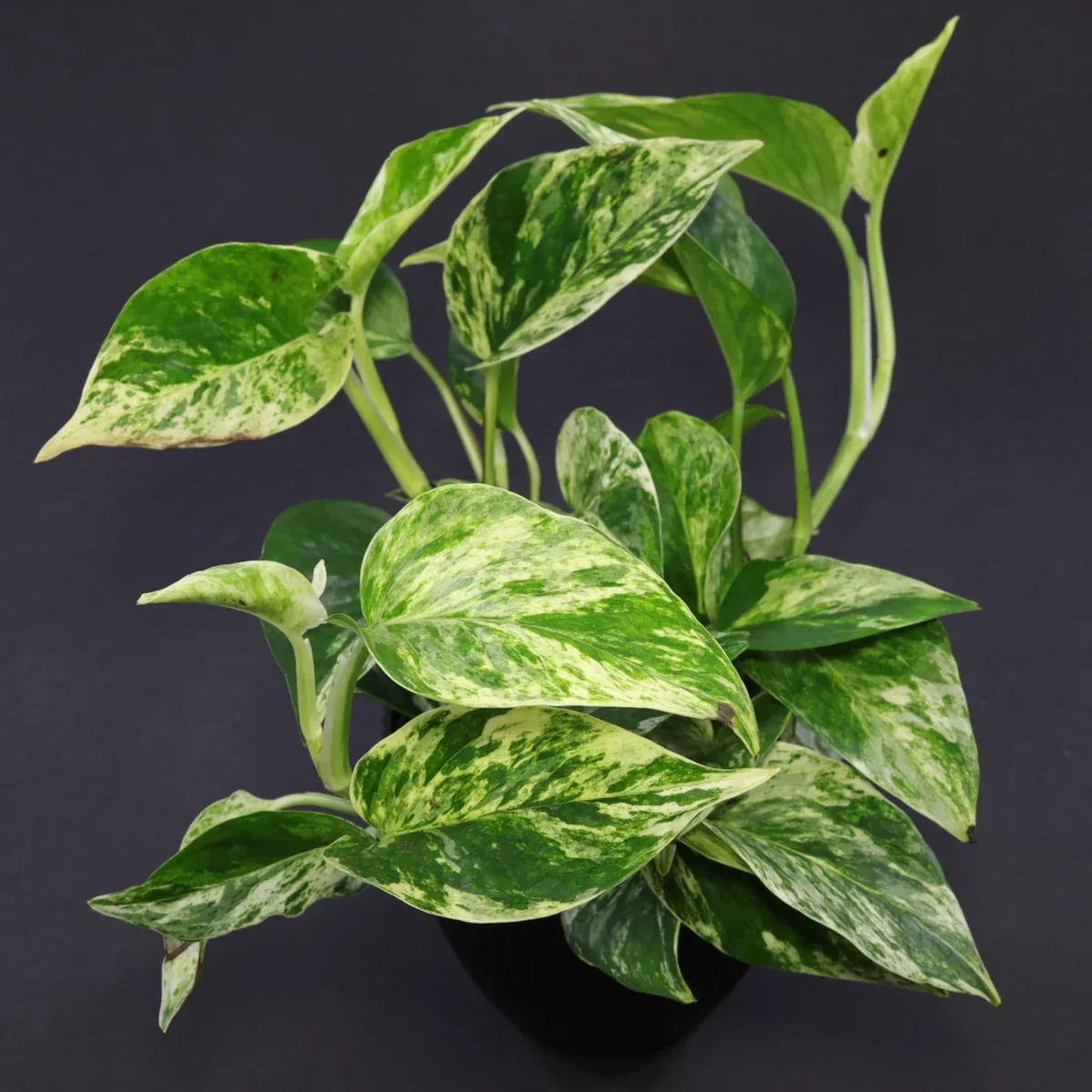
Scientific classification
- Species
- Marble Queen Pothos (Epipremnum aureum 'Marble Queen')
- Genus
- Epipremnum
- Family
- Araceae
- Toxic to cats and dogs; contains calcium oxalate crystals that cause oral irritation, drooling, and vomiting if ingested.
- Toxicity
- Houseplants · Foliage · Climber
- Plant type
- 1 - 2 metres
- Height
- 0.5 - 1 metres
- Spread
- Evergreen
- Foliage
- Climbing · Trailing
- Habit
- Spring · Summer · Autumn
- Season of interest
- Bright indirect light
- Sunlight
- 18 – 27 °C
- Ideal temperature









Marble Queen Pothos pictures
Distribution of Marble Queen Pothos
Distribution map
Solomon Islands, tropical Asia (native range of the species)
Information to be completed
Culture
Information to be completed
Toxicity
Toxic to cats and dogs; contains calcium oxalate crystals that cause oral irritation, drooling, and vomiting if ingested.
Quick identification of Marble Queen Pothos
Information to be completed
Marble Queen Pothos care guide
- Allow soil to dry completely between waterings; avoid overwatering.
- Watering
- Bright indirect light
- Sunlight
- 18 – 27 °C
- Ideal temperature

Watering
Allow soil to dry completely between waterings; avoid overwatering.
Fertilizing
 Fertilizing
Once a month with a diluted liquid fertilizer during spring and summer.
Pruning
 Pruning
Prune at any time to control length and shape; cut just above a leaf node. Remove yellow or damaged leaves to maintain appearance.
Propagation
 Propagation
Propagate by stem cuttings taken in spring or summer. Cut a stem with 2–3 nodes and a few leaves, remove the lower leaf, and place in water or moist potting mix. Roots develop within 2–4 weeks at 20–25 °C. Once rooted, pot up individually.
Growing
 Growing
Grow in bright indirect light; tolerate low light but variegation may fade. Water when the top inch of soil feels dry, avoid waterlogging. Apply a balanced liquid fertilizer monthly during the growing season (spring to early autumn). Keep in temperatures between 18–29 °C; protect from cold drafts. Repot every 2–3 years in a well-draining pot.
People also ask
Information to be completed
Common pests and diseases
Diseases
Susceptible to root rot if overwatered; ensure good drainage and avoid soggy soil. Leaf spot can occur in high humidity with poor air circulation.
Pests
Common pests include spider mites, mealybugs, and scale insects. Inspect regularly and treat with insecticidal soap or neem oil if infestation occurs.
Explore the plant health library →




