



Planting and Growing Marble Queen Pothos

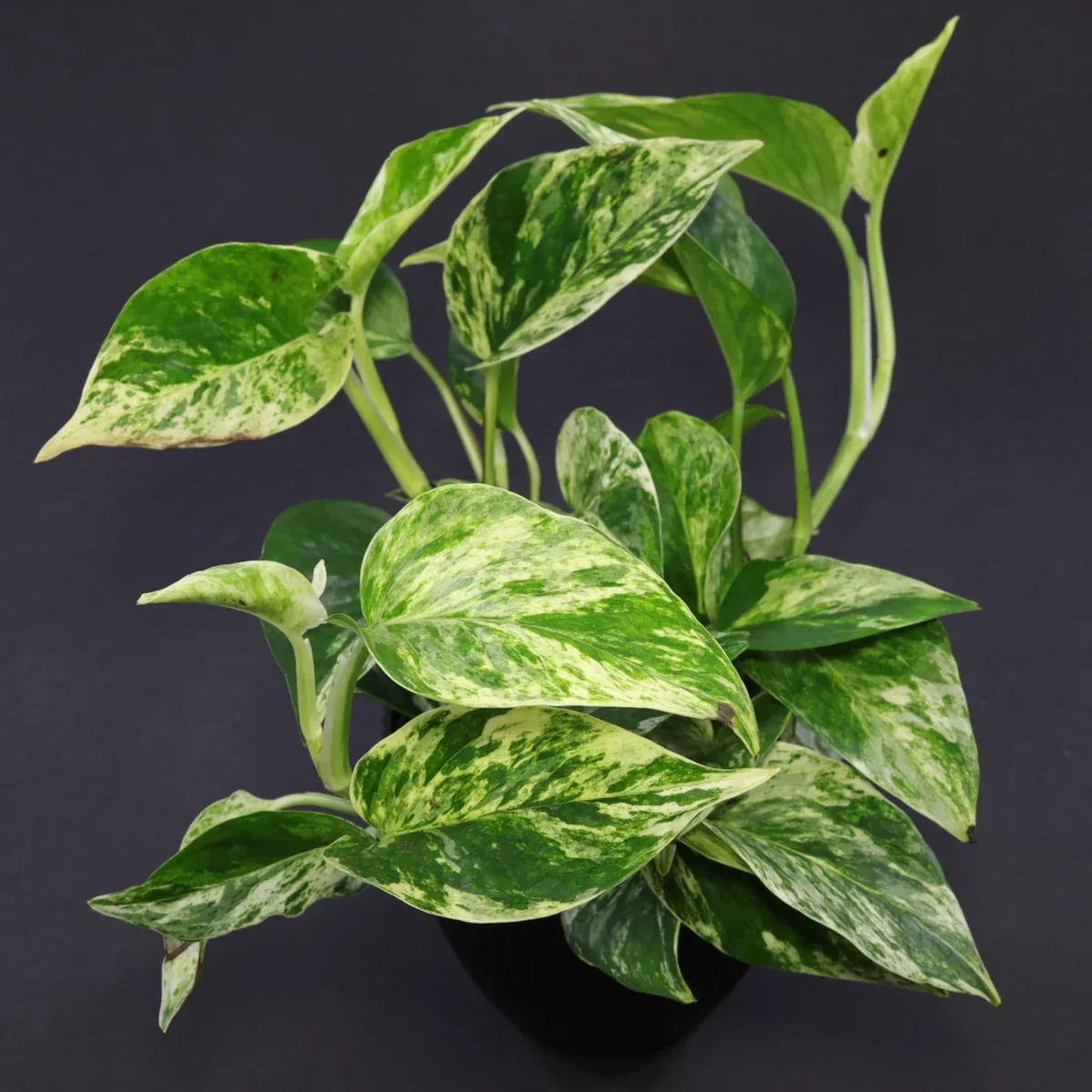
| Care difficulty | 1 / 5 |
|---|---|
| Watering schedule | Allow soil to dry completely between waterings; avoid overwatering. |
| Sunlight requirements | Bright indirect light |
| Ideal temperature | 18 – 27 °C |
| Soil type | Loam · Peat |
| Soil pH | Acid · Neutral |
| Soil moisture | Moist but well drained |
| Fertilizing | Once a month with a diluted liquid fertilizer during spring and summer. |
| Toxicity | Toxic to cats and dogs; contains calcium oxalate crystals that cause oral irritation, drooling, and vomiting if ingested. |
How to Water Marble Queen Pothos?
Marble queen pothos is a plant that thrives in high humidity environments, indicative of its tropical rainforest origins. It exhibits a preference for balanced water conditions and can tolerate periods of drought. This species requires watering every week to maintain optimal growth. As an evergreen plant, marble queen pothos retains its foliage year-round, making it essential to monitor its water intake during different growth cycles to prevent leaf drop due to overwatering.
Learn more →What Are the Sunlight Requirements for Marble Queen Pothos?
Marble queen pothos thrives in conditions of full shade, where its exposure to intense light is minimal. Though optimal growth and vibrant variegation are achieved under such conditions, marble queen pothos also displays a significant tolerance to partial sun. In less than ideal light, such as increased sunlight, marble queen pothos might exhibit reductions in the intensity of leaf variegation, potentially accelerating growth but compromising ornamental value. When grown indoors, placements near north-facing windows or in well-lit rooms with indirect sunlight are ideal. This adaptability makes marble queen pothos particularly suited for versatile home environments.
Learn more →What Is the Ideal Temperature Range for Marble Queen Pothos?

Marble queen pothos is relatively resilient to temperature fluctuations but is sensitive to extremes. It tolerates temperatures from 0℃ (32°F) to 43℃ (109°F). In cold conditions below 0℃, marble queen pothos may exhibit wilting leaves, blackened edges, and stunted growth, whereas prolonged exposure to heat above 43℃ can cause leaf burn, dryness, and yellowing. Ensure marble queen pothos is protected from frost by bringing it indoors or using insulating materials. During hot spells, maintain humidity and provide shade to prevent overheating. These measures will help maintain its health and appearance despite temperature extremes.
Learn more →What Soil Is Best for Marble Queen Pothos?
Marble queen pothos thrives in well-drained soil. A mix with equal parts potting soil, perlite, and peat moss promotes aeration and drainage, crucial to prevent root rot. If peat moss isn't available, coconut coir is a good alternative. To enhance growth, a slow-release fertilizer can be added during potting, with a routine application every 2-3 months. Ensure the mix remains loose and airy to support marble queen pothos's roots.
- Soil type
- Loam · Peat
- Soil pH
- Acid · Neutral
What Are the Moisture Requirements for Marble Queen Pothos?
Moist but well drained
Learn more →How to Fertilize Marble Queen Pothos?

For vibrant growth, marble queen pothos thrives with balanced, half-strength liquid fertilizer every month during spring and summer, when active growth occurs. Lesser applications, every 6-8 weeks, suffice in fall and winter. Over-fertilization risks root burn, so adhere to recommended dosages and frequency. Fertilization enhances foliage density and color vibrancy. Seasonal adjustments in feeding ensure marble queen pothos receives optimal nutrients throughout its life cycle, catering to its varying energy needs.
Learn more →How to Prune Marble Queen Pothos?

Marble queen pothos features striking variegated foliage, thriving in low light. Prune in early to later spring to control size, remove dead leaves, and encourage bushier growth. Use clean, sharp scissors to trim stems just above a leaf node. Regular pruning prevents legginess and supports healthy, robust development. Pruning also aids in managing the plant's spread and shape, particularly when grown indoors.
Learn more →How to Propagate Marble Queen Pothos?

beloved for its variegated foliage and adaptability, marble queen pothos thrives when propagated through cuttings. Selecting a healthy stem with multiple leaves and nodes, use clean, sharp scissors to snip just below a node. The cuttings then root readily in water or moist potting mix, with aerial roots aiding this process. Ensure high humidity and warm temperatures to encourage root development. Once rooted, transfer marble queen pothos to a standard houseplant soil for continued growth.
Learn more →How to Transplant Marble Queen Pothos?
The onset of growth season, typically at the cusp of spring, is ideal for transplanting marble queen pothos. Choose a spot with bright, indirect light, ensuring humidity stays moderate. If needed, upgrade to a slightly larger pot to encourage thriving growth.
Learn more →How to Care for Marble Queen Pothos in Winter?

Information to be completed
Learn more →How to Plant Marble Queen Pothos?
Marble queen pothos is usually propagated by stem cuttings, and can be cultivated in soil or water. Select the freshest branches of the year with bright, thick, robust leaves. Cut a 15 cm stem segment with 2-3 joints. Remove the leaves at the lower part of the branch and cut the bottom of the branch at a 45° angle to increase the contact area and help it absorb nutrients. Don't harm aerial roots when cutting the stem. After cutting, soak it in rooting powder solution for 2 minutes and then dry. If you're planting the stem cutting in soil, use a cultivation substrate of fine sand and waste slag. Sterilize the substrate by sun exposure before using. During cuttage, use bamboo sticks to drill holes and avoid damaging stem segments. Avoid cutting too deep. Half the length of the branches should be exposed above the soil surface. After cuttage, water thoroughly and place in a cool place to cure. Make sure the air is not too dry. Branches can be planted normally after rooting. If water planting cuttage is adopted, try to cut branches with aerial roots to improve the survival rate. Cut the plant branches 8 to 10 cm long. Remove the lower part of the leaves and place in a hydroponic container. Do not use too much water; submerge only 1/3 or 1/2 of the branches. Change the water once every 2-3 days as it roots, and clean the container. After rooting, change the water once a week.
Learn more →How to Repot Marble Queen Pothos?
Repot marble queen pothos, a climbing plant with striking variegated foliage, yearly, ideally in spring to support its active growth phase. Choose a pot just an inch larger in diameter than the previous one, as marble queen pothos thrives with snug roots. After repotting, provide bright, indirect light and keep the soil consistently moist for robust recovery. Marble queen pothos's resilience makes post-transplant care straightforward, ensuring a seamless transition to its new home.
Learn more →How to Harvest Marble Queen Pothos?

Marble queen pothos is an ornamental foliage plant. You can choose branches with more leaves and good colors, cut the branches into small sections obliquely with sharp scissors, and place them into clear water for viewing.
Learn more →Common Pests & Diseases

Diseases
Susceptible to root rot if overwatered; ensure good drainage and avoid soggy soil. Leaf spot can occur in high humidity with poor air circulation.
Pests
Common pests include spider mites, mealybugs, and scale insects. Inspect regularly and treat with insecticidal soap or neem oil if infestation occurs.
Explore the plant health library →The Toxicity of Marble Queen Pothos
Toxic to cats and dogs; contains calcium oxalate crystals that cause oral irritation, drooling, and vomiting if ingested.