
Alocasia 'Polly'
Also known as: Alocasia 'Polly', Amazonian Elephant Ear, African Mask Plant
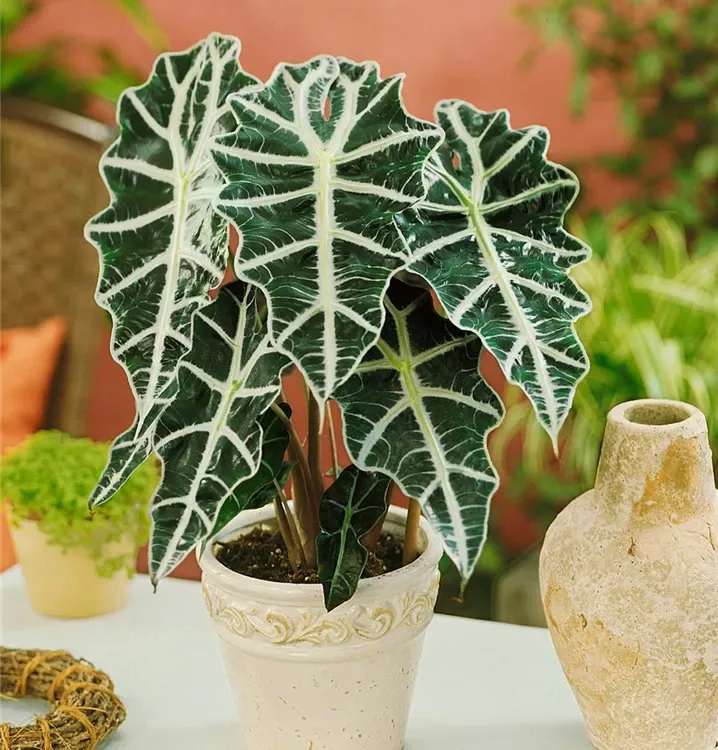
Alocasia x amazonica 'Polly' is a compact, hybrid elephant ear with striking arrow-shaped leaves up to 30cm long. The dark green leaves are adorned with prominent white or silver veins and have wavy, scalloped edges. It grows in a clump-forming habit, reaching 30-60cm in height and spread. This plant is prized for its dramatic foliage and is a popular houseplant.
Scientific classification
- Species
- Alocasia 'Polly' (Alocasia x amazonica)
- Genus
- Alocasia
- Family
- Araceae
- Order
- Alismatales
- Class
- Liliopsida
- Phylum
- Magnoliophyta
- Toxic if ingested; contains calcium oxalate crystals which can cause oral irritation, drooling, and swelling in pets and humans.
- Toxicity
- Houseplants · Foliage · Herbaceous Perennial
- Plant type
- 0.3 - 0.6 metres
- Height
- 0.3 - 0.5 metres
- Spread
- Evergreen
- Foliage
- Upright · Clump forming
- Habit
- Spring · Summer
- Season of interest
- Bright indirect light
- Sunlight
- 20 – 30 °C
- Ideal temperature









Alocasia 'Polly' pictures
Distribution of Alocasia 'Polly'
Distribution map
Hybrid origin; no natural distribution
Toxicity
Toxic if ingested; contains calcium oxalate crystals which can cause oral irritation, drooling, and swelling in pets and humans.
Alocasia 'Polly' care guide
- Keep soil consistently moist but never waterlogged; high humidity preferred.
- Watering
- Bright indirect light
- Sunlight
- 20 – 30 °C
- Ideal temperature

Watering
Keep soil consistently moist but never waterlogged; high humidity preferred.
Fertilizing
 Fertilizing
Every 2-4 weeks during the growing season with a diluted fertilizer.
Pruning
 Pruning
Remove any yellowing or dead leaves at the base as they appear to maintain appearance and health. No other regular pruning is required.
Propagation
 Propagation
Propagate by division in spring when repotting, separating offsets with roots. Alternatively, take stem cuttings with a node and place in moist perlite or sphagnum moss at 20-25°C (68-77°F). Keep humid until roots develop.
Growing
 Growing
Grow in a warm, humid environment with bright indirect light; avoid direct sun which scorches leaves. Use a well-drained potting mix based on loam and peat. Water regularly during the growing season, keeping the compost moist but not waterlogged; reduce watering in winter. Maintain temperatures above 15°C (59°F) and increase humidity by misting or using a pebble tray. Feed monthly with a balanced liquid fertilizer from spring to early autumn.
Common pests and diseases
Diseases
Susceptible to root rot if overwatered or grown in poorly draining compost. Leaf spot diseases may occur in persistently humid conditions without airflow.
Pests
Common pests include spider mites, mealybugs, and scale insects. Regular inspection and wiping leaves can help prevent infestations.
Explore the plant health library →




