



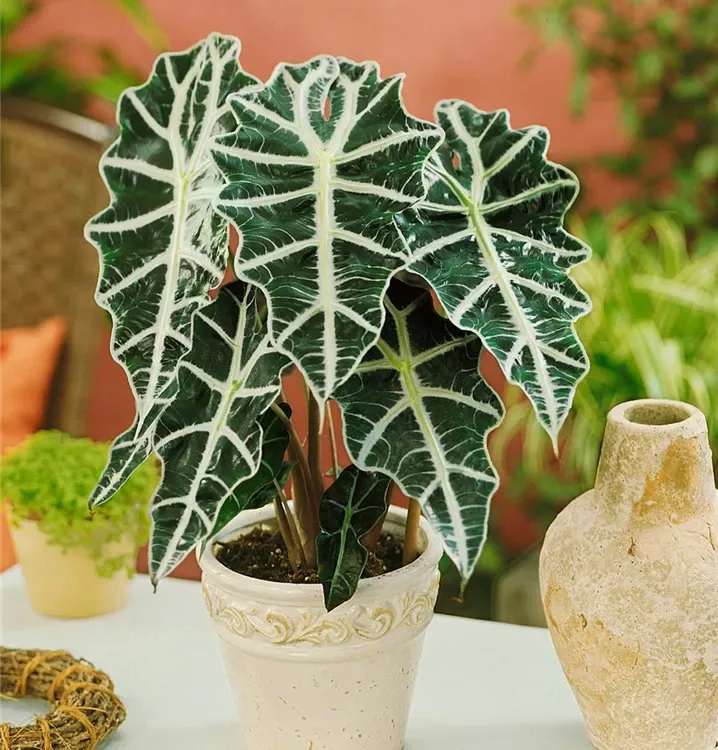
Planting and Growing Alocasia 'Polly'

| Care difficulty | 4 / 5 |
|---|---|
| Watering schedule | Keep soil consistently moist but never waterlogged; high humidity preferred. |
| Sunlight requirements | Bright indirect light |
| Ideal temperature | 20 – 30 °C |
| Soil type | Loam · Peat |
| Soil pH | Acid · Neutral |
| Soil moisture | Moist but well drained |
| Fertilizing | Every 2-4 weeks during the growing season with a diluted fertilizer. |
| Toxicity | Toxic if ingested; contains calcium oxalate crystals which can cause oral irritation, drooling, and swelling in pets and humans. |
How to Water Alocasia 'Polly'?
Keep soil consistently moist but never waterlogged; high humidity preferred.
Learn more →What Are the Sunlight Requirements for Alocasia 'Polly'?
Bright indirect light
Learn more →What Is the Ideal Temperature Range for Alocasia 'Polly'?

20 – 30 °C
Learn more →What Soil Is Best for Alocasia 'Polly'?
- Soil type
- Loam · Peat
- Soil pH
- Acid · Neutral
What Are the Moisture Requirements for Alocasia 'Polly'?
Moist but well drained
Learn more →How to Fertilize Alocasia 'Polly'?

Every 2-4 weeks during the growing season with a diluted fertilizer.
Learn more →How to Prune Alocasia 'Polly'?

Remove any yellowing or dead leaves at the base as they appear to maintain appearance and health. No other regular pruning is required.
Learn more →How to Propagate Alocasia 'Polly'?

Propagate by division in spring when repotting, separating offsets with roots. Alternatively, take stem cuttings with a node and place in moist perlite or sphagnum moss at 20-25°C (68-77°F). Keep humid until roots develop.
Learn more →How to Plant Alocasia 'Polly'?
Grow in a warm, humid environment with bright indirect light; avoid direct sun which scorches leaves. Use a well-drained potting mix based on loam and peat. Water regularly during the growing season, keeping the compost moist but not waterlogged; reduce watering in winter. Maintain temperatures above 15°C (59°F) and increase humidity by misting or using a pebble tray. Feed monthly with a balanced liquid fertilizer from spring to early autumn.
Learn more →Common Pests & Diseases

Diseases
Susceptible to root rot if overwatered or grown in poorly draining compost. Leaf spot diseases may occur in persistently humid conditions without airflow.
Pests
Common pests include spider mites, mealybugs, and scale insects. Regular inspection and wiping leaves can help prevent infestations.
Explore the plant health library →Troubleshooting
Yellowing Outer Leaves or Sudden Dormancy Leaf Drop
Alocasia 'Polly' (Alocasia x amazonica) grows from an underground rhizome or corm and naturally cycles leaves, but rapid yellowing signals root moisture stress or seasonal chill.
| What you notice | Possible explanation | What to check next |
|---|---|---|
| One oldest outer leaf yellows and dies back right as a new leaf unfurls | Normal resource reallocation in compact Alocasias that sustain a limited number of leaves at once | Check that the emerging leaf and remaining foliage are firm and upright |
| Multiple leaves droop and turn yellow-brown while the potting mix stays wet | Overwatering, dense soil, or cool temperatures causing rhizome and root rot | Feel deep into the mix and inspect roots for mushy brown decay |
| All leaves yellow and die down in autumn or winter while the underground corm remains firm | Seasonal dormancy triggered by cooler temperatures and shorter daylength | Gently check the top of the rhizome/corm to confirm it is hard and healthy rather than soft |
- Use a chunky, fast-draining aroid mix (peat-free compost or coco coir blended with bark and perlite) and water when the top inch of mix feels dry.
- Keep temperatures warm and stable above 15–18°C (59–65°F) and shield from cold window drafts.
- If the plant enters winter dormancy with a firm corm, reduce watering dramatically so the mix stays barely damp until warm spring growth resumes.
- Trim fully yellowed leaves cleanly at the base once spent.
Stop watering immediately and unpot if the rhizome base feels soft, hollow, or foul-smelling.
Never force dormant corms with heavy watering or fertilizer, which causes rapid rot.
Spider Mites, Speckled Foliage, or Brown Leaf Margins
Textured and jewel Alocasia leaves are prime targets for spider mites in dry indoor air and also show crisp edges when humidity or salts fluctuate.
| What you notice | Possible explanation | What to check next |
|---|---|---|
| Tiny pale speckles, dull bronze sheen, or fine webbing on leaf undersides | Spider mite infestation encouraged by warm, dry indoor air | Inspect leaf undersides and petiole junctions closely, especially along raised veins |
| Dry brown leaf tips or edges without webbing | Low ambient humidity, underwatering, or fertilizer salt buildup | Check soil moisture and review recent feeding strength |
| Water-soaked dark spots with yellow halos spreading on leaves | Bacterial or fungal leaf spot favored by wet foliage and stagnant air | Check whether water sits on leaves overnight or airflow is poor |
- Isolate mite-suspected plants immediately and wipe both upper and lower leaf surfaces with a soft, damp cloth.
- Treat confirmed spider mites with insecticidal soap or horticultural oil following label instructions, covering leaf undersides thoroughly.
- Improve air circulation and maintain moderate-to-high humidity without leaving standing water droplets on foliage.
- Flush the potting mix periodically with plain water to prevent soluble salt accumulation.
Remove and discard leaves with spreading water-soaked bacterial lesions using sterilized shears to prevent spread.
The Toxicity of Alocasia 'Polly'
Toxic if ingested; contains calcium oxalate crystals which can cause oral irritation, drooling, and swelling in pets and humans.