
Variegated Anthurium
Also known as: Variegated Flamingo Lily, Variegated Anthurium
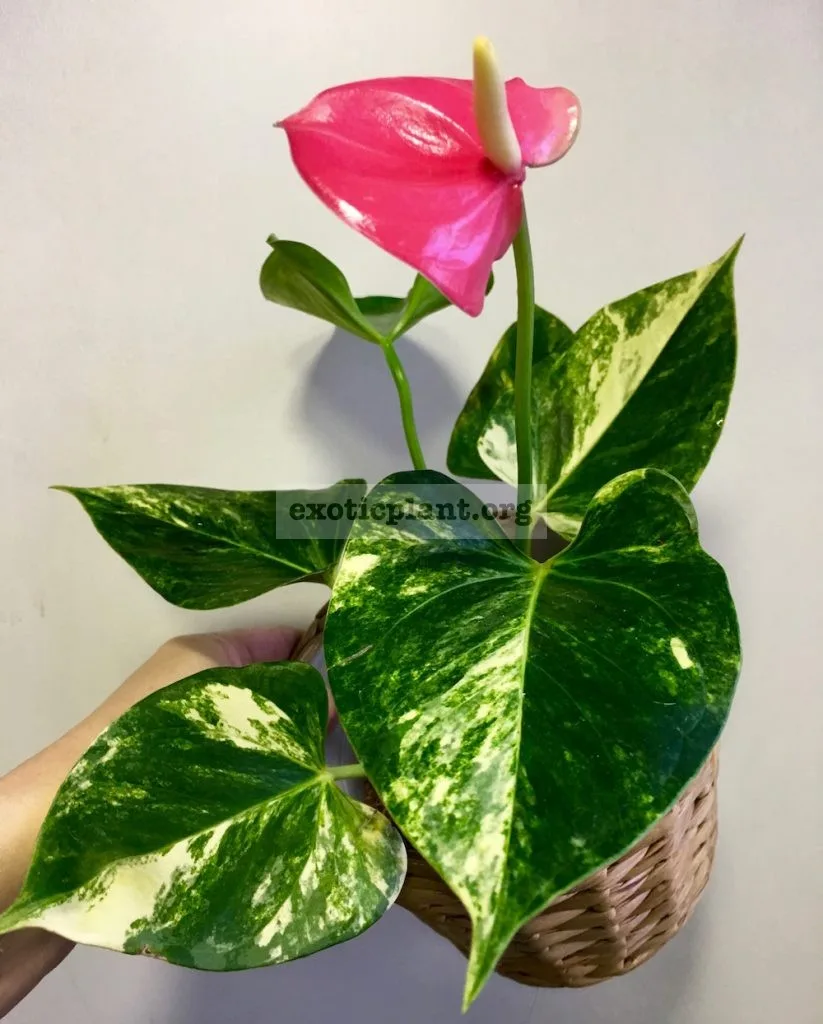
The Variegated Anthurium is an evergreen perennial with heart-shaped, dark green leaves heavily variegated with creamy white or pale yellow patches. Its showy, waxy spathes (modified leaves) come in shades of red, pink, or white, surrounding a prominent yellow spadix. The plant forms a tidy, clumping habit and can bloom repeatedly throughout the year under suitable conditions. Its striking foliage and long-lasting flowers make it a popular choice for indoor decoration.
Scientific classification
- Species
- Variegated Anthurium (Anthurium andraeanum (variegated cultivar))
- Genus
- Anthurium
- Family
- Araceae
- Order
- Alismatales
- Class
- Liliopsida
- Phylum
- Magnoliophyta
- Toxic if ingested, due to calcium oxalate crystals; can cause oral irritation and digestive upset in humans and pets.
- Toxicity
- Houseplants · Foliage · Conservatory Greenhouse
- Plant type
- 0.3 - 0.6 metres
- Height
- 0.3 - 0.5 metres
- Spread
- Evergreen
- Foliage
- Upright · Clump forming
- Habit
- Spring · Summer
- Season of interest
- Bright indirect light
- Sunlight
- 18 – 27 °C
- Ideal temperature









Variegated Anthurium pictures
Distribution of Variegated Anthurium
Distribution map
Southwestern Colombia, Ecuador (tropical rainforests)
Toxicity
Toxic if ingested, due to calcium oxalate crystals; can cause oral irritation and digestive upset in humans and pets.
Variegated Anthurium care guide
- Keep soil evenly moist but not soggy; high humidity is essential.
- Watering
- Bright indirect light
- Sunlight
- 18 – 27 °C
- Ideal temperature

Watering
Keep soil evenly moist but not soggy; high humidity is essential.
Fertilizing
 Fertilizing
Every 2-4 weeks during the growing season with a diluted liquid fertilizer.
Pruning
 Pruning
Remove yellowing or damaged leaves at the base, and cut spent flower stems down to the soil level. Prune in early spring to maintain a tidy shape and encourage new growth.
Propagation
 Propagation
Propagate by division in spring when repotting, ensuring each division has at least 2-3 leaves and a healthy root system. Stem cuttings can also be rooted in water or moist sphagnum moss at 25°C with high humidity. Rooting takes 3-4 weeks.
Growing
 Growing
Provide bright, indirect light; direct sun will scorch the leaves. Use a well-draining, peat-based potting mix and keep the soil consistently moist but not waterlogged. Maintain high humidity (60-80%) by misting or placing on a pebble tray. Fertilize every 4-6 weeks during the growing season with a balanced liquid feed. In winter, reduce watering and stop fertilizing, keeping temperatures above 15°C.
Common pests and diseases
Diseases
Susceptible to root rot (Rhizoctonia, Pythium) and leaf spot diseases if overwatered or grown in poor air circulation. Ensure proper drainage and avoid wetting the foliage.
Pests
Common pests include aphids, spider mites, mealybugs, and scale insects. Regularly check leaf undersides and treat with insecticidal soap or neem oil if infested.
Explore the plant health library →




