



Planting and Growing Variegated Anthurium

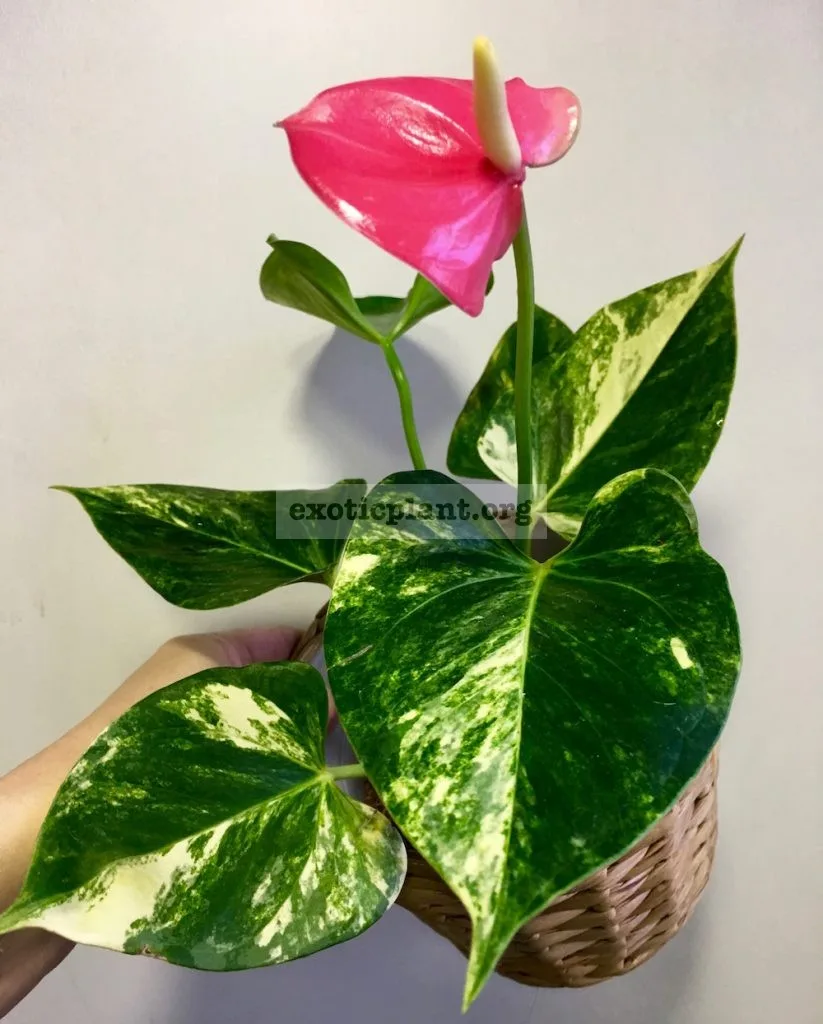
| Care difficulty | 4 / 5 |
|---|---|
| Watering schedule | Keep soil evenly moist but not soggy; high humidity is essential. |
| Sunlight requirements | Bright indirect light |
| Ideal temperature | 18 – 27 °C |
| Soil type | Loam · Peat |
| Soil pH | Acid |
| Soil moisture | Moist but well drained |
| Fertilizing | Every 2-4 weeks during the growing season with a diluted liquid fertilizer. |
| Toxicity | Toxic if ingested, due to calcium oxalate crystals; can cause oral irritation and digestive upset in humans and pets. |
How to Water Variegated Anthurium?
Keep soil evenly moist but not soggy; high humidity is essential.
Learn more →What Are the Sunlight Requirements for Variegated Anthurium?
Bright indirect light
Learn more →What Is the Ideal Temperature Range for Variegated Anthurium?

18 – 27 °C
Learn more →What Soil Is Best for Variegated Anthurium?
- Soil type
- Loam · Peat
- Soil pH
- Acid
What Are the Moisture Requirements for Variegated Anthurium?
Moist but well drained
Learn more →How to Fertilize Variegated Anthurium?

Every 2-4 weeks during the growing season with a diluted liquid fertilizer.
Learn more →How to Prune Variegated Anthurium?

Remove yellowing or damaged leaves at the base, and cut spent flower stems down to the soil level. Prune in early spring to maintain a tidy shape and encourage new growth.
Learn more →How to Propagate Variegated Anthurium?

Propagate by division in spring when repotting, ensuring each division has at least 2-3 leaves and a healthy root system. Stem cuttings can also be rooted in water or moist sphagnum moss at 25°C with high humidity. Rooting takes 3-4 weeks.
Learn more →How to Transplant Variegated Anthurium?
Information to be completed
Learn more →How to Care for Variegated Anthurium in Winter?

Information to be completed
Learn more →How to Plant Variegated Anthurium?
Provide bright, indirect light; direct sun will scorch the leaves. Use a well-draining, peat-based potting mix and keep the soil consistently moist but not waterlogged. Maintain high humidity (60-80%) by misting or placing on a pebble tray. Fertilize every 4-6 weeks during the growing season with a balanced liquid feed. In winter, reduce watering and stop fertilizing, keeping temperatures above 15°C.
Learn more →How to Repot Variegated Anthurium?
Information to be completed
Learn more →How to Harvest Variegated Anthurium?

Information to be completed
Learn more →Common Pests & Diseases

Diseases
Susceptible to root rot (Rhizoctonia, Pythium) and leaf spot diseases if overwatered or grown in poor air circulation. Ensure proper drainage and avoid wetting the foliage.
Pests
Common pests include aphids, spider mites, mealybugs, and scale insects. Regularly check leaf undersides and treat with insecticidal soap or neem oil if infested.
Explore the plant health library →The Toxicity of Variegated Anthurium
Toxic if ingested, due to calcium oxalate crystals; can cause oral irritation and digestive upset in humans and pets.