
Black Velvet Alocasia
Also known as: Black Velvet Alocasia, Velvet Leaf Alocasia
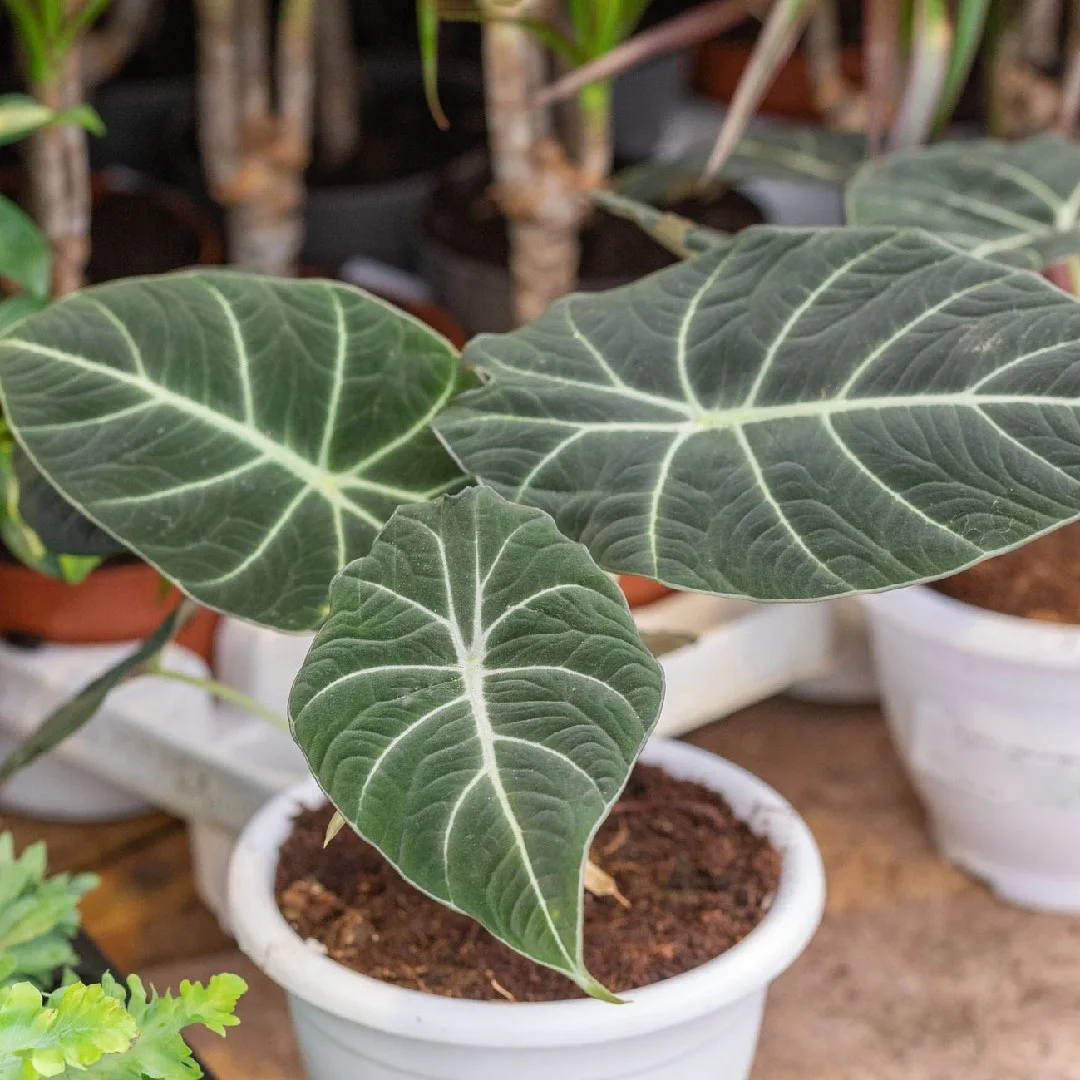
Alocasia reginula, commonly known as Black Velvet, is a compact, evergreen perennial with striking heart-shaped leaves. The foliage has a deep velvety black-green surface and silvery-white veins, creating a dramatic contrast. It typically reaches a height of 30-60 cm and forms a clump of upright stems. This plant is prized for its unique ornamental foliage and is ideal for indoor containers or terrariums.
Scientific classification
- Species
- Black Velvet Alocasia (Alocasia reginula)
- Genus
- Alocasia
- Family
- Araceae
- Order
- Alismatales
- Class
- Liliopsida
- Phylum
- Magnoliophyta
- Toxic if ingested, may cause irritation to mouth and digestive tract due to calcium oxalate crystals; keep away from pets and children.
- Toxicity
- Foliage · Houseplants · Herbaceous Perennial
- Plant type
- 0.3 - 0.6 metres
- Height
- 0.3 - 0.5 metres
- Spread
- Evergreen
- Foliage
- Upright · Clump forming
- Habit
- Spring · Summer · Autumn
- Season of interest
- Bright indirect light
- Sunlight
- 18 – 24 °C
- Ideal temperature









Black Velvet Alocasia pictures
Distribution of Black Velvet Alocasia
Distribution map
- Native
- Introduced
- Cultivated
Source:WCVP v16 · Royal Botanic Gardens, Kew · CC BY 3.0 · Boundaries:WGSRPD / TDWG
Toxicity
Toxic if ingested, may cause irritation to mouth and digestive tract due to calcium oxalate crystals; keep away from pets and children.
Black Velvet Alocasia care guide
- Keep soil consistently moist but not waterlogged; high humidity preferred
- Watering
- Bright indirect light
- Sunlight
- 18 – 24 °C
- Ideal temperature

Watering
Keep soil consistently moist but not waterlogged; high humidity preferred
Fertilizing
 Fertilizing
Biweekly during growing season with diluted liquid fertilizer
Pruning
 Pruning
Remove yellowing or damaged leaves at the base with clean, sharp scissors. Prune in spring to maintain shape and encourage new growth.
Propagation
 Propagation
Propagate by division in spring when repotting. Carefully separate offsets or rhizome sections, each with at least one leaf and root system. Pot them in moist, well-draining mix and keep in a warm, humid environment (20-25°C) until established.
Growing
 Growing
Grow in bright, indirect light; avoid direct sunlight which can scorch leaves. Use a well-draining, peat-based potting mix and keep consistently moist but never waterlogged. Maintain high humidity by misting or using a humidity tray; ideal temperature is 18-24°C. Fertilize monthly during the growing season with a balanced liquid fertilizer diluted to half strength. In winter, reduce watering and stop fertilizing to allow a rest period.
Common pests and diseases
Diseases
Susceptible to root rot if overwatered; ensure soil drainage and avoid waterlogging. Leaf spot can occur in overly humid conditions with poor air circulation.
Pests
Common pests include spider mites, aphids, and mealybugs. Regularly inspect leaves and treat with insecticidal soap or neem oil if infested.
Explore the plant health library →




