



Planting and Growing Black Velvet Alocasia

| Care difficulty | 4 / 5 |
|---|---|
| Watering schedule | Keep soil consistently moist but not waterlogged; high humidity preferred |
| Sunlight requirements | Bright indirect light |
| Ideal temperature | 18 – 24 °C |
| Soil type | Loam · Peat |
| Soil pH | Acid · Neutral |
| Soil moisture | Moist but well drained |
| Fertilizing | Biweekly during growing season with diluted liquid fertilizer |
| Toxicity | Toxic if ingested, may cause irritation to mouth and digestive tract due to calcium oxalate crystals; keep away from pets and children. |
How to Water Black Velvet Alocasia?
Originating from the understory of tropical rainforests, alocasia reginula thrives in environments with high humidity and consistent moisture. This species exhibits a preference for evenly moist soil, reflecting its native habitat's conditions. Watering should be regular, aligning with watering every week to maintain its lush foliage. For indoor cultivation, alocasia reginula benefits significantly from increased ambient humidity, which can be achieved through pebble trays or humidifiers. As an evergreen plant, maintaining adequate moisture levels is crucial to support its year-round foliage display.
Learn more →What Are the Sunlight Requirements for Black Velvet Alocasia?
Alocasia reginula can grow in filtered sunlight to shady conditions. Direct sunlight can burn leaves badly. On the other hand, if it is placed in an area with insufficient light for a long time, its stem will become slender and the leaves soft. It is best to plant alocasia reginula in partial shade.
Learn more →What Is the Ideal Temperature Range for Black Velvet Alocasia?

Alocasia reginula shows moderate sensitivity to temperature fluctuations. It can withstand temperatures as low as 5℃ (41℉) and as high as 35℃ (95℉). However, exposure to these extremes should be minimized. In colder conditions, the plant may exhibit leaf drooping and discoloration, while overheating can cause leaf scorching and wilting. Protective measures like mulching and shading are advised during extreme weather. It's crucial to maintain stable temperatures to keep alocasia reginula healthy, making it more suitable for indoor environments or temperate climates.
Learn more →What Soil Is Best for Black Velvet Alocasia?
Alocasia reginula is not that picky when it comes to soil type, but it grows best in loose and well-drained soils. If planted outdoors, it can grow successfully in all except water-retaining soils. Even though it thrives in humid environments, soggy soil will make it more susceptible to various fungal diseases. If potted, it's best to use peat moss or sandy soil mixed with a small amount of organic fertilizer.
- Soil type
- Loam · Peat
- Soil pH
- Acid · Neutral
What Are the Moisture Requirements for Black Velvet Alocasia?
Moist but well drained
Learn more →How to Fertilize Black Velvet Alocasia?

Demand for fertilization varies between Alocasia species. Some are not very demanding, while others, especially large species, are heavy feeders. Base fertilizer should be added to the soil before planting. Add a bit of liquid fertilizer with each watering during the growing season to keep it healthy and growing vigorously. Fertilization can be reduced gradually as the plants enter dormancy, or stopped entirely after the temperature drops below 16 ℃.
Learn more →How to Prune Black Velvet Alocasia?

Alocasia reginula, known for its striking dark leaves and vibrant veins, thrives with careful pruning. Prune in early spring to shape and remove damaged leaves. Use clean, sharp tools to cut close to the base of old or yellowed leaves without harming the main stem. Benefits include promoting new growth, improving air circulation, and maintaining the plant's aesthetic. Regular pruning ensures a healthier, more vibrant appearance, enhancing its ornamental appeal and overall vitality.
Learn more →How to Propagate Black Velvet Alocasia?

Alocasia reginula is best propagated through division, which involves separating the root mass carefully to ensure each new plantlet has sufficient roots to establish itself independently. When dividing, use a clean, sharp knife to minimize damage and disease risk. After division, place the new segments in moist, well-draining soil, maintaining high humidity and indirect light to encourage growth. Gentle handling and minimal root disturbance are crucial for successful establishment.
Learn more →How to Transplant Black Velvet Alocasia?
Alocasia reginula thrives when transplanted from mid to late spring due to optimal growth conditions. Ensure a bright, indirect light location and warm temperatures for successful acclimation. Incorporate well-draining soil to support healthy roots.
Learn more →How to Plant Black Velvet Alocasia?
Alocasia reginula can be grown from seeds or ramets. Propagating from seed is a very demanding, slow process, so the most common method is ramets. They can be acquired from a healthy mother plant 2-3 years old in the spring. The process starts by delicately removing the plant roots and rhizomes from the ground. When the plant is pulled out from the soil, gently rinse its root system with water using a garden hose. Rinse until the individual ramets become visible; then they can be easily pulled apart from the mother plant. It is important to separate them very carefully with a sharp knife, so the roots suffer as little damage as possible. Plant the separated ramets into individual pots filled with a mixture of a potting mix, a lot of sand, and some perlite. The substrate must drain well. Water the ramets after planting and keep the temperature of the soil between 18 to 25 ℃. After it grows into a new plant, it's better to repot it every year in spring to ensure better growth.
Learn more →Common Pests & Diseases

Diseases
Susceptible to root rot if overwatered; ensure soil drainage and avoid waterlogging. Leaf spot can occur in overly humid conditions with poor air circulation.
Pests
Common pests include spider mites, aphids, and mealybugs. Regularly inspect leaves and treat with insecticidal soap or neem oil if infested.
Explore the plant health library →Troubleshooting
Yellowing Outer Leaves, Rhizome Rot, and Winter Dormancy
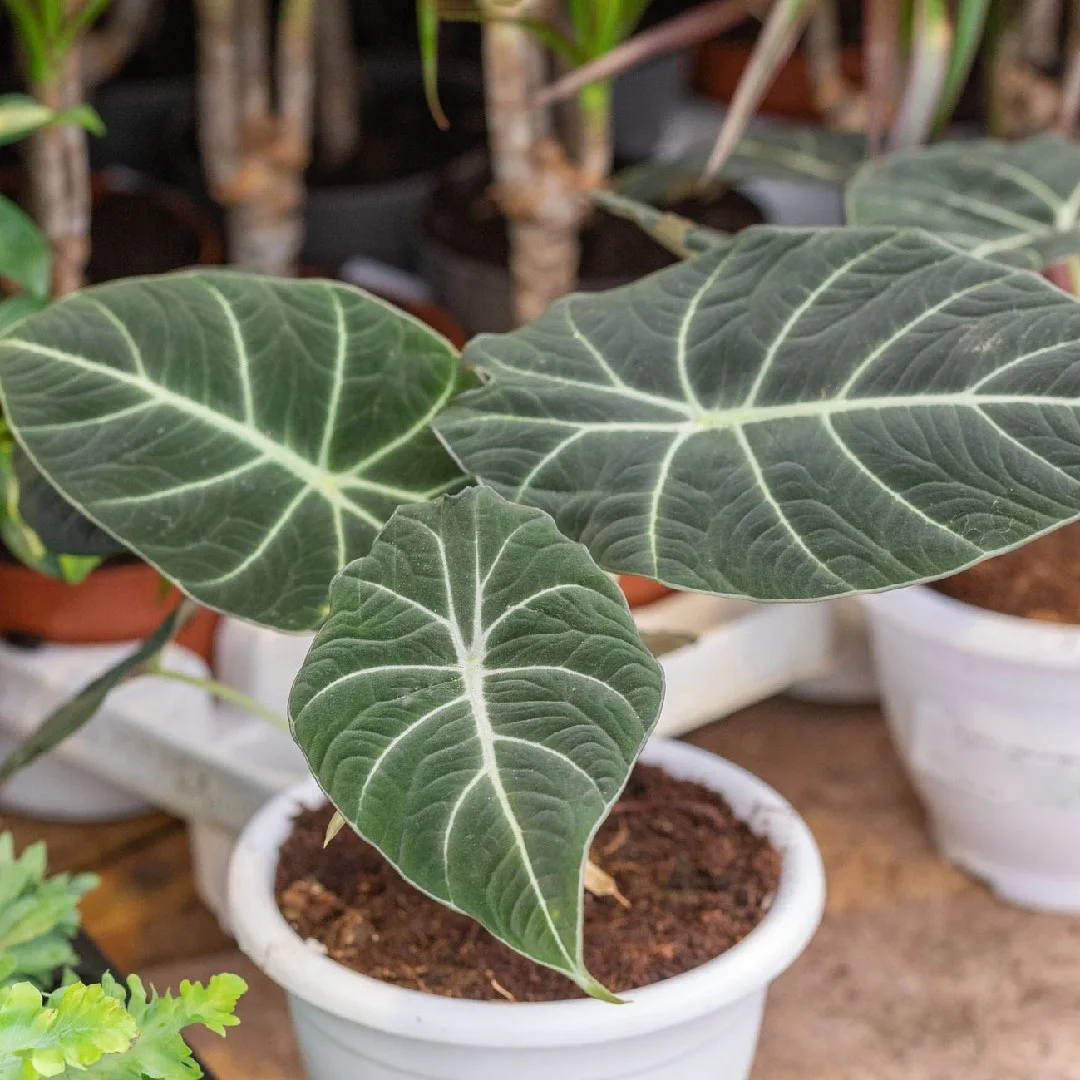
Alocasia reginula ('Black Velvet' alocasia) is a compact jewel alocasia with thick, nearly black velvety leaves and silver veins; its thick roots and small rhizome rot rapidly in dense wet soil and go dormant if chilled.
| What you notice | Possible explanation | What to check next |
|---|---|---|
| One oldest outer leaf yellows slowly as a new leaf emerges from the center | Normal leaf turnover in young jewel Alocasia | Cut the spent leaf cleanly at the base with gloved hands. |
| Multiple leaves yellow and soften while potting mix stays wet or compacted | Overwatering, poorly draining soil, or rhizome/root rot | Stop watering immediately, empty standing water, and inspect the rhizome and roots for mushy decay. |
| Leaves die back in cool winter temperatures below 15°C to 18°C (60°F to 65°F) while the rhizome stays firm | Seasonal dormancy | Keep the mix barely damp in a warm spot above 18°C (65°F) and resume normal watering when spring shoots emerge. |
- Grow in a snug pot with open drainage holes using a very chunky, airy aroid mix (fine-to-medium orchid bark, perlite, and coco coir or peat).
- Allow the top 1 to 2 inches of mix to dry out before watering thoroughly, emptying excess saucer water promptly.
- Keep warm between 18°C and 27°C (65°F to 80°F) away from cold drafts.
- Wear gloves when pruning or repotting, as all parts contain insoluble calcium oxalate crystals and are toxic to cats and dogs.
Because 'Black Velvet' has thick, semi-succulent leaves compared to larger alocasias, it tolerates slightly drier mix between waterings than thin-leaved species.
Spider Mites or Bleached Patches on Dark Velvet Leaves
Intense direct sun bleaches the deep charcoal-black foliage, while dry indoor air encourages spider mites.
| What you notice | Possible explanation | What to check next |
|---|---|---|
| Fine webbing, pale stippling, or tiny moving specks appear on leaf undersides | Two-spotted spider mites | Isolate the plant immediately and rinse or gently wipe both leaf surfaces with room-temperature water. |
| Dark velvety leaves look washed out, silvery-gray, or scorched | Direct sun exposure | Move the plant out of direct sun into bright, indirect light. |
- Place in bright to medium indirect light (such as near an east- or north-facing window) out of direct midday sun.
- Maintain moderate indoor humidity (ideally 55% to 70%) without letting water droplets sit on the dark velvety leaves in stagnant air.
- Feed lightly once a month during spring and summer with a balanced liquid fertilizer diluted to quarter or half strength, and skip feeding in winter.
Alocasia reginula is toxic to cats and dogs if chewed or ingested.
The Toxicity of Black Velvet Alocasia
Toxic if ingested, may cause irritation to mouth and digestive tract due to calcium oxalate crystals; keep away from pets and children.