
Frydek Alocasia
Also known as: Frydek, Green Velvet Alocasia, Alocasia Frydek
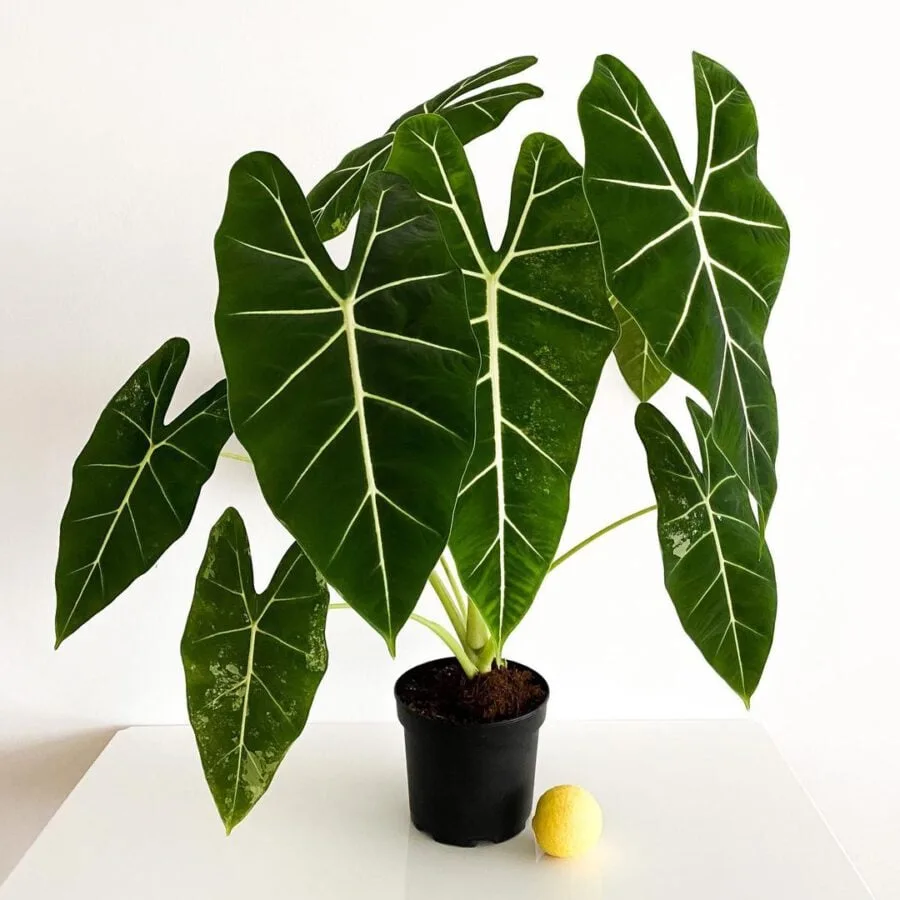
Alocasia micholitziana 'Frydek' is a striking evergreen perennial with large, arrow-shaped, deep green leaves that have a velvety texture and prominent white veins. It forms a clump of upright stems, each bearing a single leaf. This compact cultivar is prized for its dramatic foliage and adds a tropical feel to indoor spaces.
Scientific classification
- Species
- Frydek Alocasia (Alocasia micholitziana 'Frydek')
- Genus
- Alocasia
- Family
- Araceae
- Order
- Alismatales
- Class
- Liliopsida
- Phylum
- Magnoliophyta
- All parts of the plant are toxic if ingested due to calcium oxalate crystals; keep away from children and pets.
- Toxicity
- Houseplants · Foliage
- Plant type
- 0.6 - 1.0 metres
- Height
- 0.3 - 0.6 metres
- Spread
- Evergreen
- Foliage
- Upright
- Habit
- Spring · Summer
- Season of interest
- Bright indirect light
- Sunlight
- 20 – 30 °C
- Ideal temperature









Frydek Alocasia pictures
Distribution of Frydek Alocasia
Distribution map
- Native
- Introduced
- Cultivated
Source:WCVP v16 · Royal Botanic Gardens, Kew · CC BY 3.0 · Boundaries:WGSRPD / TDWG
Toxicity
All parts of the plant are toxic if ingested due to calcium oxalate crystals; keep away from children and pets.
Frydek Alocasia care guide
- Keep soil moist; do not let it dry out completely
- Watering
- Bright indirect light
- Sunlight
- 20 – 30 °C
- Ideal temperature

Watering
Keep soil moist; do not let it dry out completely
Fertilizing
 Fertilizing
Every two weeks with half-strength fertilizer during growth
Pruning
 Pruning
Remove yellow or damaged leaves at the base to maintain appearance and health. No regular pruning is required.
Propagation
 Propagation
Propagate by division of the clump in spring when repotting, ensuring each division has at least one leaf and a portion of the rhizome. Alternatively, stem cuttings can be taken from young offsets. Place cuttings in moist sphagnum moss or water at 20-25°C until roots develop.
Growing
 Growing
Grow in bright, indirect light; direct sun can scorch the leaves. Use a well-drained, peat-based potting mix and keep the soil consistently moist during the growing season, but reduce watering in winter. Maintain high humidity by misting or using a humidity tray. Fertilize monthly with a balanced liquid fertilizer during spring and summer. Protect from temperatures below 15°C.
Common pests and diseases
Diseases
Susceptible to root rot if overwatered or poorly drained. Leaf spot diseases may occur in overly humid conditions with poor air circulation.
Pests
Common pests include spider mites, aphids, and mealybugs, especially in dry indoor air. Regularly inspect and treat with insecticidal soap if needed.
Explore the plant health library →




