



Planting and Growing Frydek Alocasia

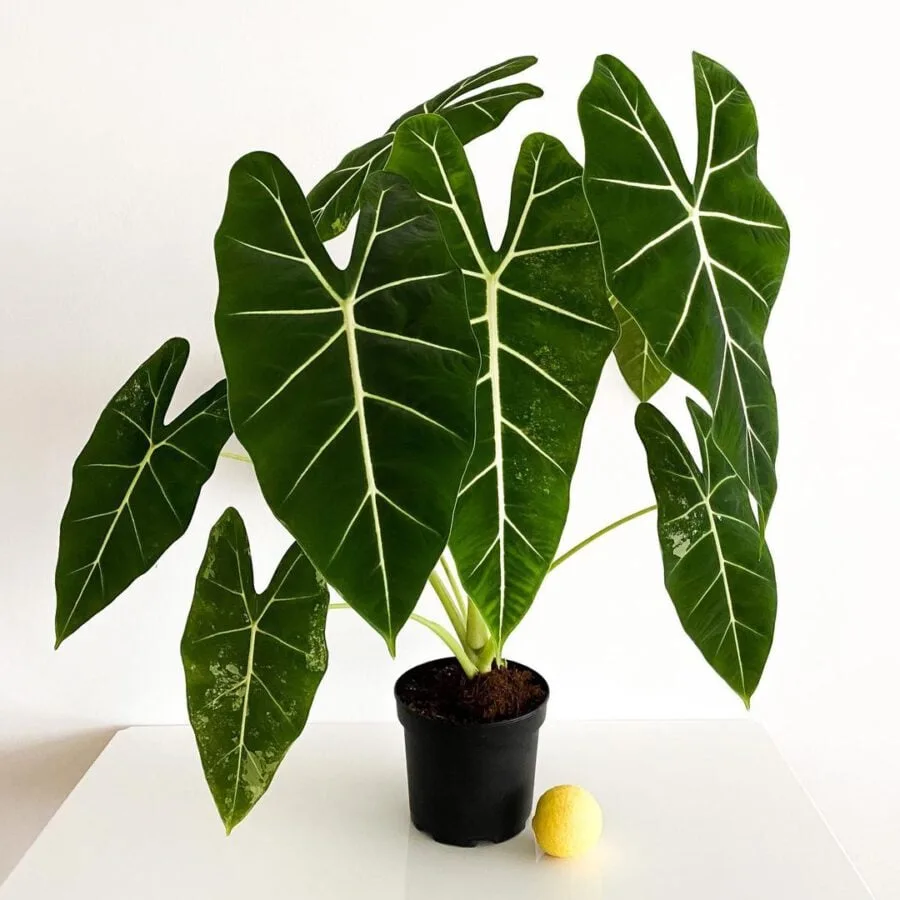
| Care difficulty | 4 / 5 |
|---|---|
| Watering schedule | Keep soil moist; do not let it dry out completely |
| Sunlight requirements | Bright indirect light |
| Ideal temperature | 20 – 30 °C |
| Soil type | Peat · Loam |
| Soil pH | Acid |
| Soil moisture | Moist but well drained |
| Fertilizing | Every two weeks with half-strength fertilizer during growth |
| Toxicity | All parts of the plant are toxic if ingested due to calcium oxalate crystals; keep away from children and pets. |
How to Water Frydek Alocasia?
Alocasia Frydek is a tropical plant that thrives in humid environments, exhibiting a preference for moist conditions. It's not drought-tolerant and requires consistent watering to maintain its lush appearance. This translates to watering every week under normal circumstances. Being an evergreen plant, alocasia Frydek retains water in its leaves throughout the year, making it a suitable choice for indoor cultivation where humidity can be controlled.
Learn more →What Are the Sunlight Requirements for Frydek Alocasia?
Alocasia Frydek thrives best in partial sun conditions, where it receives bright, indirect sunlight for optimal growth and vibrant leaf coloration. It is crucial to protect alocasia Frydek from prolonged direct sunlight, which can cause leaf burn and stress the plant. Adaptable to lower light levels, alocasia Frydek can tolerate full shade but its growth rate may slow and the striking leaf colors could become less pronounced. When planted outdoors, a spot under partial canopy or filtered light is ideal. Indoors, place alocasia Frydek near a window with sheer curtains to diffuse direct sunlight, ensuring a balance of light exposure.
Learn more →What Is the Ideal Temperature Range for Frydek Alocasia?

Alocasia Frydek exhibits a sensitivity to extreme temperature fluctuations. It tolerates cold down to 0℃ (32℉) and heat up to 43℃ (109℉), making it moderately adaptable. However, this tolerance means it may struggle outside these ranges. Sudden drops or spikes in temperature can cause stress. Signs of cold stress include yellowing leaves and stunted growth, while overheating may result in wilting and leaf burn. Protective measures like moving the plant indoors during cold spells or providing shade and increased humidity in high heat are crucial. Alocasia Frydek's temperature tolerance impacts its care by necessitating climate control in less stable environments.
Learn more →What Soil Is Best for Frydek Alocasia?
For optimal growth, alocasia Frydek requires well-aerated, fast-draining soil. Create a mix using equal parts potting mix, peat moss, and perlite. Add orchid bark for extra aeration if available. Ensure good drainage by using pots with holes and placing a layer of gravel at the bottom. Enhance soil fertility with a balanced liquid fertilizer diluted to half strength every 4-6 weeks during the growing season.
- Soil type
- Peat · Loam
- Soil pH
- Acid
What Are the Moisture Requirements for Frydek Alocasia?
Moist but well drained
Learn more →How to Fertilize Frydek Alocasia?

To maintain alocasia Frydek's lush foliage, use balanced nutrition fertilizers every 4-6 weeks during the growing season. A diluted liquid fertilizer is preferable to prevent root burn and promote robust growth. Reduce feeding frequency to every 8-10 weeks in the dormant period to match alocasia Frydek's slowed metabolism. Applying the right amount is crucial; follow package instructions specific to container size. Avoid fertilizing on dry soil to mitigate risk of damage. Extra caution should be given to avoid fertilizer contact with alocasia Frydek's leaves to prevent chemical burns.
Learn more →How to Prune Frydek Alocasia?

Alocasia Frydek, known for its striking foliage with dark green, velvety leaves and prominent white veins, benefits from pruning in early spring. Remove damaged, dead, or yellowing leaves to encourage healthy new growth and improve air circulation. Cut close to the base using clean, sharp tools to prevent infection. Pruning promotes a fuller, more vigorous plant and can help manage its size. Ensure the plant is well-hydrated before and after pruning to minimize stress.
Learn more →How to Propagate Frydek Alocasia?

Alocasia Frydek is effectively propagated through division. Carefully separate the plant's offsets or rhizomes, ensuring each section has at least one growing point. This process requires a gentle touch to avoid damaging the roots. After detachment, plant the divisions in a well-draining soil mix specifically formulated for alocasia Frydek, providing adequate warmth and humidity to foster root development and new growth.
Learn more →How to Transplant Frydek Alocasia?
The optimal window to transplant alocasia Frydek is from the awakening of spring until the cusp of summer, ensuring robust growth. Select a shady spot with ample humidity. Gently encourage root establishment in the new location for best results.
Learn more →How to Plant Frydek Alocasia?
Alocasia Frydek can be grown from seeds or ramets. Propagating from seed is a very demanding, slow process, so the most common method is ramets. They can be acquired from a healthy mother plant 2-3 years old in the spring. The process starts by delicately removing the plant roots and rhizomes from the ground. When the plant is pulled out from the soil, gently rinse its root system with water using a garden hose. Rinse until the individual ramets become visible; then they can be easily pulled apart from the mother plant. It is important to separate them very carefully with a sharp knife, so the roots suffer as little damage as possible. Plant the separated ramets into individual pots filled with a mixture of a potting mix, a lot of sand, and some perlite. The substrate must drain well. Water the ramets after planting and keep the temperature of the soil between 18 to 25 ℃. After it grows into a new plant, it's better to repot it every year in spring to ensure better growth.
Learn more →Common Pests & Diseases

Diseases
Susceptible to root rot if overwatered or poorly drained. Leaf spot diseases may occur in overly humid conditions with poor air circulation.
Pests
Common pests include spider mites, aphids, and mealybugs, especially in dry indoor air. Regularly inspect and treat with insecticidal soap if needed.
Explore the plant health library →Troubleshooting
Yellowing Outer Leaves, Drooping Petioles, and Winter Dormancy
Alocasia micholitziana 'Frydek' (green velvet alocasia) is prized for its deep emerald velvety leaves and stark white veins; like other rhizomatous alocasias, it sheds older outer leaves as new ones emerge and goes dormant in cool, low-light rooms.
| What you notice | Possible explanation | What to check next |
|---|---|---|
| One oldest outer leaf yellows and droops just as a new velvety leaf unfurls from the center | Normal outer-leaf turnover in young or root-restricted Alocasia | Cut the spent leaf cleanly at the base with gloved hands and support active growth with bright indirect light and light feeding. |
| Multiple leaves yellow and collapse rapidly while potting mix stays wet and cool | Overwatering, compacted mix, or rhizome/root rot | Stop watering, empty standing water, and inspect the underground rhizome and roots for mushy decay. |
| All leaves die back in autumn or winter while the underground rhizome stays firm | Seasonal dormancy triggered by temperatures below 15°C to 18°C (60°F to 65°F) and shorter days | Verify that the rhizome is firm, keep the mix barely damp in a warm spot, and resume normal watering when spring shoots sprout. |
- Grow in an airy, chunky aroid mix (coco coir or peat amended heavily with orchid bark and perlite) in a pot with open drainage holes.
- Water thoroughly when the top 1 to 2 inches of mix feel dry during warm growth, emptying saucer water promptly.
- Keep indoor temperatures warm between 18°C and 27°C (65°F to 80°F) away from cold drafts.
- Wear gloves when pruning or repotting, as all parts contain insoluble calcium oxalate crystals and are toxic to pets and humans.
Avoid wiping 'Frydek' velvety leaves with rough cloths or oil-based leaf shines, which permanently damage the matte velvet surface.
Spider Mites and Crispy Leaf Edges in Dry Air
Velvety Alocasia leaves are prime magnets for spider mites in warm, dry indoor air.
| What you notice | Possible explanation | What to check next |
|---|---|---|
| Fine webbing in leaf notches, pale stippling on upper leaves, and tiny moving dots underneath | Two-spotted spider mites | Isolate the plant immediately and rinse or gently wipe both leaf surfaces with lukewarm water. |
| Leaf tips and margins turn brown and dry without webbing | Low indoor humidity or heater drafts | Raise ambient humidity with a humidifier or pebble tray and move away from air vents. |
- Maintain moderate-to-high indoor humidity (ideally 55% to 75%) with gentle air circulation.
- Place in bright, indirect light (such as near an east-facing window) out of direct midday sun, which bleaches the dark velvet foliage.
- Feed every 2 to 4 weeks during spring and summer with a balanced liquid fertilizer diluted to half strength, and pause feeding in winter.
Alocasia micholitziana 'Frydek' is toxic to cats and dogs if chewed or ingested.
The Toxicity of Frydek Alocasia
All parts of the plant are toxic if ingested due to calcium oxalate crystals; keep away from children and pets.