
Calamondin Orange
Also known as: Calamondin, Kalamansi, Philippine lime
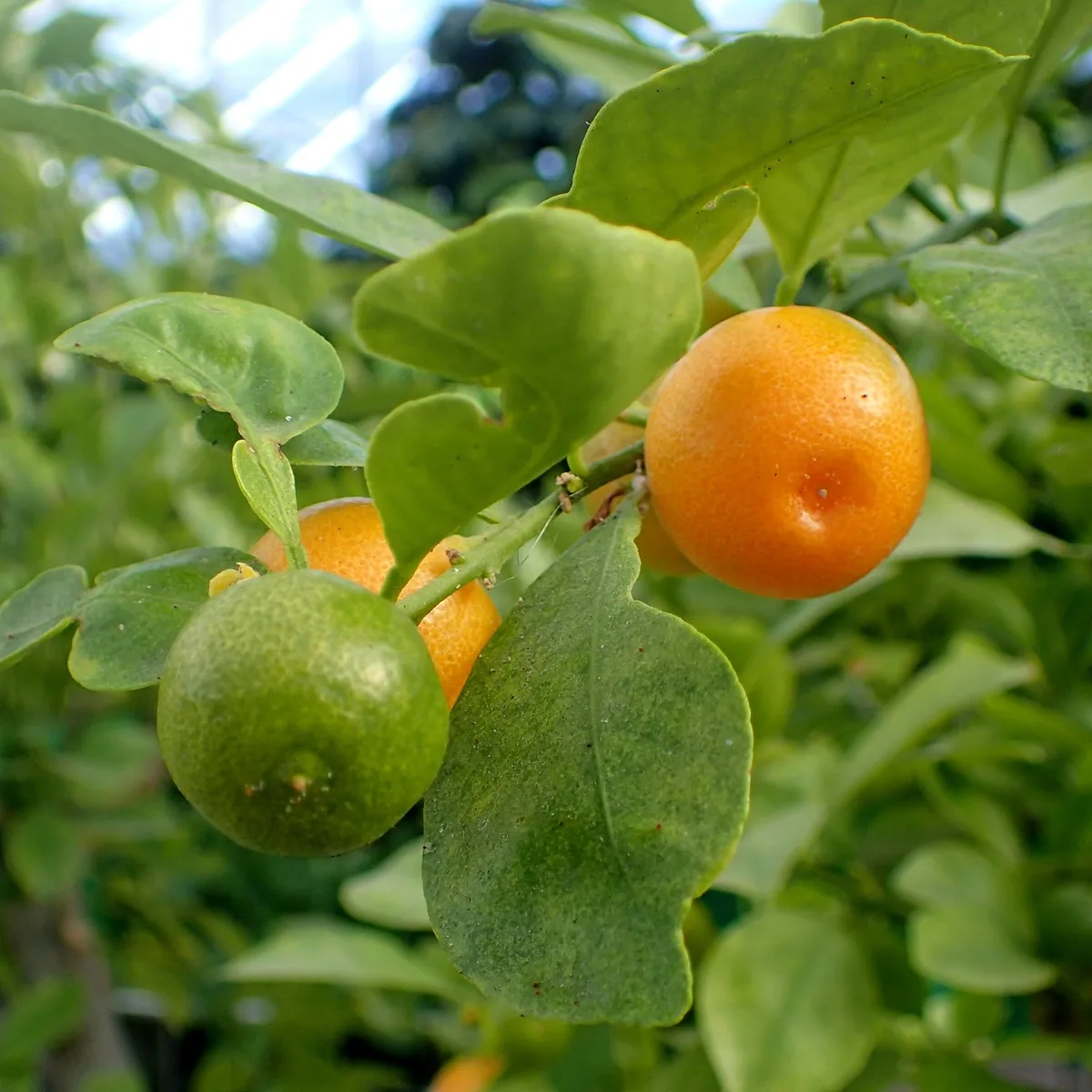
Calamondin Orange is a compact, evergreen shrub or small tree with glossy, dark green, ovate leaves. It produces small, fragrant white flowers followed by round, orange fruits that are sour and edible, often used in marmalades and drinks. The plant has a bushy, upright habit and is highly ornamental, with the fruit lasting on the tree for several months. It is commonly grown as a container plant or indoors.
Scientific classification
- Species
- Calamondin Orange (Citrus microcarpa)
- Genus
- Citrus
- Family
- Rutaceae
- Order
- Sapindales
- Class
- Magnoliopsida
- Phylum
- Tracheophyta
- Non-toxic. The fruit is edible when ripe, though sour.
- Toxicity
- Shrubs · Fruit Edible
- Plant type
- 1.5 - 3 metres
- Height
- 1 - 2 metres
- Spread
- Evergreen
- Foliage
- Upright · Bushy
- Habit
- Spring · Summer · Autumn
- Season of interest
- Full sun · Partial shade
- Sunlight
- 15 – 25 °C
- Ideal temperature









Calamondin Orange pictures
Distribution of Calamondin Orange
Distribution map
Southeast Asia (Philippines, Malaysia, Indonesia)
Toxicity
Non-toxic. The fruit is edible when ripe, though sour.
Calamondin Orange care guide
- Water thoroughly when soil surface feels dry, allow to dry slightly between watering
- Watering
- Full sun · Partial shade
- Sunlight
- 15 – 25 °C
- Ideal temperature

Watering
Water thoroughly when soil surface feels dry, allow to dry slightly between watering
Fertilizing
 Fertilizing
Every 2 weeks with citrus-specific fertilizer during growing season
Pruning
 Pruning
Prune in early spring to maintain shape, remove dead or diseased wood, and thin out crowded branches to improve light penetration and air flow. Lightly trim after fruiting if needed.
Propagation
 Propagation
Propagate by semi-ripe cuttings in early summer. Take 10-15 cm cuttings from healthy shoots, remove lower leaves, dip in rooting hormone, and insert into a moist perlite and peat mix. Keep at 20-25°C with high humidity. Grafting onto suitable rootstocks is also common for stronger growth.
Growing
 Growing
Grow in a well-drained, loamy or sandy soil with an acidic to neutral pH. Water regularly in the growing season, allowing the top 2-3 cm of soil to dry before re-watering, but reduce watering in winter. Apply a balanced citrus fertilizer every 2-3 weeks from spring to autumn. Overwinter indoors or in a frost-free greenhouse, as the plant is not hardy and will suffer damage below -2°C. Ensure good air circulation to prevent fungal diseases.
Common pests and diseases
Diseases
Susceptible to root rot in waterlogged conditions, citrus canker, and greasy spot. Ensure good drainage and avoid overhead watering to minimize risks.
Pests
Common pests include aphids, spider mites, scale insects, and mealybugs. Inspect regularly and treat with insecticidal soap or neem oil if infestation occurs.
Explore the plant health library →




