
Peppermint
Also known as: Peppermint
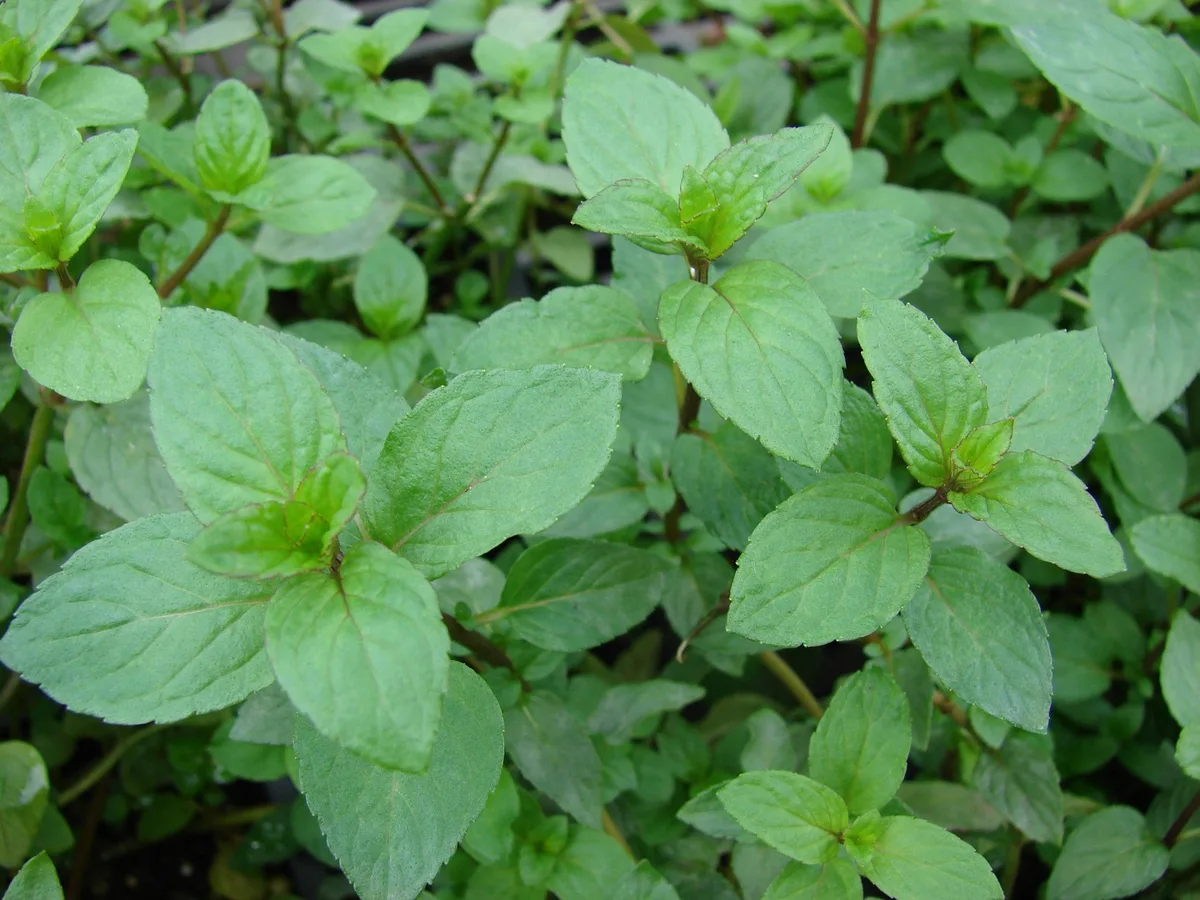
Mentha piperita, commonly known as peppermint, is a vigorous herbaceous perennial with dark green, pointed leaves that are strongly aromatic and have a cooling, peppery taste. In summer it produces slender spikes of small, pale purple or pink flowers that attract bees and butterflies. The plant spreads rapidly via underground runners, forming dense clumps that can become invasive if not controlled. Its ornamental value lies in the lush foliage and the refreshing scent that fills the garden.
Scientific classification
- Species
- Peppermint (Mentha piperita)
- Genus
- Mentha
- Family
- Lamiaceae
- Order
- Lamiales
- Class
- Magnoliopsida
- Phylum
- Tracheophyta
- Non-toxic to humans and pets when used in normal culinary amounts, but excessive consumption of concentrated peppermint oil may cause irritation.
- Toxicity
- Herbaceous Perennial · Herbs - Culinary
- Plant type
- 0.3 - 0.6 metres
- Height
- 0.6 - 1.0 metres
- Spread
- Deciduous
- Foliage
- Upright · Spreading
- Habit
- Summer
- Season of interest
- Full sun · Partial shade
- Sunlight
- 15 – 25 °C
- Ideal temperature









Peppermint pictures
Distribution of Peppermint
Distribution map
Europe (naturalized worldwide)
Toxicity
Non-toxic to humans and pets when used in normal culinary amounts, but excessive consumption of concentrated peppermint oil may cause irritation.
Peppermint care guide
- Keep soil moist
- Watering
- Full sun · Partial shade
- Sunlight
- 15 – 25 °C
- Ideal temperature

Watering
Keep soil moist
Fertilizing
 Fertilizing
Every 4 weeks during growing season
Pruning
 Pruning
Cut back stems to ground level in late autumn after the foliage has died down. Regularly harvest leaves to promote bushy growth and prevent flowering if leaf production is desired.
Propagation
 Propagation
Propagate by division in spring or autumn, separating rooted runners and replanting them. Alternatively, take 10-15 cm stem cuttings in early summer, remove lower leaves, and root in moist compost at 15-18°C. Seeds can be sown in spring but may not come true to type.
Growing
 Growing
Grow Mentha piperita in moist but well-drained soil in full sun or partial shade. It thrives in rich, loamy soils but tolerates a wide range of conditions. Water regularly to keep the soil consistently moist, especially during dry spells. Apply a balanced liquid fertilizer monthly during the growing season to encourage lush foliage. In winter, the stems die back; cut them down to ground level in late autumn. To prevent invasiveness, plant in a bottomless container sunk into the ground or use raised beds. Divide clumps every 3-4 years to maintain vigour.
Common pests and diseases
Diseases
Peppermint is susceptible to rust (Puccinia menthae) which causes orange pustules on leaves, and verticillium wilt in poorly drained soils. Good air circulation and crop rotation help reduce risk.
Pests
Common pests include aphids, spider mites, and mint flea beetles. Regular hosing off with water or using insecticidal soap can control outbreaks.
Explore the plant health library →




