
Thai Constellation Monstera
Also known as: Swiss Cheese Plant, Split-leaf Philodendron, Thai Constellation Monstera
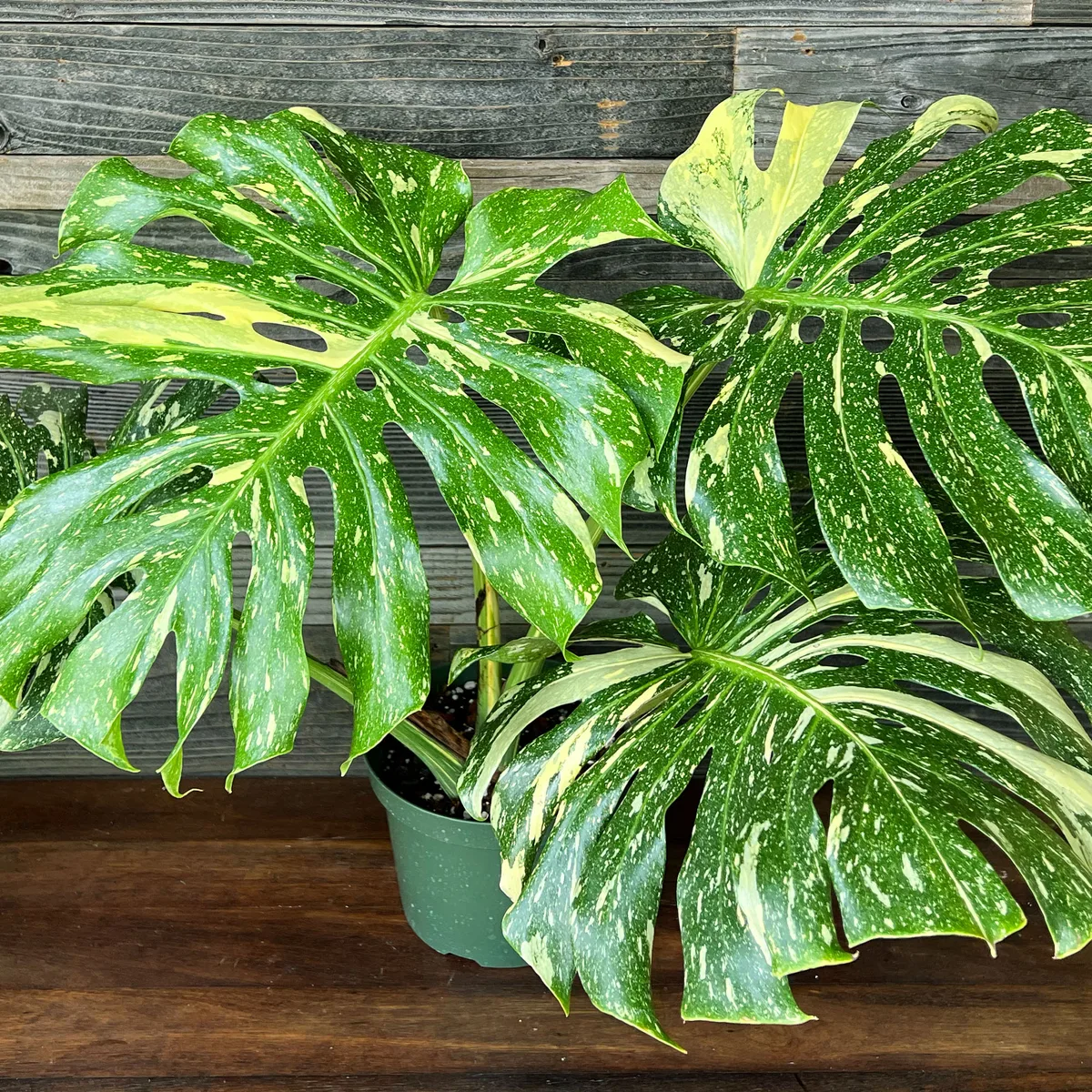
Monstera deliciosa 'Thai Constellation' is a striking variegated cultivar of the Swiss cheese plant, known for its large, deep green leaves adorned with creamy white or pale yellow patches and marbling. The foliage is deeply lobed and develops characteristic fenestrations (holes) as it matures, giving it a unique tropical appearance. This climbing aroid produces aerial roots that help it attach to supports, making it ideal for indoor trellises or moss poles. Its compact growth habit and eye-catching variegation make it a highly sought-after houseplant for adding a touch of exotic elegance to interiors.
Scientific classification
- Species
- Thai Constellation Monstera (Monstera deliciosa 'Thai Constellation')
- Genus
- Monstera
- Family
- Araceae
- Toxic to humans and pets if ingested, causing oral irritation, swelling, and vomiting due to calcium oxalate crystals. Keep out of reach of children and animals.
- Toxicity
- Houseplants · Foliage
- Plant type
- 1 - 2 metres
- Height
- 0.5 - 1 metres
- Spread
- Evergreen
- Foliage
- Upright · Climbing
- Habit
- Spring · Summer
- Season of interest
- Bright indirect light
- Sunlight
- 18 – 27 °C
- Ideal temperature









Thai Constellation Monstera pictures
Distribution of Thai Constellation Monstera
Distribution map
Southern Mexico to Colombia (cultivar bred in cultivation)
Information to be completed
Culture
Information to be completed
Toxicity
Toxic to humans and pets if ingested, causing oral irritation, swelling, and vomiting due to calcium oxalate crystals. Keep out of reach of children and animals.
Quick identification of Thai Constellation Monstera
Information to be completed
Thai Constellation Monstera care guide
- Keep soil moderately moist; allow top 1-2 cm to dry before re-watering, especially in winter.
- Watering
- Bright indirect light
- Sunlight
- 18 – 27 °C
- Ideal temperature

Watering
Keep soil moderately moist; allow top 1-2 cm to dry before re-watering, especially in winter.
Fertilizing
 Fertilizing
Every 2 weeks during growing season (spring to early autumn).
Pruning
 Pruning
Prune in early spring to remove dead or damaged leaves and control size. Cut back long stems to encourage bushier growth; always use clean, sharp tools.
Propagation
 Propagation
Propagate via stem cuttings in spring or early summer. Take a cutting with at least one node and a leaf, place in water or moist potting mix, and keep in a warm, bright location with high humidity. Roots usually appear within 3-4 weeks. Alternatively, air layering can be used for larger plants.
Growing
 Growing
Provide bright, indirect light; direct sun will scorch the variegated leaves. Use a well-draining potting mix rich in organic matter, such as a blend of peat, perlite, and loam. Keep the soil consistently moist during the growing season but reduce watering in winter, allowing the top inch to dry slightly between waterings. Maintain high humidity by misting or using a humidifier, and avoid temperature drops below 10°C. Fertilize every two weeks with a balanced liquid fertilizer diluted to half strength from spring to early autumn.
People also ask
Information to be completed
Common pests and diseases
Diseases
Susceptible to root rot if overwatered or if the soil does not drain well. Leaf spot and bacterial blight may occur in high humidity with poor air circulation. Ensure proper drainage and ventilation.
Pests
Common pests include spider mites, mealybugs, scale insects, and thrips. Check leaves regularly, especially the undersides, and treat with insecticidal soap or neem oil if detected.
Explore the plant health library →




