



Planting and Growing Thai Constellation Monstera

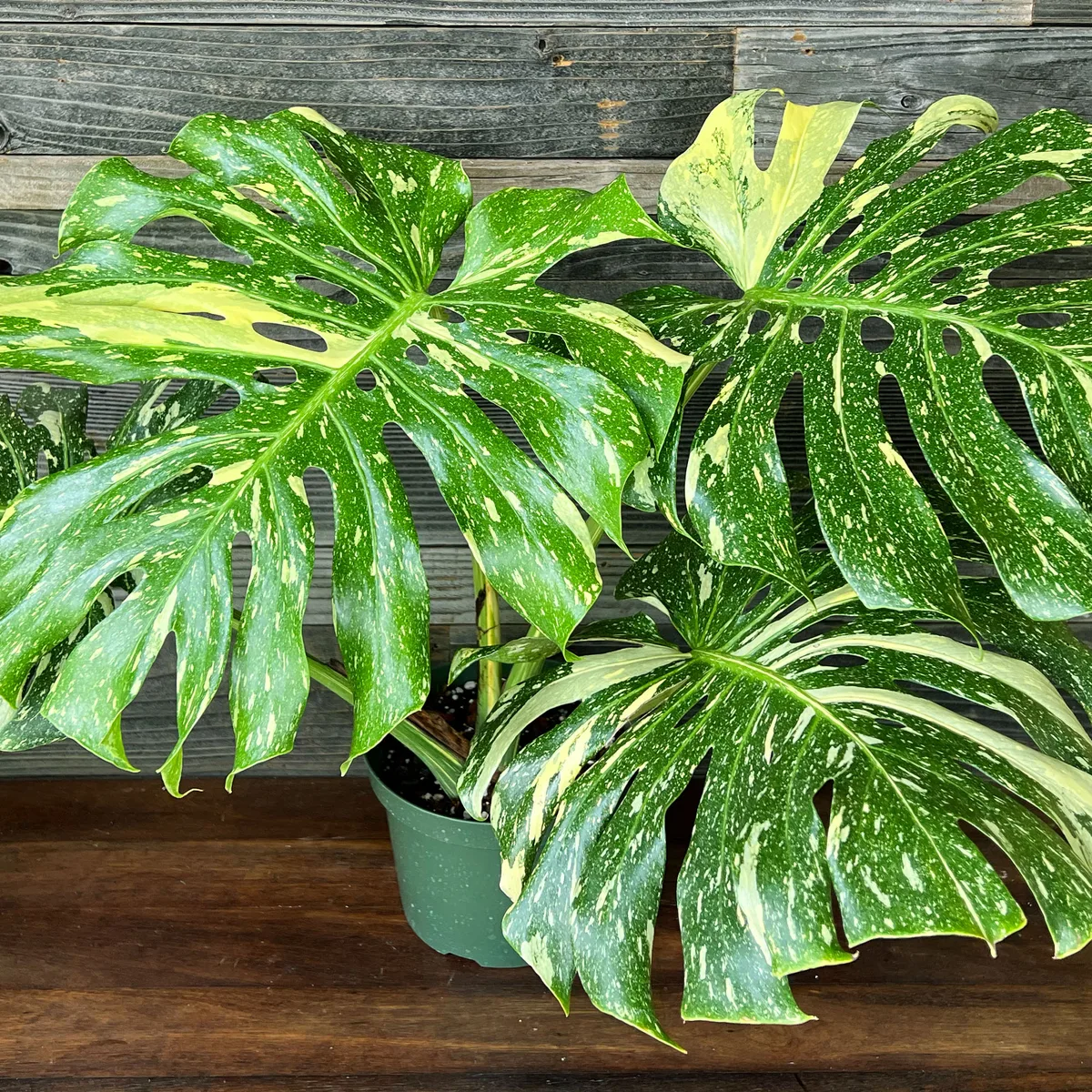
| Care difficulty | 3 / 5 |
|---|---|
| Watering schedule | Keep soil moderately moist; allow top 1-2 cm to dry before re-watering, especially in winter. |
| Sunlight requirements | Bright indirect light |
| Ideal temperature | 18 – 27 °C |
| Soil type | Loam · Peat |
| Soil pH | Acid · Neutral |
| Soil moisture | Moist but well drained |
| Fertilizing | Every 2 weeks during growing season (spring to early autumn). |
| Toxicity | Toxic to humans and pets if ingested, causing oral irritation, swelling, and vomiting due to calcium oxalate crystals. Keep out of reach of children and animals. |
How to Water Thai Constellation Monstera?
Originating from the tropical rainforests, monstera deliciosa 'Thai Constellation' thrives in high humidity and consistently moist soil conditions. It exhibits a preference for evenly balanced moisture levels without being waterlogged. The watering schedule for this species should be maintained at once every week to mimic its natural environment. Monstera deliciosa 'Thai Constellation' is typically grown indoors where it can be shielded from excessive dryness, and as an evergreen plant, it maintains its lush foliage year-round when provided with adequate water and humidity.
Learn more →What Are the Sunlight Requirements for Thai Constellation Monstera?
Monstera deliciosa 'Thai Constellation' loves a sunny spot in your home. It is recommended to place your monstera deliciosa 'Thai Constellation' in a location which receives lots of indirect sunlight with a little bit of partial shade. Monstera deliciosa 'Thai Constellation' has "muscles" so it can adjust its leaves to be closer to the light when it needs it, or further away when it doesn't. A good tip is to gently wipe the leaves every 2 weeks with a damp cloth to help it photosynthesize and rotate the plant every month to make sure all leaves have time in the sun.
Learn more →What Is the Ideal Temperature Range for Thai Constellation Monstera?

Monstera deliciosa 'Thai Constellation' is relatively resilient but has defined thresholds for cold and heat. It tolerates temperatures down to about 5℃ (41℉) and up to 43℃ (109℉). In cooler conditions, monstera deliciosa 'Thai Constellation' may exhibit slower growth, yellowing leaves, or development of brown spots. Hot temperatures can cause leaf burn and dehydration. Protective measures include providing insulation or relocating the plant during cold snaps, and ensuring adequate shade and humidity during hot weather. Regular monitoring and prompt adjustments in care are crucial for maintaining the health of monstera deliciosa 'Thai Constellation'.
Learn more →What Soil Is Best for Thai Constellation Monstera?
The optimum soil for monstera deliciosa 'Thai Constellation' is well-drained soil, which is slightly acidic with a pH value of 6.1-7.5. While monstera deliciosa 'Thai Constellation' can tolerate slightly sandy soil, it prefers moist loamy soil, which is rich in nutrients. If you have standard potting soil, then add in perlite to improve drainage and avoid root rot.
- Soil type
- Loam · Peat
- Soil pH
- Acid · Neutral
What Are the Moisture Requirements for Thai Constellation Monstera?
Moist but well drained
Learn more →How to Fertilize Thai Constellation Monstera?

It is recommended to feed your monstera deliciosa 'Thai Constellation' once a month in summer and spring with a water-soluble fertilizer. In the fall and winter, stop feeding your plant as it will not be in a growing stage. A top tip is to flush the soil after 6 months of feeding to remove any salt build-up, which can affect your plant's health.
Learn more →How to Prune Thai Constellation Monstera?

Monstera deliciosa 'Thai Constellation' is known for its striking variegated leaves. Prune in early to late spring, the ideal time for this plant's growth cycle. Focus on removing yellow, damaged, or dead leaves, and trimming back leggy stems to encourage bushier growth. Be careful not to cut off healthy leaves unnecessarily. Pruning helps manage size, improve air circulation, and maintain an aesthetically pleasing shape. Always use clean, sharp tools to minimize the risk of disease.
Learn more →How to Propagate Thai Constellation Monstera?

Monstera deliciosa 'Thai Constellation' is best propagated by division, a straightforward technique to clone this particular cultivar. Carefully separate the root-bound sections to maintain the marbled variegation unique to monstera deliciosa 'Thai Constellation'. Utilize sterile tools to minimize infection risks and ensure the divisions have at least one stem with a node and aerial roots to promote successful rooting. Prioritize healthy, vigorous sections for division, as this will influence the robustness of new plants.
Learn more →How to Transplant Thai Constellation Monstera?
Monstera deliciosa 'Thai Constellation' thrives when transplanted during the vibrant months of mid to late spring, ensuring optimal growth. Choose a warm, bright location shielded from direct sunlight to provide the perfect environment for its new home.
Learn more →How to Care for Thai Constellation Monstera in Winter?

Information to be completed
Learn more →How to Plant Thai Constellation Monstera?
Plant your monstera deliciosa 'Thai Constellation' in a deep container that is twice the size of the main root ball. The container should have drainage holes to help avoid the monstera deliciosa 'Thai Constellation' developing root rot. Lightly press the soil once planted. It's recommended to repot your monstera deliciosa 'Thai Constellation' every 1-2 years in spring before the growing season, and increase the pot size by around 5 cm across to encourage growth. When Swiss cheese vine (Monstera obliqua) is grown outdoors, it will attach itself to trees to be supported as it grows. When grown as a houseplant, it will need support to assist its growth once it has more than two or three leaves. This support can be through a moss-covered plant pole or bamboo stake.
Learn more →How to Repot Thai Constellation Monstera?
Needs excellent drainage in pots.
Learn more →How to Harvest Thai Constellation Monstera?

While the monstera deliciosa 'Thai Constellation' can bear fruit from the age of six when growing in its natural habitat, it very rare for a houseplant. The fruit that it produces is known for being sweet and tasty when ripe, but if eaten before it is ripe, it can cause throat and skin irritation due to the oxalic acid it contains. Available to harvest in spring, you will know when the fruit is ripe because the outer skin, made up of green hexagonal scales, will start to fall off. It usually takes a full year for the fruit to ripen.
Learn more →Common Pests & Diseases

Diseases
Susceptible to root rot if overwatered or if the soil does not drain well. Leaf spot and bacterial blight may occur in high humidity with poor air circulation. Ensure proper drainage and ventilation.
Pests
Common pests include spider mites, mealybugs, scale insects, and thrips. Check leaves regularly, especially the undersides, and treat with insecticidal soap or neem oil if detected.
Explore the plant health library →The Toxicity of Thai Constellation Monstera
Toxic to humans and pets if ingested, causing oral irritation, swelling, and vomiting due to calcium oxalate crystals. Keep out of reach of children and animals.