
Variegated Alocasia
Also known as: Variegated Alocasia, Variegated Elephant Ear
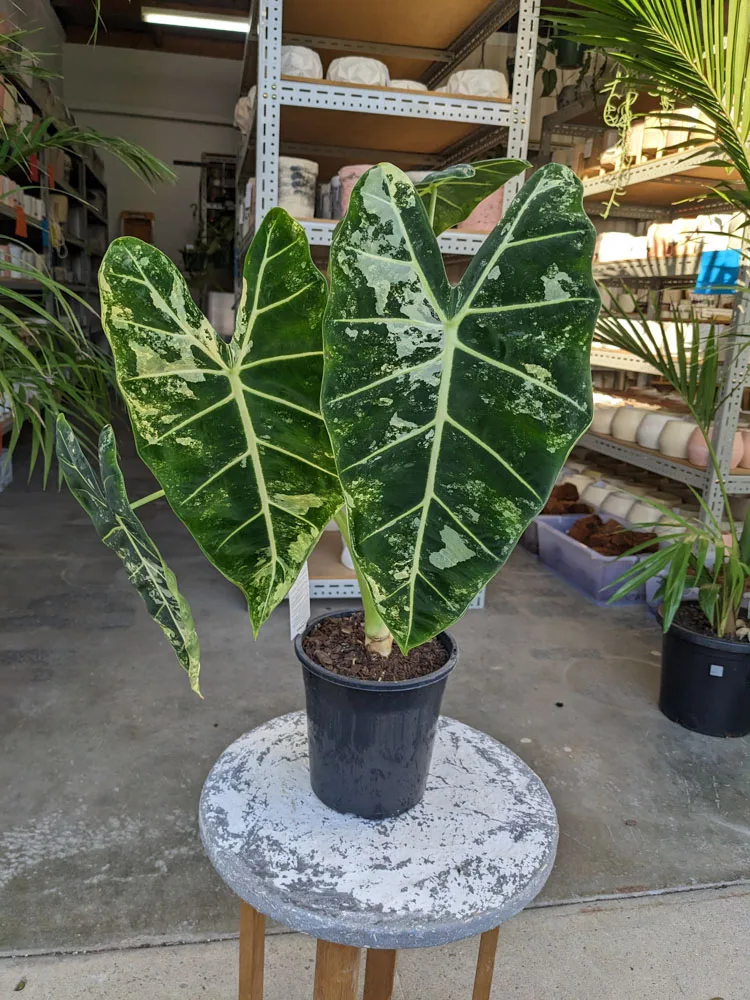
Alocasia micholitziana 'Variegata' is a striking houseplant with large, heart-shaped leaves that display irregular white or creamy variegation against a deep green, velvety background. The prominent white veins and purple-tinged undersides add to its ornamental appeal. This compact Alocasia forms a clump of upright stems and rarely exceeds 1 meter in height, making it ideal for indoor containers. Its unique foliage pattern and texture make it a focal point in any plant collection.
Scientific classification
- Species
- Variegated Alocasia (Alocasia micholitziana 'Variegata')
- Genus
- Alocasia
- Family
- Araceae
- Order
- Alismatales
- Class
- Liliopsida
- Phylum
- Magnoliophyta
- Toxic to humans and pets if ingested due to calcium oxalate crystals, causing oral irritation and digestive discomfort.
- Toxicity
- Houseplants · Foliage · Conservatory Greenhouse
- Plant type
- 0.6 - 1.0 metres
- Height
- 0.3 - 0.6 metres
- Spread
- Evergreen
- Foliage
- Clump forming · Upright
- Habit
- Spring · Summer
- Season of interest
- Bright indirect light
- Sunlight
- 18 – 25 °C
- Ideal temperature









Variegated Alocasia pictures
Distribution of Variegated Alocasia
Distribution map
- Native
- Introduced
- Cultivated
Source:WCVP v16 · Royal Botanic Gardens, Kew · CC BY 3.0 · Boundaries:WGSRPD / TDWG
Toxicity
Toxic to humans and pets if ingested due to calcium oxalate crystals, causing oral irritation and digestive discomfort.
Variegated Alocasia care guide
- Keep soil evenly moist, allow top 1-2 cm to dry slightly between waterings
- Watering
- Bright indirect light
- Sunlight
- 18 – 25 °C
- Ideal temperature

Watering
Keep soil evenly moist, allow top 1-2 cm to dry slightly between waterings
Fertilizing
 Fertilizing
Every 2-4 weeks during active growth (spring to autumn)
Pruning
 Pruning
Remove yellowing or damaged leaves at the base to maintain appearance and encourage new growth. No regular pruning needed.
Propagation
 Propagation
Propagate by division during repotting in spring. Carefully separate offsets (pups) with at least one stem and roots, pot them in fresh moist mix, and keep in warm, humid conditions until established. Alternatively, stem cuttings with a node can be rooted in water or sphagnum moss.
Growing
 Growing
Grow in bright, indirect light; direct sun will scorch the leaves. Use a well-draining, peat-based potting mix and keep the soil consistently moist but never waterlogged. Maintain high humidity (60% or more) by misting or using a pebble tray. Reduce watering and stop fertilizing in winter when growth slows. Ideal temperatures are 18-25°C, never below 15°C.
Common pests and diseases
Diseases
Susceptible to root rot if overwatered or kept in poorly drained soil. Leaf spot and bacterial soft rot may occur under stagnant, humid conditions.
Pests
Common pests include spider mites, mealybugs, and aphids, especially in dry indoor air. Regular inspection and wiping leaves with neem oil can prevent infestations.
Explore the plant health library →




