



Planting and Growing Variegated Alocasia

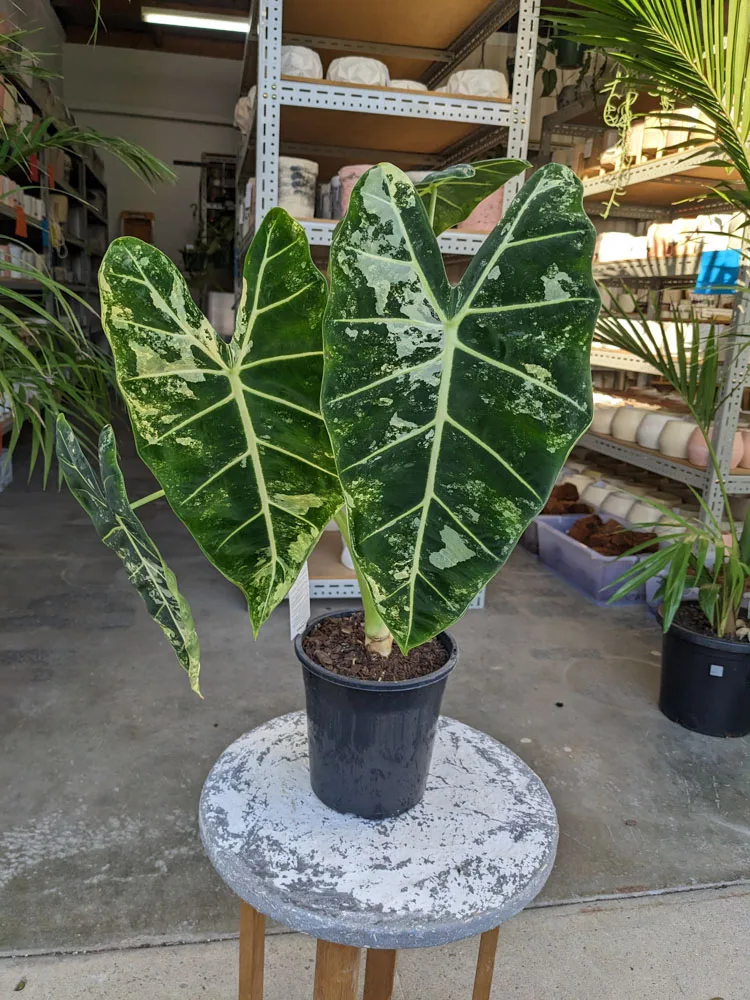
| Care difficulty | 4 / 5 |
|---|---|
| Watering schedule | Keep soil evenly moist, allow top 1-2 cm to dry slightly between waterings |
| Sunlight requirements | Bright indirect light |
| Ideal temperature | 18 – 25 °C |
| Soil type | Loam · Peat |
| Soil pH | Acid · Neutral |
| Soil moisture | Moist but well drained |
| Fertilizing | Every 2-4 weeks during active growth (spring to autumn) |
| Toxicity | Toxic to humans and pets if ingested due to calcium oxalate crystals, causing oral irritation and digestive discomfort. |
How to Water Variegated Alocasia?
Keep soil evenly moist, allow top 1-2 cm to dry slightly between waterings
Learn more →What Are the Sunlight Requirements for Variegated Alocasia?
Bright indirect light
Learn more →What Is the Ideal Temperature Range for Variegated Alocasia?

18 – 25 °C
Learn more →What Soil Is Best for Variegated Alocasia?
- Soil type
- Loam · Peat
- Soil pH
- Acid · Neutral
What Are the Moisture Requirements for Variegated Alocasia?
Moist but well drained
Learn more →How to Fertilize Variegated Alocasia?

Every 2-4 weeks during active growth (spring to autumn)
Learn more →How to Prune Variegated Alocasia?

Remove yellowing or damaged leaves at the base to maintain appearance and encourage new growth. No regular pruning needed.
Learn more →How to Propagate Variegated Alocasia?

Propagate by division during repotting in spring. Carefully separate offsets (pups) with at least one stem and roots, pot them in fresh moist mix, and keep in warm, humid conditions until established. Alternatively, stem cuttings with a node can be rooted in water or sphagnum moss.
Learn more →How to Plant Variegated Alocasia?
Grow in bright, indirect light; direct sun will scorch the leaves. Use a well-draining, peat-based potting mix and keep the soil consistently moist but never waterlogged. Maintain high humidity (60% or more) by misting or using a pebble tray. Reduce watering and stop fertilizing in winter when growth slows. Ideal temperatures are 18-25°C, never below 15°C.
Learn more →Common Pests & Diseases

Diseases
Susceptible to root rot if overwatered or kept in poorly drained soil. Leaf spot and bacterial soft rot may occur under stagnant, humid conditions.
Pests
Common pests include spider mites, mealybugs, and aphids, especially in dry indoor air. Regular inspection and wiping leaves with neem oil can prevent infestations.
Explore the plant health library →Troubleshooting
Yellowing Lower Leaves, Root Rot, or Crispy Brown Edges
Variegated Alocasia (Alocasia micholitziana 'Variegata') thrives in warm, humid conditions with evenly moist but airy soil; prolonged soggy compost suffocates roots, while dry indoor air or direct sun crisps leaf margins.
| What you notice | Possible explanation | What to check next |
|---|---|---|
| Multiple lower or inner leaves turn yellow and limp while potting mix remains heavy and wet | Overwatering, dense poorly drained compost, or cold drafts causing root/rhizome rot | Feel two inches into the potting mix, check drainage holes, and verify room temperature stays above 15°C (59°F) |
| Leaf tips or margins turn brown and dry while center leaves stay green, or bleached patches appear on sunny sides | Low indoor air humidity, mineral/salt buildup, or harsh direct sun scorch | Check proximity to heaters/vents and whether midday direct sun hits the foliage |
| A single oldest outer leaf yellows gradually while sturdy new growth unfurls at the center | Normal age-related leaf turnover | Confirm the potting mix drains well and new leaves look healthy |
- Pot in an airy, humus-rich, well-drained mix (amended with bark, perlite, or coarse grit) in a container with open drainage holes.
- Water properly: Keep soil evenly moist, allow top 1-2 cm to dry slightly between waterings, and reduce watering during cooler winter months without letting the root ball desiccate completely.
- Provide bright indirect light out of scorching midday sun, boost ambient humidity with a pebble tray or humidifier, and keep away from cold drafts.
Stop watering and inspect roots if stems or rhizomes turn mushy at the soil line; trim decayed roots and repot into fresh airy mix.
Fine Webbing, Sticky Residue, or Leaf Spots
Warm, dry indoor air favors spider mites, mealybugs, and scale on Variegated Alocasia (Alocasia micholitziana 'Variegata'), while stagnant wet foliage encourages fungal or bacterial leaf spots.
| What you notice | Possible explanation | What to check next |
|---|---|---|
| Speckled pale stippling with fine webbing under leaves, or white cottony clusters along petioles and veins | Sap-sucking pests (Common pests include spider mites, mealybugs, and aphids, especially in dry indoor air. Regular inspection and wiping leaves with neem oil can prevent infestations.) | Inspect leaf undersides, midribs, and petiole sheaths with a magnifier |
| Dark water-soaked or yellow-haloed spots expanding on leaves in cool, stagnant, humid conditions | Suspected leaf spot or fungal blight (Susceptible to root rot if overwatered or kept in poorly drained soil. Leaf spot and bacterial soft rot may occur under stagnant, humid conditions.) | Check whether water sits on leaves overnight and assess room airflow |
- Isolate affected plants, wipe leaf surfaces and undersides gently with a damp cloth, and apply insecticidal soap or horticultural oil per label directions.
- Remove heavily spotted leaves at the base with sterilized shears, water at the soil surface rather than over the crown, and improve gentle air circulation.
- Keep foliage clean of dust so leaves photosynthesize efficiently.
Avoid spraying foliage in stagnant, cool rooms where leaves cannot dry within a few hours.
The Toxicity of Variegated Alocasia
Toxic to humans and pets if ingested due to calcium oxalate crystals, causing oral irritation and digestive discomfort.