
Pak choi
Also known as: Pak choi, Chinese cabbage, Chinese mustard
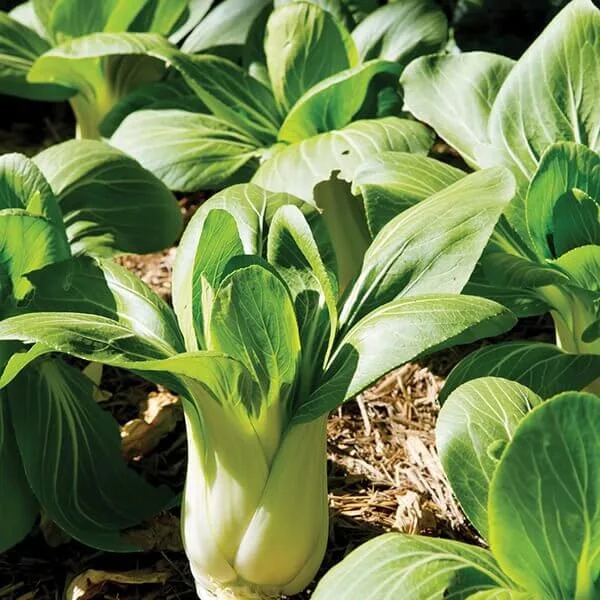
A short-lived herbaceous plant forming a rosette of broad, ovate to oblong leaves with thick, fleshy petioles. Leaf blades are bright green to dark green with prominent veins. Plants typically reach 20-40 cm in height and spread. Grown primarily for its edible leaves and stalks, it grows rapidly and is ideal for home vegetable gardens.
Scientific classification
- Species
- Pak choi (Brassica rapa subsp. chinensis)
- Genus
- Information to be completed
- Family
- Brassicaceae
- Non-toxic to humans and pets.
- Toxicity
- Annual Biennial · Bedding
- Plant type
- 0.2 - 0.4 metres
- Height
- 0.2 - 0.4 metres
- Spread
- Deciduous
- Foliage
- Upright · Clump forming
- Habit
- Spring · Autumn
- Season of interest
- Full sun
- Sunlight
- 15 – 20 °C
- Ideal temperature









Pak choi pictures
Distribution of Pak choi
Distribution map
- Native
- Introduced
- Cultivated
Source:WCVP v16 · Royal Botanic Gardens, Kew · CC BY 3.0 · Boundaries:WGSRPD / TDWG
Toxicity
Non-toxic to humans and pets.
Pak choi care guide
- Keep soil consistently moist
- Watering
- Full sun
- Sunlight
- 15 – 20 °C
- Ideal temperature

Watering
Keep soil consistently moist
Fertilizing
 Fertilizing
Every 2-3 weeks during growing season with a balanced liquid fertilizer
Pruning
 Pruning
Harvest outer leaves as needed; remove flower stalks immediately if they appear to prolong leaf production.
Propagation
 Propagation
Sow seeds directly in prepared soil from early spring to late summer. Thin seedlings to 10-15 cm apart. Keep soil moist until germination, which takes 4-7 days.
Growing
 Growing
Prefers cool weather with optimal growing temperatures of 15-20°C. Sow seeds in well-prepared soil and keep consistently moist. Thin seedlings to 10-15 cm apart for proper air circulation. Apply a balanced liquid fertilizer every 2-3 weeks during the growing season. To prevent bolting caused by high temperatures and long days, harvest promptly or provide light shade. In mild climates, winter protection with cloches is beneficial.
Common pests and diseases
Diseases
Susceptible to clubroot and downy mildew in poorly drained soils. Avoid overwatering and rotate crops.
Pests
Common pests include aphids, flea beetles, and cabbage white caterpillars. Use row covers or insecticidal soap as needed.
Explore the plant health library →




