
Amaryllis
Also known as: Amaryllis, Hippeastrum
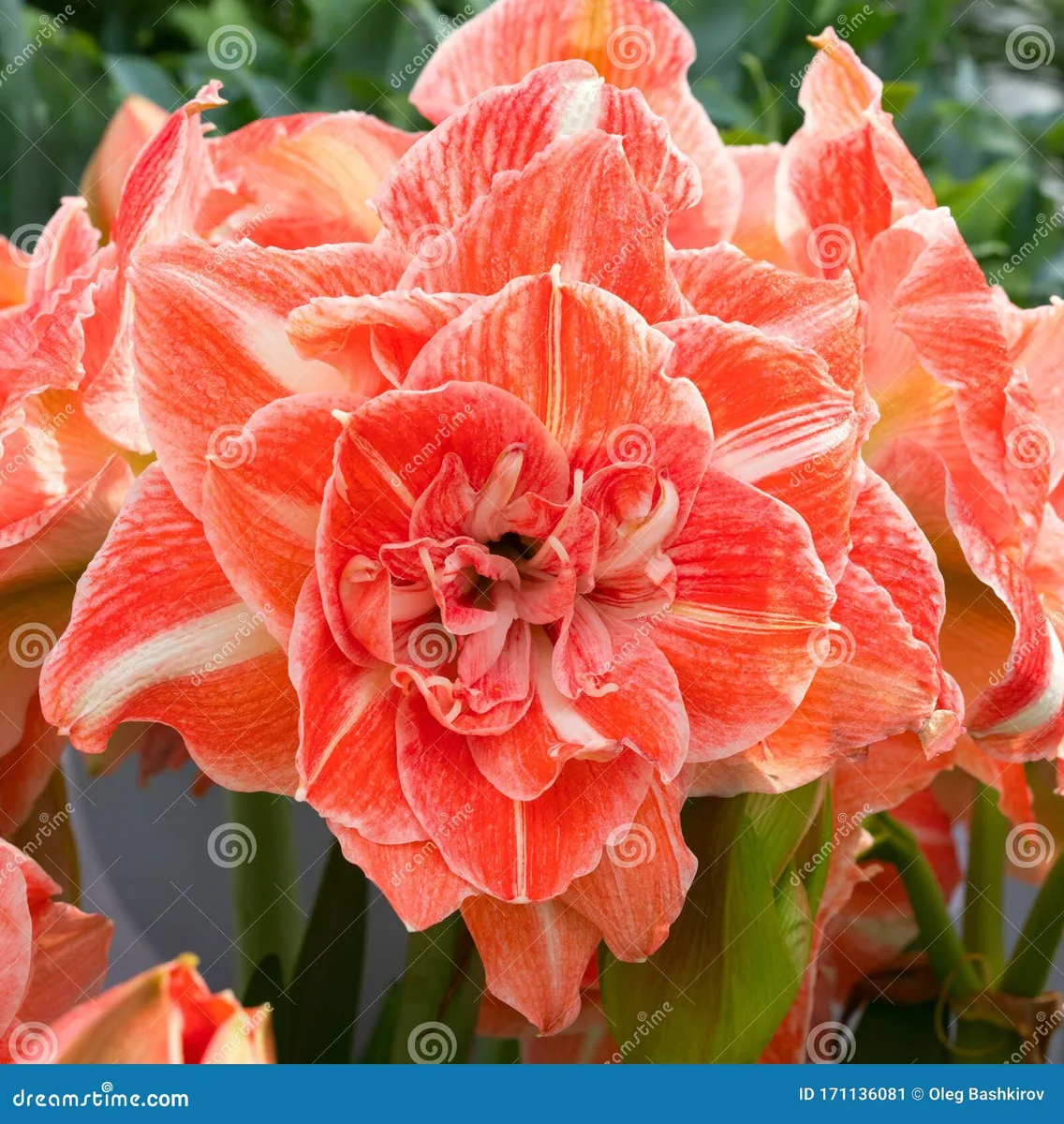
Hippeastrum hybridum, commonly known as amaryllis, is a bulbous perennial producing large, trumpet-shaped flowers in shades of red, pink, white, orange or bi-colors. The leaves are strap-shaped, arising from the bulb after flowering or concurrently, and can reach 30–60 cm in length. Plants typically grow 30–60 cm tall and 15–30 cm wide, with an upright habit. The showy blooms make it a popular indoor plant for winter and spring decoration.
Scientific classification
- Species
- Amaryllis (Hippeastrum hybridum)
- Genus
- Information to be completed
- Family
- Amaryllidaceae
- All parts of the plant are toxic if ingested, containing alkaloids that can cause vomiting, diarrhea, and lethargy in humans and pets.
- Toxicity
- Bulbs · Houseplants · Conservatory Greenhouse
- Plant type
- 0.3 - 0.6 metres
- Height
- 0.15 - 0.3 metres
- Spread
- Deciduous
- Foliage
- Upright
- Habit
- Spring
- Season of interest
- Bright indirect light · Partial shade
- Sunlight
- 15 – 25 °C
- Ideal temperature









Amaryllis pictures
Distribution of Amaryllis
Distribution map
Tropical and subtropical regions of South America (Brazil, Peru, Bolivia, etc.)
Toxicity
All parts of the plant are toxic if ingested, containing alkaloids that can cause vomiting, diarrhea, and lethargy in humans and pets.
Amaryllis care guide
- Keep soil moist during active growth; allow top layer to dry slightly between waterings
- Watering
- Bright indirect light · Partial shade
- Sunlight
- 15 – 25 °C
- Ideal temperature

Watering
Keep soil moist during active growth; allow top layer to dry slightly between waterings
Fertilizing
 Fertilizing
Every 2 weeks during growing season
Pruning
 Pruning
Cut spent flower stems down to the base after blooming. Remove yellowing leaves once they die back naturally.
Propagation
 Propagation
Offsets removed from the mother bulb in autumn and potted individually. Seeds can be sown in spring at 18–21°C, though flowering may take 2–3 years. Twin-scaling is a specialized method for rapid propagation.
Growing
 Growing
Plant bulbs in spring or autumn in well-drained soil with the neck exposed. Water moderately during the growing season, allowing the top layer of soil to dry between waterings. Feed with a balanced liquid fertilizer every two weeks from leaf emergence until flower buds appear. After flowering, continue watering and feeding until leaves yellow, then gradually reduce water to initiate dormancy. Protect from frost; store bulbs dry at 5–10°C during winter dormancy. Repot every 2–3 years after dormancy.
Common pests and diseases
Diseases
Susceptible to bulb rot (Fusarium, Botrytis) in overly wet conditions, and leaf scorch (Stagonospora) in high humidity.
Pests
Common pests include aphids, mealybugs, spider mites, and thrips, particularly when grown indoors.
Explore the plant health library →




