
Red Ivy
Also known as: Red Ivy, Metal Leaf
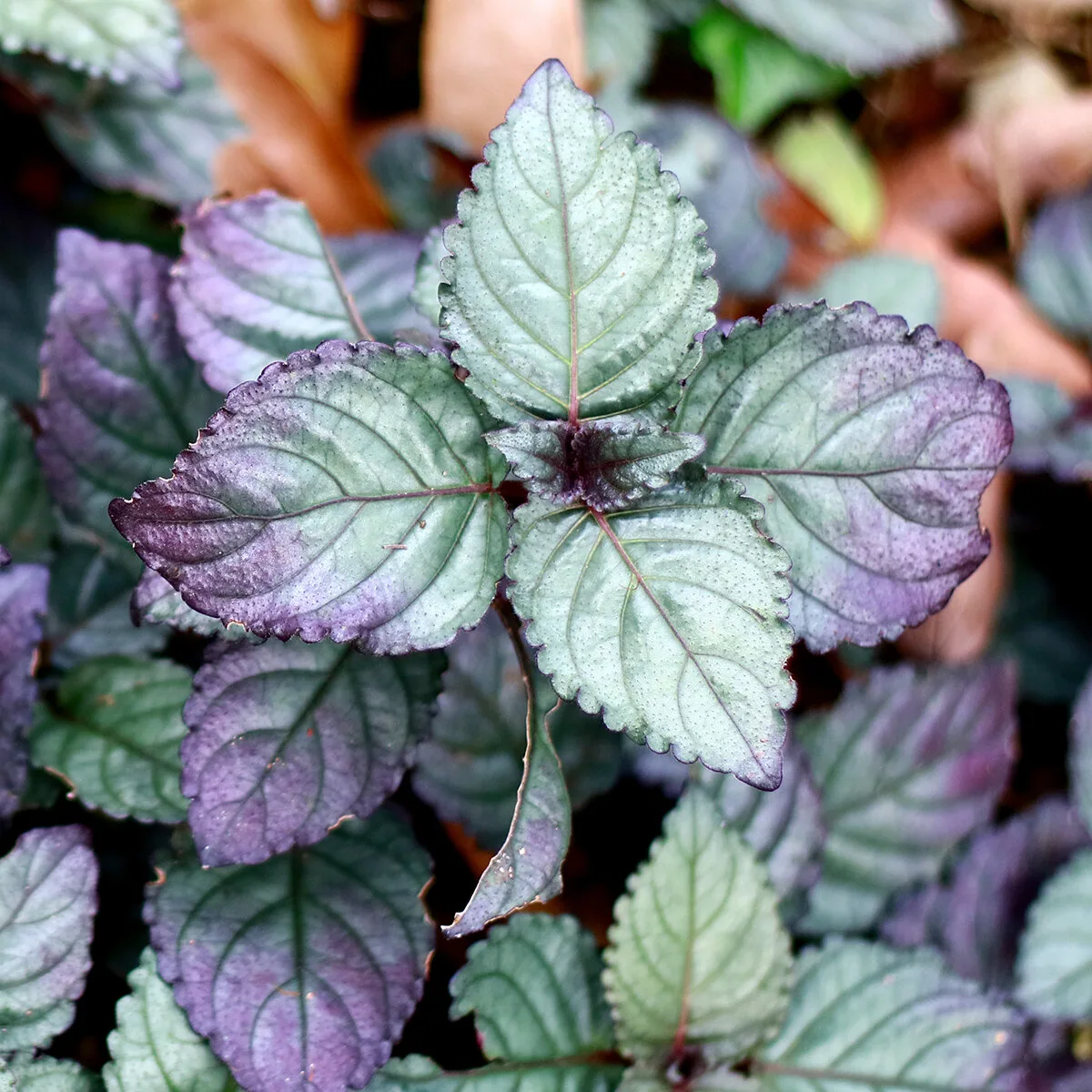
Hemigraphis alternata is a low-growing, trailing perennial with oval, slightly puckered leaves that display a metallic green to purple sheen, often with reddish undersides. The plant forms dense mats and produces small, white tubular flowers in summer, though it is primarily grown for its striking foliage. Its compact, creeping habit makes it ideal for hanging baskets, terrariums, or as ground cover in humid environments.
Scientific classification
- Species
- Red Ivy (Hemigraphis alternata)
- Genus
- Information to be completed
- Family
- Acanthaceae
- Non-toxic to humans and pets.
- Toxicity
- Houseplants · Foliage · Herbaceous Perennial
- Plant type
- 0.1 - 0.3 metres
- Height
- 0.3 - 0.6 metres
- Spread
- Evergreen
- Foliage
- Spreading · Trailing
- Habit
- Summer
- Season of interest
- Bright indirect light
- Sunlight
- 18 – 27 °C
- Ideal temperature









Red Ivy pictures
Distribution of Red Ivy
Distribution map
- Native
- Introduced
- Cultivated
Source:WCVP v16 · Royal Botanic Gardens, Kew · CC BY 3.0 · Boundaries:WGSRPD / TDWG
Toxicity
Non-toxic to humans and pets.
Red Ivy care guide
- Keep soil evenly moist
- Watering
- Bright indirect light
- Sunlight
- 18 – 27 °C
- Ideal temperature

Watering
Keep soil evenly moist
Fertilizing
 Fertilizing
Every 4 weeks during growing season
Pruning
 Pruning
Prune in early spring to shape the plant and remove any leggy or damaged stems. Pinch back growing tips to encourage bushier growth.
Propagation
 Propagation
Propagate from stem cuttings taken in spring or early summer. Cut a 5-8 cm section below a node, remove lower leaves, and insert into moist cutting compost. Cover with a plastic bag or place in a propagator to maintain high humidity. Roots usually form within 2-3 weeks at 20-25°C.
Growing
 Growing
Grow Hemigraphis alternata in bright, indirect light; avoid direct sun which can scorch the leaves. Use a well-draining, peat-based potting mix and keep the soil consistently moist during the growing season, but reduce watering in winter. Feed monthly with a balanced liquid fertilizer from spring to autumn. The plant prefers high humidity, so mist regularly or place on a humidity tray. Maintain minimum winter temperatures above 10°C, as it is not frost-hardy.
Common pests and diseases
Diseases
Susceptible to root rot if overwatered or grown in poorly drained soil. Foliar fungal diseases may occur in overly humid conditions with poor air circulation.
Pests
Aphids and spider mites can occasionally infest the plant, especially in dry indoor air. Regular misting and wiping of leaves help prevent infestations.
Explore the plant health library →




