
Spanish moss
Also known as: black moss; Florida moss; gray moss; hanging moss; long beard; long moss; New Orleans moss; southern moss; tree beard; vegetable hair; old man's beard
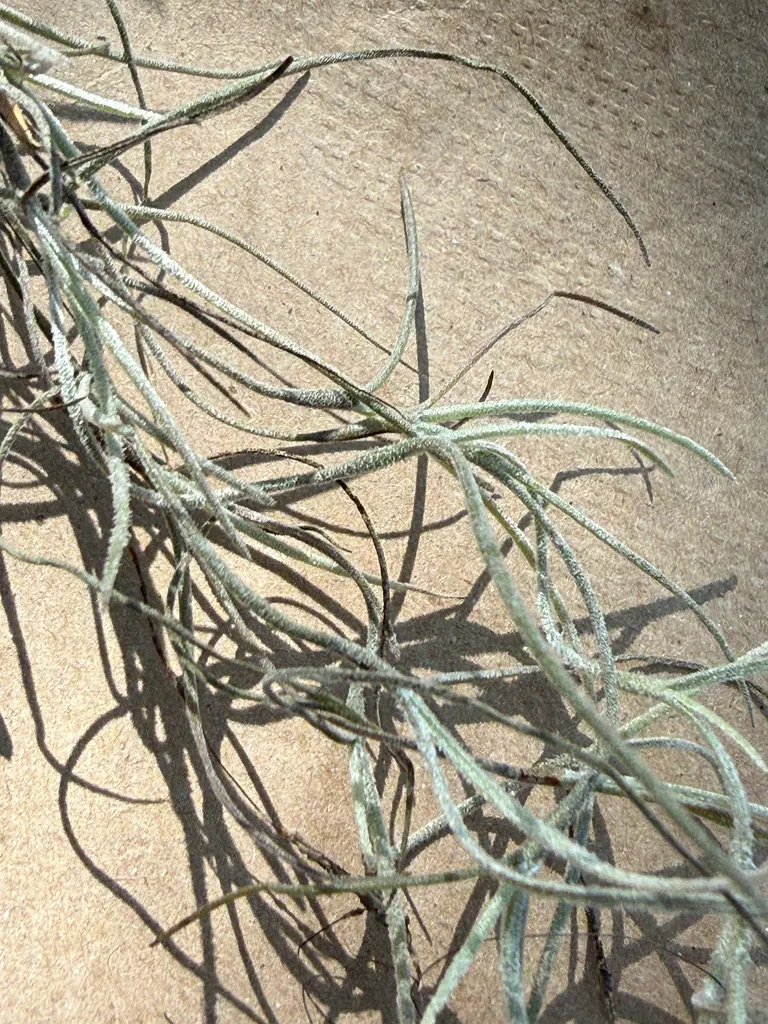
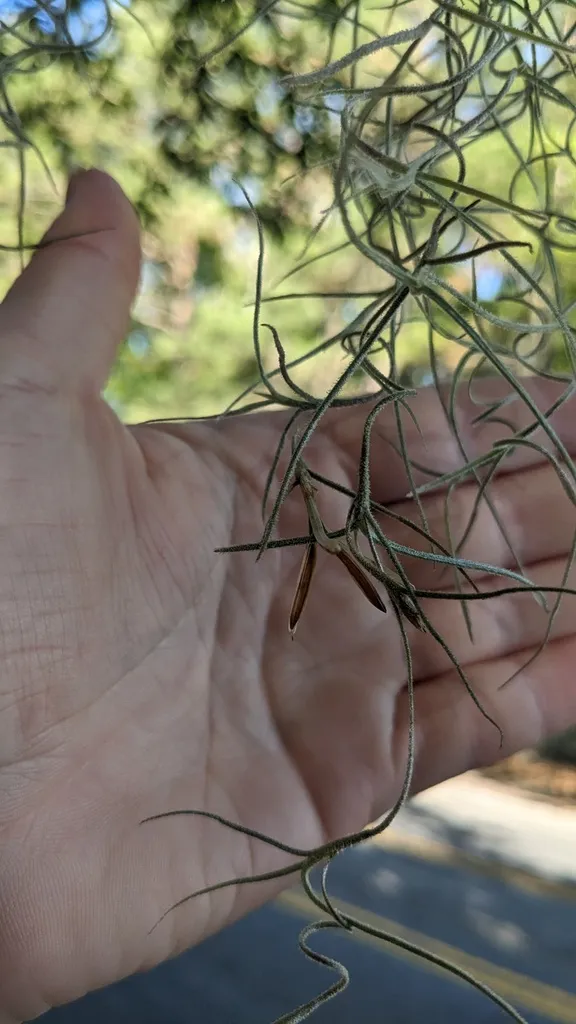
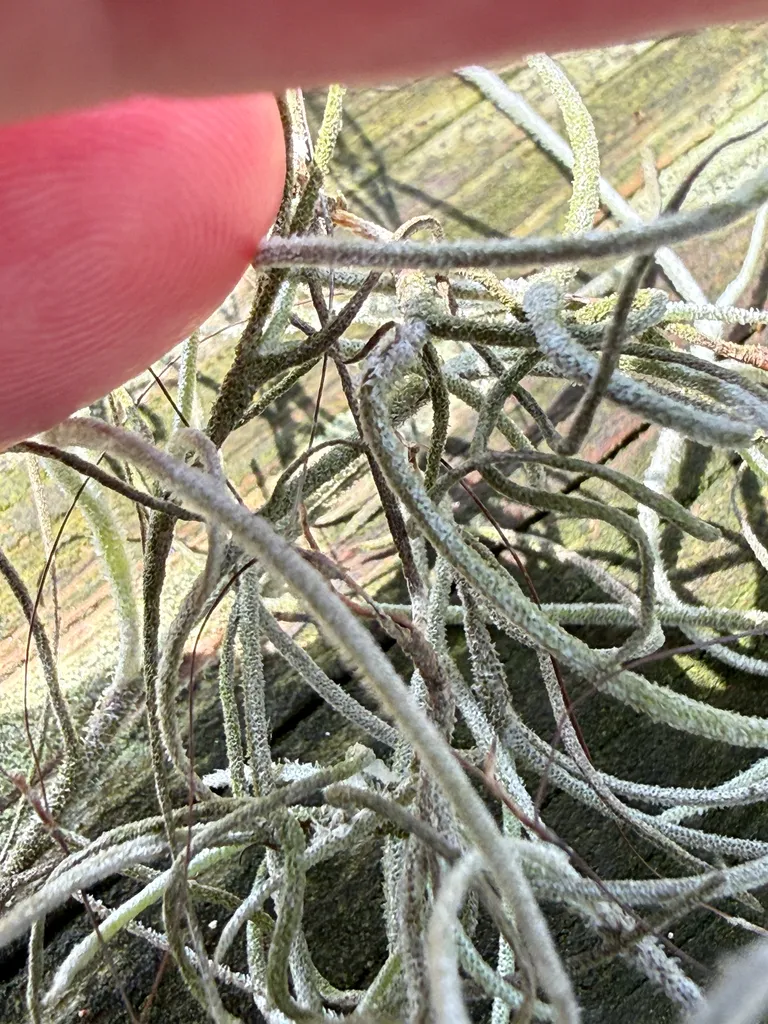
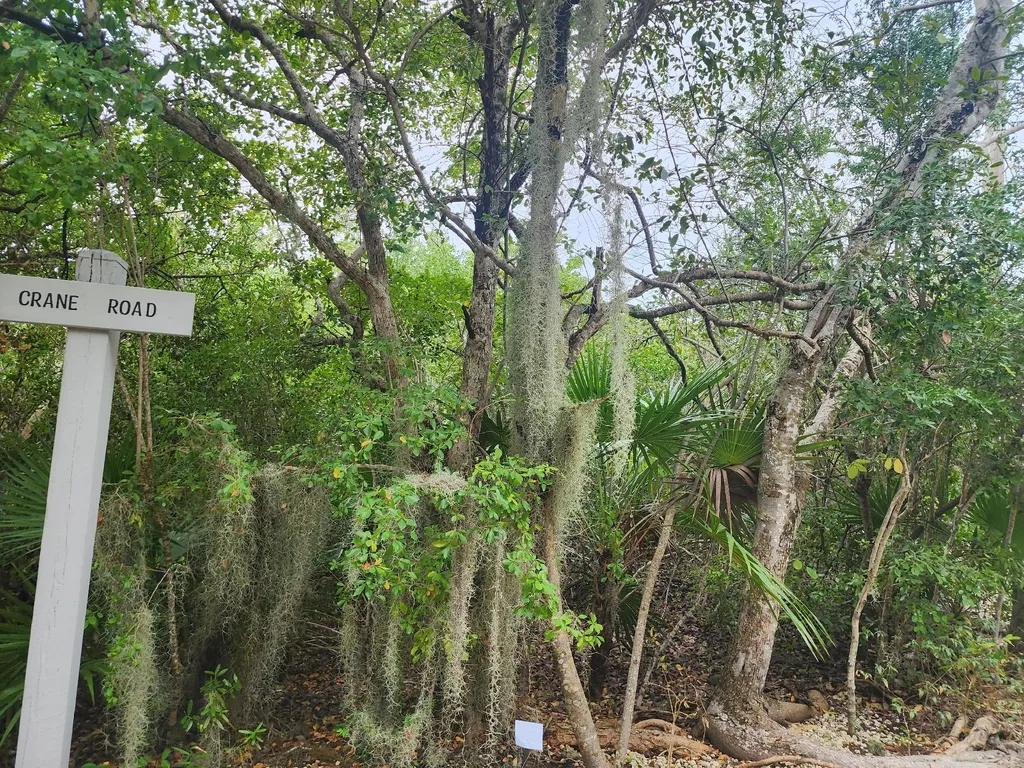
T. usneoides is a hanging, epiphytic perennial, with branching, rootless, wiry stems that can reach several metres long, clothed with cylindrical, silver-grey leaves. Scented, tubular, yellow-green or pale blue flowers are produced in late spring or autumn
Scientific classification
- Species
- Spanish moss (Tillandsia usneoides)
- Genus
- Tillandsia
- Family
- Bromeliaceae
- Order
- Poales
- Class
- Liliopsida
- Phylum
- Magnoliophyta
- Information to be completed
- Toxicity
- Conservatory Greenhouse
- Plant type
- 4-8 metres
- Height
- 4-8 metres
- Spread
- Evergreen
- Foliage
- Pendulous weeping
- Habit
- Spring · Summer · Autumn · Winter
- Season of interest
- Full sun
- Sunlight
- 15 – 25 °C
- Ideal temperature









Spanish moss pictures
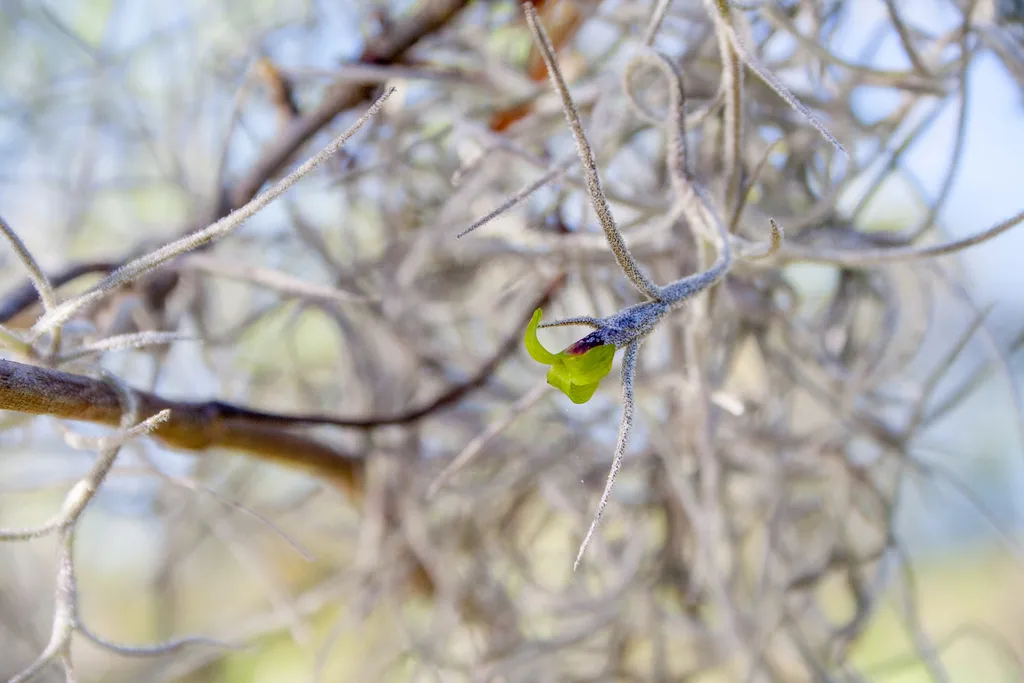
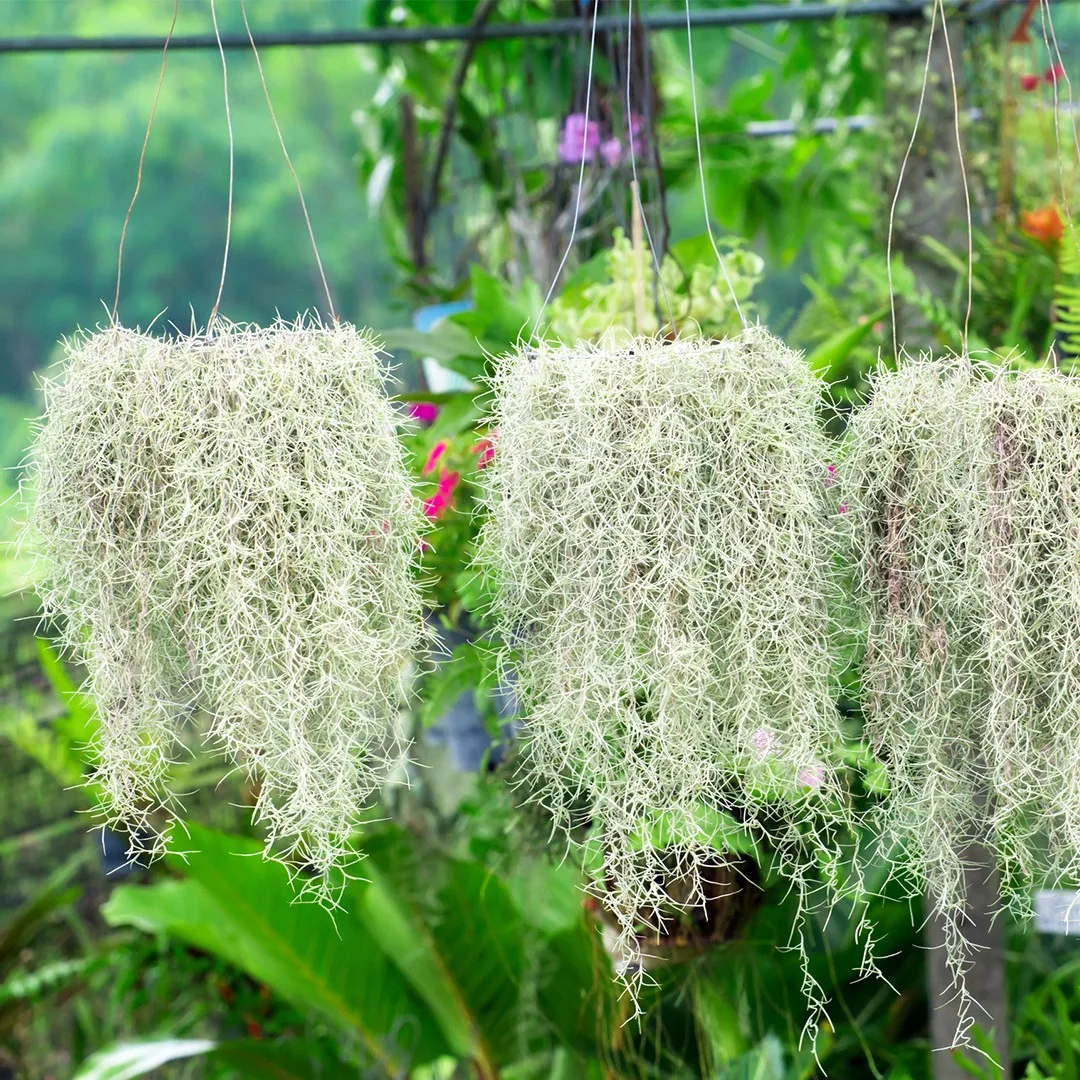
Distribution of Spanish moss
Distribution map
- Native
- Introduced
- Cultivated
Locally extinct or doubtful records are excluded from native and introduced layers.
Source:WCVP v16 · Royal Botanic Gardens, Kew · CC BY 3.0 · Boundaries:WGSRPD / TDWG
Spanish moss care guide
- Moderate regular watering, avoid prolonged drought or waterlogging
- Watering
- Full sun
- Sunlight
- 15 – 25 °C
- Ideal temperature

Watering
Moderate regular watering, avoid prolonged drought or waterlogging
Fertilizing
 Fertilizing
Balanced feed in spring and light repeat in growth season
Pruning
 Pruning
No pruning needed
Propagation
 Propagation
Propagate by detaching a length of stem
Growing
 Growing
Grow epiphytically under glass in bright, indirect light with moderate to high humidity. From late spring to mid-autumn mist daily with rainwater and apply quarter-strength, low-nitrogen, liquid feed monthly. See bromeliad cultivation
Common pests and diseases
Diseases
Usually disease free
Pests
Usually pest-free
Explore the plant health library →




