
St. Peter's palm
Also known as: tree yucca
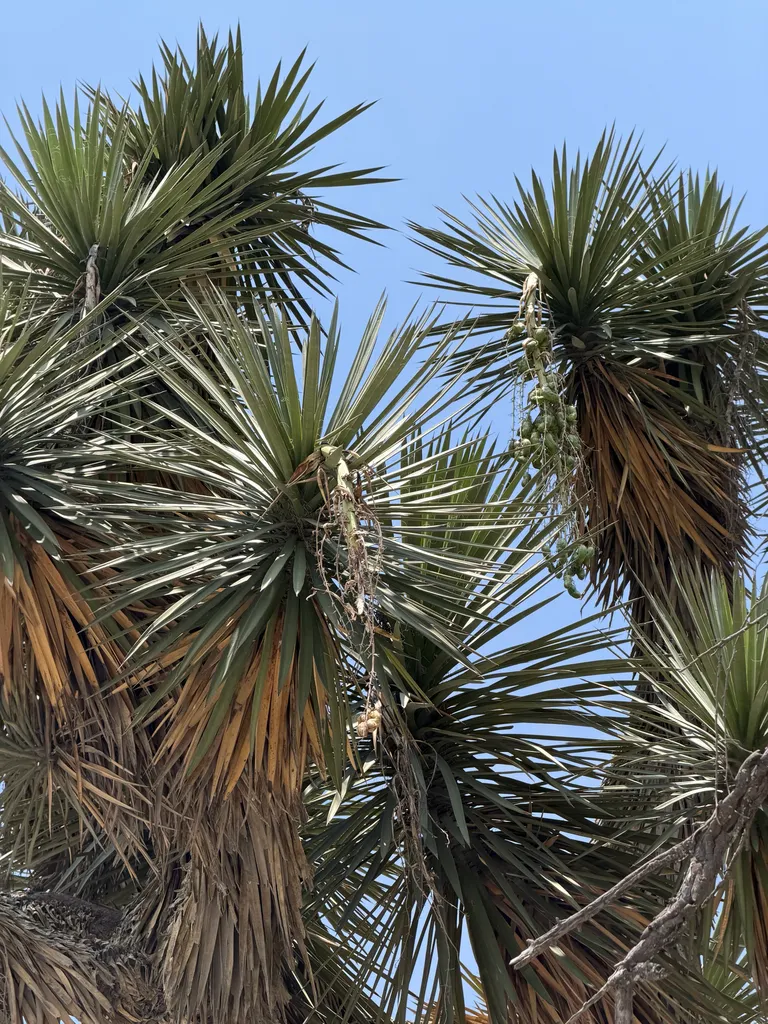
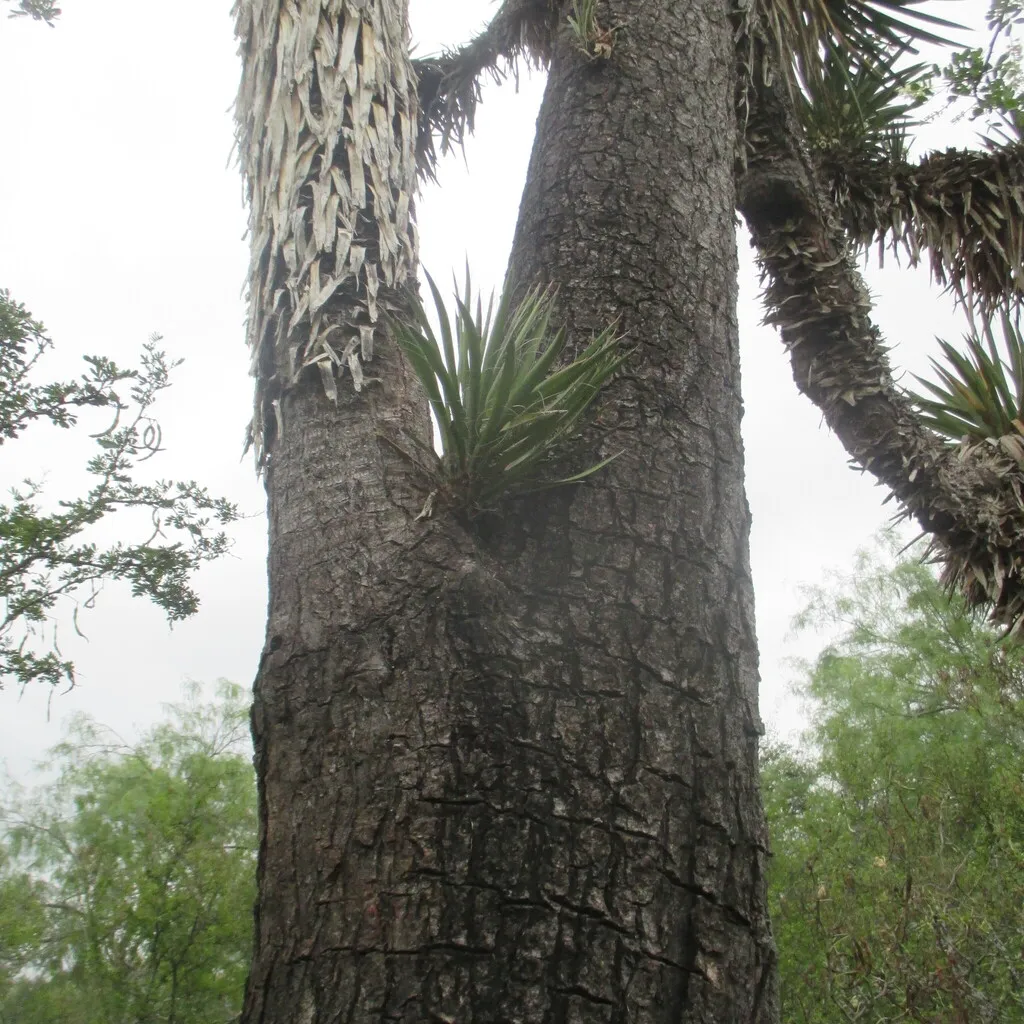
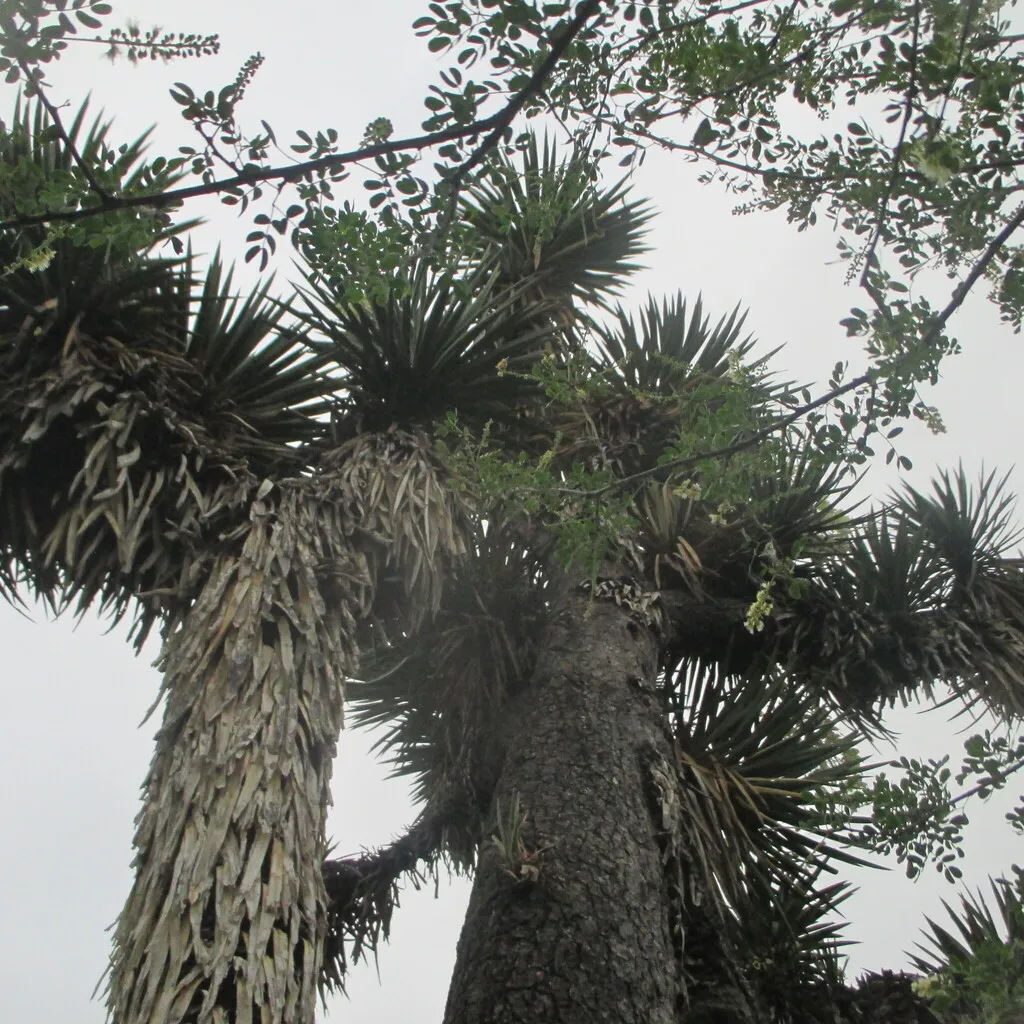
eventually forms a tall, sparsely-branched evergreen tree but is usually seen in cultivation with a single, short trunk. The stiff, spine-tipped leaves, up to 50cm long, have peeling, thread-like edges and are arranged in a dense rosette. Mature plants produce large, hanging clusters of creamy, bell-shaped flowers
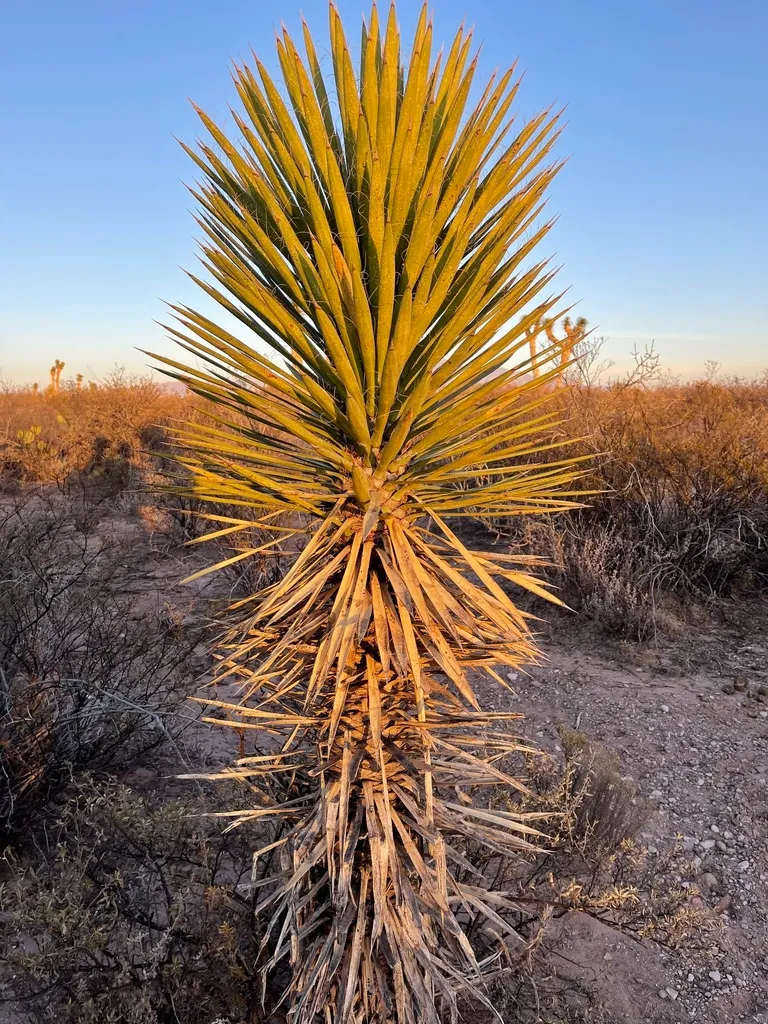
Scientific classification
- Species
- St. Peter's palm (Yucca filifera)
- Genus
- Yucca
- Family
- Asparagaceae
- Order
- Asparagales
- Class
- Magnoliopsida
- Phylum
- Tracheophyta
- Skin allergen. Wear gloves and other protective equipment when handling
- Toxicity
- Conservatory Greenhouse · Trees
- Plant type
- 8-12 metres
- Height
- 2.5-4 metres
- Spread
- Evergreen
- Foliage
- Bushy
- Habit
- Spring · Summer · Autumn · Winter
- Season of interest
- Full sun
- Sunlight
- Information to be completed
- Ideal temperature









St. Peter's palm pictures
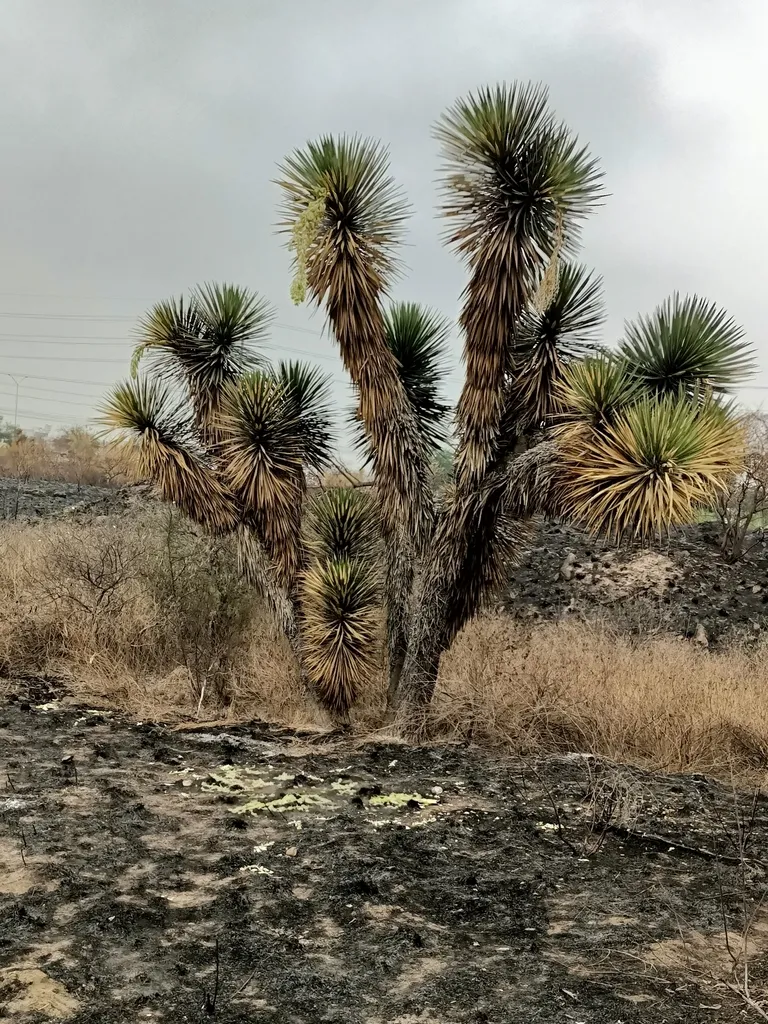
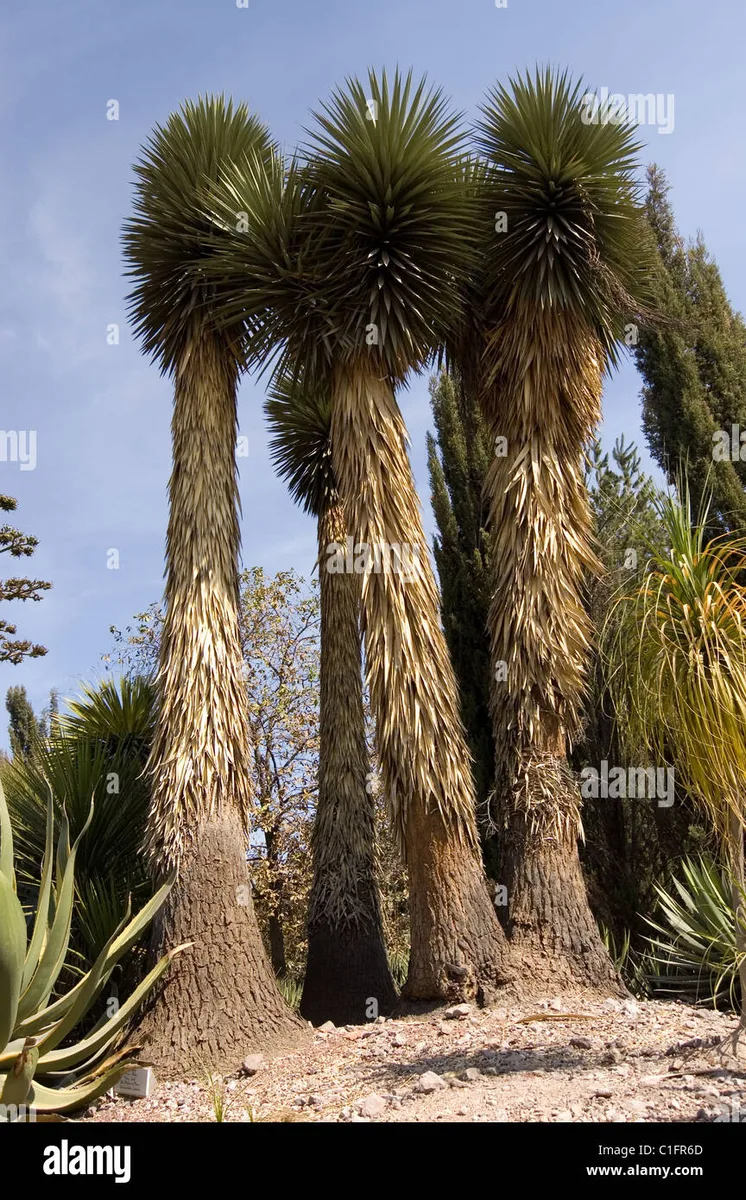
Distribution of St. Peter's palm
Distribution map
Mexico
Toxicity
Skin allergen. Wear gloves and other protective equipment when handling
St. Peter's palm care guide
- Thorough water only after substrate dries entirely, minimal winter moisture
- Watering
- Full sun
- Sunlight

Watering
Thorough water only after substrate dries entirely, minimal winter moisture
Fertilizing
 Fertilizing
Diluted low-nitrogen succulent feed monthly in warm active growth
Pruning
 Pruning
No pruning required, but dead leaves can be removed to improve appearance. Overlarge plants can be cut back in late spring and will reshoot from the trunk
Propagation
 Propagation
Propagate by seed or remove rooted suckers
Growing
 Growing
Grow in very well-drained soil in full sun in a sheltered position, or grow under glass in gritty compost. Needs to be kept almost dry over winter
Common pests and diseases
Diseases
May be susceptible to leaf spot
Pests
May be susceptible to aphids on flower spikes and snails
Explore the plant health library →




