
Cymbidium erythraeum
Also known as: Information to be completed
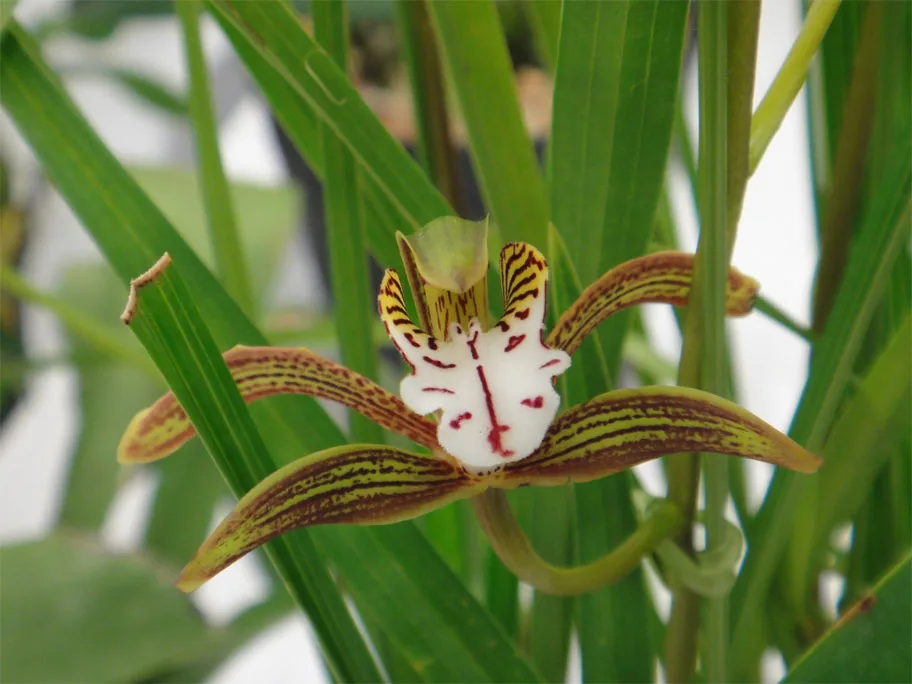
An orchid naturally growing on trees or rocks, with tall, narrow, upright, bright green leaves, occasionally with dark spots. In autumn and winter, long arching stems carry about a dozen scented flowers, 8cm wide, with five narrow outer petals, green with dark red spots, and a tubular green centre with a white lip marked with dark red
Scientific classification
- Species
- Cymbidium erythraeum (Cymbidium erythraeum)
- Genus
- Cymbidium
- Family
- Orchidaceae
- Order
- Asparagales
- Class
- Liliopsida
- Phylum
- Magnoliophyta
- Skin allergen. Wear gloves and other protective equipment when handling
- Toxicity
- Conservatory Greenhouse
- Plant type
- 0.5-1 metres
- Height
- 0.1-0.5 metres
- Spread
- Evergreen
- Foliage
- Clump forming
- Habit
- Spring · Summer · Autumn · Winter
- Season of interest
- Partial shade
- Sunlight
- Information to be completed
- Ideal temperature









Cymbidium erythraeum pictures
Distribution of Cymbidium erythraeum
Distribution map
- Native
- Introduced
- Cultivated
Source:WCVP v16 · Royal Botanic Gardens, Kew · CC BY 3.0 · Boundaries:WGSRPD / TDWG
Toxicity
Skin allergen. Wear gloves and other protective equipment when handling
Cymbidium erythraeum care guide
- High humidity evenly moist mix, avoid cold hard tap water
- Watering
- Partial shade
- Sunlight

Watering
High humidity evenly moist mix, avoid cold hard tap water
Fertilizing
 Fertilizing
Highly diluted orchid feed biweekly warm growing months
Pruning
 Pruning
Cut flowered stems down to base
Propagation
 Propagation
Propagate by division of pseudobulbs
Growing
 Growing
Requires day temperatures around 16°C and 10°C at night. Provide good light levels, but avoid direct sunlight. Pot firmly into epiphytic or terrestrial orchid compost, water thoroughly when compost is almost dry, allow to drain and use orchid fertiliser at every third watering. Water sparingly in winter. Place outside in dappled shade during the summer months to aid flower initiation. See cymbidium cultivation
Common pests and diseases
Diseases
Generally disease-free
Pests
May be susceptible to aphids, glasshouse red spider mite, glasshouse whitefly and mealybugs
Explore the plant health library →




