
Celastrus pyracanthus
Also known as: Information to be completed
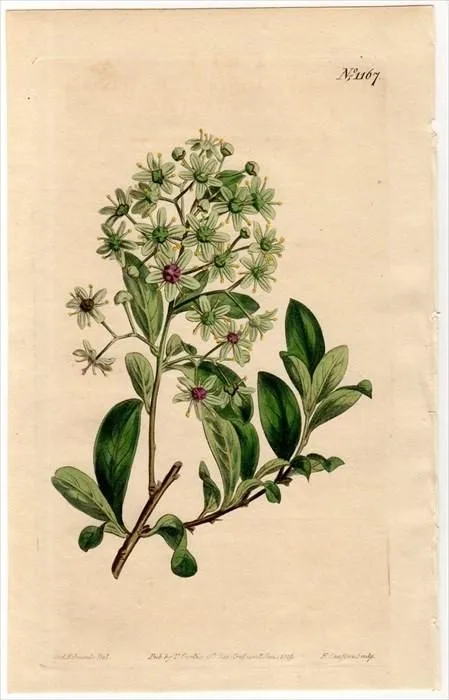
A bushy shrub to around 3m tall with arching, spiny stems clothed in elliptic to oval, dark green, leathery leaves up to 3cm long. Loose heads of small, creamy-white flowers are followed by cream, woody fruits ripening to a pinkish-red colour
Scientific classification
- Species
- Celastrus pyracanthus (Celastrus pyracanthus)
- Genus
- Celastrus
- Family
- Celastraceae
- Order
- Celastrales
- Class
- Magnoliopsida
- Phylum
- Magnoliophyta
- Harmful if eaten. Wear gloves and other protective equipment when handling
- Toxicity
- Shrubs
- Plant type
- 2.5-4 metres
- Height
- 1.5-2.5 metres
- Spread
- Evergreen
- Foliage
- Bushy
- Habit
- Spring · Summer · Autumn · Winter
- Season of interest
- Full sun · Partial shade
- Sunlight
- Information to be completed
- Ideal temperature









Celastrus pyracanthus pictures
Distribution of Celastrus pyracanthus
Distribution map
- Native
- Introduced
- Cultivated
Source:WCVP v16 · Royal Botanic Gardens, Kew · CC BY 3.0 · Boundaries:WGSRPD / TDWG
Toxicity
Harmful if eaten. Wear gloves and other protective equipment when handling
Celastrus pyracanthus care guide
- Water moderately, allow partial soil drying between waterings
- Watering
- Full sun · Partial shade
- Sunlight

Watering
Water moderately, allow partial soil drying between waterings
Fertilizing
 Fertilizing
Annual spring shrub feed with diluted liquid top-up in summer
Pruning
 Pruning
Little pruning is needed. Remove diseased, damaged, crowded or crossing shoots and unwanted growth. Timing depends on the plant: generally late winter or early spring; plants prone to bleeding and deciduous magnolias need different timing, and deciduous azaleas and lilacs are pruned after flowering.
Propagation
 Propagation
Propagate by seed or by semi-hardwood cuttings
Growing
 Growing
Grow in well-drained soil in full sun or partial shade
Common pests and diseases
Diseases
Generally disease-free
Pests
Generally pest-free
Explore the plant health library →




