
Dahlia 'Glorie van Noordwijk'
Also known as: Information to be completed
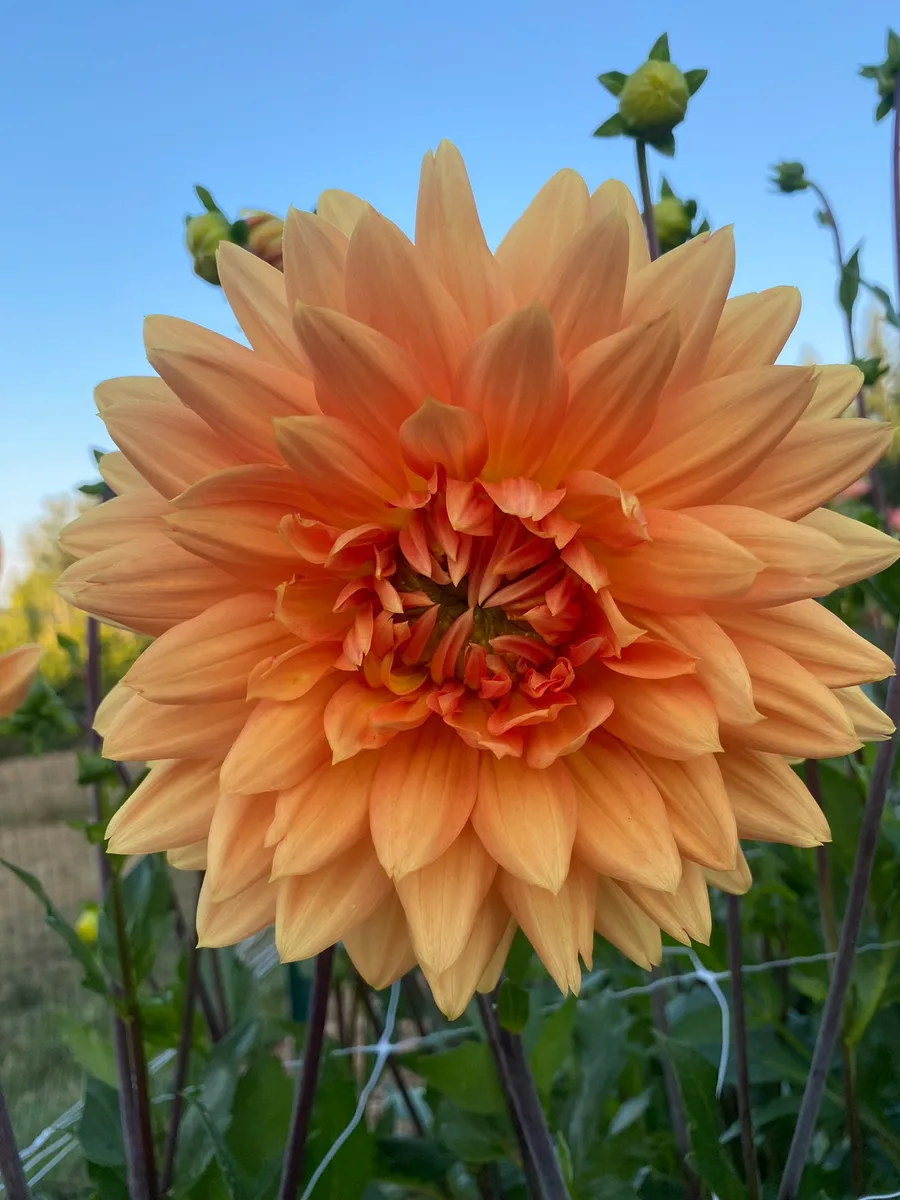
An upright, bushy herbaceous perennial to 1.1m high, with dark green leaves and semi-cactus shaped flowerheads up to 20cm across, with soft peachy-orange florets. Flowers from summer to autumn, until the first frosts.
Scientific classification
- Species
- Dahlia 'Glorie van Noordwijk' (Dahlia 'Glorie van Noordwijk')
- Genus
- Dahlia
- Family
- Asteraceae
- Order
- Asterales
- Class
- Magnoliopsida
- Phylum
- Magnoliophyta
- Information to be completed
- Toxicity
- Herbaceous Perennial
- Plant type
- 1-1.5 metres
- Height
- 0.5-1 metres
- Spread
- Deciduous
- Foliage
- Bushy
- Habit
- Spring · Summer · Autumn
- Season of interest
- Full sun
- Sunlight
- Information to be completed
- Ideal temperature









Dahlia 'Glorie van Noordwijk' pictures
Dahlia 'Glorie van Noordwijk' care guide
- Regular deep watering, keeping soil evenly moist in active summer growth
- Watering
- Full sun
- Sunlight

Watering
Regular deep watering, keeping soil evenly moist in active summer growth
Fertilizing
 Fertilizing
High-potash dahlia feed every two weeks from growth to flowering
Pruning
 Pruning
Deadhead to prolong flowering. Cut back to near ground level in the autumn, before lifting and storing for the winter
Propagation
 Propagation
Propagate by seed sown at 16ºC in spring, harden off and plant out when all danger of frost has passed; or propagate by division, dividing tubers in early spring, ensuring each section has a growing shoot
Growing
 Growing
Grow in fertile, humus-rich, well-drained soil, in full sun; may require support, see staking (perennials). Lift and store tubers in autumn to replant or use as a source of cuttings in spring. For more advice, see dahlia cultivation
Common pests and diseases
Diseases
May be susceptible to powdery mildews and virus diseases; tubers may rot in storage in damp conditions
Pests
May be susceptible to aphids, capsid bugs, glasshouse red spider mite, caterpillars, earwigs and slugs
Explore the plant health library →




