
peacock plant
Also known as: brain plant; cathedral windows
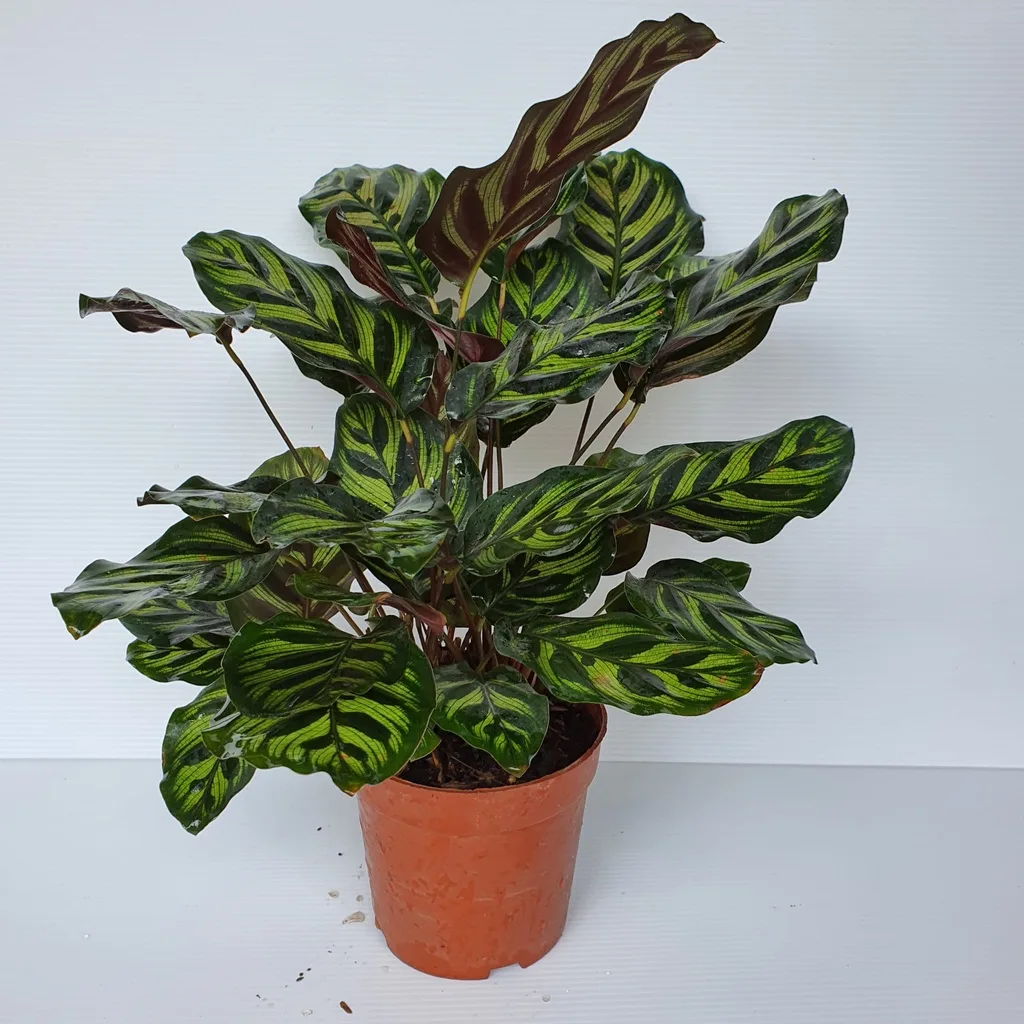
A clump-forming evergreen perennial, with long-stalked ovate silvery-green leaves, with darker veins and regular dark blotches each side of the midrib, and purple beneath; small purple and white flowers in spikes
Scientific classification
- Species
- peacock plant (Goeppertia makoyana)
- Genus
- Goeppertia
- Family
- Marantaceae
- Order
- Zingiberales
- Class
- Liliopsida
- Phylum
- Tracheophyta
- Information to be completed
- Toxicity
- Conservatory Greenhouse · Houseplants
- Plant type
- 0.1-0.5 metres
- Height
- 0.1-0.5 metres
- Spread
- Evergreen
- Foliage
- Bushy
- Habit
- Spring · Summer · Autumn · Winter
- Season of interest
- Partial shade
- Sunlight
- 18 – 27 °C
- Ideal temperature









peacock plant pictures
Distribution of peacock plant
Distribution map
- Native
- Introduced
- Cultivated
Source:WCVP v16 · Royal Botanic Gardens, Kew · CC BY 3.0 · Boundaries:WGSRPD / TDWG
peacock plant care guide
- Keep soil consistently moist, use soft water
- Watering
- Partial shade
- Sunlight
- 18 – 27 °C
- Ideal temperature

Watering
Keep soil consistently moist, use soft water
Fertilizing
 Fertilizing
Every two weeks during growing season with diluted liquid fertilizer
Pruning
 Pruning
No pruning required
Propagation
 Propagation
Propagate by division in late spring
Growing
 Growing
Grow outdoors in a warm sheltered frost-free area in moist but well-drained soil. Grow under glass in loam-less or loam-based compost in indirect or filtered light in draught-free condtions. Will tolerate low light levels. Bright light can cause leaf scorch
Common pests and diseases
Diseases
Generally disease free
Pests
Can get aphids and glasshouse red spider mite
Explore the plant health library →




