



Planting and Growing peacock plant

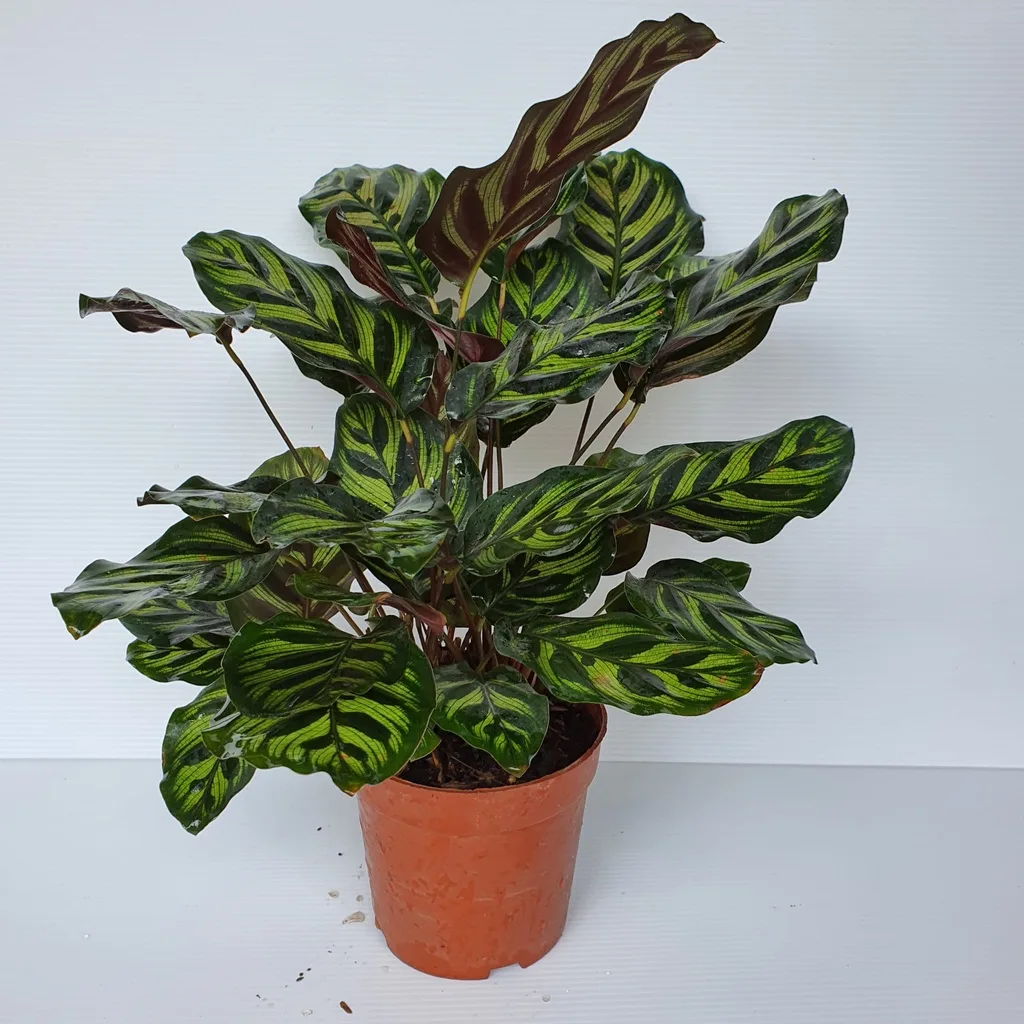
| Care difficulty | 4 / 5 |
|---|---|
| Watering schedule | Keep soil consistently moist, use soft water |
| Sunlight requirements | Partial shade |
| Ideal temperature | 18 – 27 °C |
| Soil type | Chalk · Clay · Loam · Sand |
| Soil pH | Acid · Alkaline · Neutral |
| Soil moisture | Moist but well drained |
| Fertilizing | Every two weeks during growing season with diluted liquid fertilizer |
| Toxicity | Information to be completed |
How to Water peacock plant?
Originating from the understory of tropical rainforests, peacock plant thrives in high humidity and consistent moisture. This species is adapted to environments where water is readily available but well-drained, avoiding waterlogged conditions. Watering should be done once every week to mimic its natural habitat's hydration cycle. Peacock plant prefers indirect light and consistently moist soil, making it more commonly grown indoors where such conditions can be controlled. In indoor settings, ensuring adequate humidity is key for peacock plant's foliage to maintain its vibrant patterns.
Learn more →What Are the Sunlight Requirements for peacock plant?
Peacock plant thrives in full shade, where the intensity of light is diffused, safeguarding its delicate leaves from direct sunlight. Consistent exposure to indirect light bolsters its growth and maintains vibrant foliage. Although peacock plant can endure partial sun, too much direct light can lead to faded leaves and stunted growth. To adapt, peacock plant's leaves may curl or change color to minimize damage. Within an indoor setting, a north-facing window or a spot with filtered light is ideal. Outdoors, peacock plant should be nestled in a shaded area, potentially under a canopy that mimics its natural, understorey habitat.
Learn more →What Is the Ideal Temperature Range for peacock plant?

Peacock plant shows moderate sensitivity to temperature fluctuations. It can endure temperatures from 5℃ (41℉) to 43℃ (109℉). In cooler conditions, under 5℃, peacock plant may exhibit leaf curling or browning, while temperatures above 43℃ could lead to leaf scorching and wilting. Care involves maintaining stable indoor temperatures, especially during extreme weather. For cold protection, shelter the plant from drafts and use insulating materials. During excessively hot periods, ensure sufficient humidity and indirect light to prevent overheating. Adapting care practices to these temperature tolerances helps maintain peacock plant's vibrant foliage and overall health.
Learn more →What Soil Is Best for peacock plant?
Peacock plant thrives with well-aerated, well-draining soil. A suitable soil mix includes equal parts of potting mix, peat, and perlite or coarse sand. The peat maintains slight acidity and moisture, while perlite/sand ensures good drainage, critical to prevent water-logging. If peat is unavailable, coco coir is a viable alternative. Regularly mix in a balanced, slow-release fertilizer per the product's instructions to support growth. Maintain drainage with loose soil structure and by using pots with drainage holes.
- Soil type
- Chalk · Clay · Loam · Sand
- Soil pH
- Acid · Alkaline · Neutral
What Are the Moisture Requirements for peacock plant?
Moist but well drained
Learn more →How to Fertilize peacock plant?

Nourish peacock plant every 4 weeks with a balanced, water-soluble, high-nitrogen fertilizer during its active growing season (spring and summer). No more than a 1/4 recommended strength to avoid fertilizer burn and buildup. In fall and winter, reduce to every 6-8 weeks to match peacock plant's slower growth. Fertilization boosts peacock plant's vibrant foliage, promoting lush, healthy growth. Always water peacock plant before feeding to protect roots. Periodic flushing of soil will prevent salt accumulation from fertilizers.
Learn more →How to Prune peacock plant?

Peacock plant, known for its striking foliage, thrives best when pruned in early spring. During this time, remove any dead or damaged leaves to encourage healthier growth. Cutting back leggy stems improves shape and density. Utilize clean, sharp tools to avoid infections. Regular pruning not only maintains aesthetics but also promotes robust, vibrant foliage. This approach ensures that peacock plant remains a stunning addition to any indoor garden.
Learn more →How to Propagate peacock plant?

For propagating peacock plant, it's best to use division during Spring or Autumn. This method is relatively easy, with successful signs including new leaf growth. Carefully separate root clumps to ensure a healthy propagation.
Learn more →How to Transplant peacock plant?
The best time to transplant peacock plant is between late spring and late summer when it enjoys ample warmth and sunlight. Choose a location with bright, indirect light and well-draining soil. Take special care not to damage the roots during transplanting for a thriving peacock plant.
Learn more →How to Care for peacock plant in Winter?

Peacock plant is indigenous to the warm, tropical regions of Brazil, where winters are mild. Naturally, peacock plant enters a dormant stage during winter, needing minimal water but plenty of humidity. For plant enthusiasts, it's crucial to mimic these conditions indoors. Reduce watering, avoid temperature drops, and maintain humidity levels. Since peacock plant detests the cold, positioning it away from chilly windows is vital.
Learn more →How to Plant peacock plant?
Indoors-potted: Thriving indoors, peacock plant enjoys consistent warmth away from cold drafts, making it an eye-catching addition to your home oasis. Outdoors-potted: When potted outside, shelter peacock plant from harsh elements; a patio with cover provides a splendid habitat for its lush foliage. Outdoors-in the ground: Peacock plant may struggle outdoors in direct exposure; optimal growth occurs when nestled under larger plants that offer protection.
Learn more →How to Repot peacock plant?
Repot the peacock plant – a compact, non-climbing foliage plant – every 3-4 years, preferably during spring to coincide with its growth cycle. Choose a container one size larger to accommodate growth. Post-repotting, maintain high humidity and avoid direct sun to prevent leaf stress. Using a well-draining pot ensures peacock plant's health, reflecting its intricate leaf patterns reminiscent of peacock feathers. Consistent care will help peacock plant thrive in its new home.
Learn more →Common Pests & Diseases

Diseases
Generally disease free
Pests
Can get aphids and glasshouse red spider mite
Explore the plant health library →Troubleshooting
Brown, Crispy Leaf Edges or Curling Foliage
peacock plant (Goeppertia makoyana) is a humid tropical understory plant whose patterned leaves curl or develop brown margins when moisture, air humidity, or water minerals are out of balance.
| What you notice | Possible explanation | What to check next |
|---|---|---|
| Leaves roll inward like tubes during the day while the potting mix is dry | Acute underwatering or low ambient humidity causing the plant to conserve moisture | Check soil moisture two inches down and observe whether leaves uncurl after watering |
| Leaf tips and margins turn dry and brown even when soil is kept moist | Low indoor humidity, hot heating/AC drafts, or dissolved salts and fluoride in hard tap water | Check proximity to vents/radiators and evaluate water mineral hardness |
| Leaves curl and turn yellow-brown while the potting mix stays soggy | Overwatering and poor root aeration leading to root stress | Inspect drainage holes and feel whether the lower mix is waterlogged |
- Water with rainwater, distilled water, or filtered water when the top inch of potting mix feels barely dry, keeping the root zone evenly moist but never waterlogged.
- Increase local humidity using a pebble tray, plant grouping, or room humidifier, and move the pot away from dry heating vents or cold drafts.
- Flush the potting mix periodically with soft water to prevent soluble mineral salt buildup.
- Trim brown leaf margins neatly with clean scissors following the natural leaf shape without cutting into healthy green tissue.
Stop watering if the crown or rhizomes feel soft and mushy, and inspect roots for decay.
Remember that upward leaf folding at night is normal nyctinastic movement, not distress.
Faded Leaf Patterns, Scorched Patches, or Fine Webbing
Loss of vibrant markings or stippled yellowing usually points to excessive direct light or spider mites in dry indoor air.
| What you notice | Possible explanation | What to check next |
|---|---|---|
| Dark green and silvery or purple leaf markings look washed out or bleached | Too much direct sunlight degrading leaf pigments | Check if direct sunbeams hit the foliage during midday or afternoon |
| Fine webbing and tiny yellow-white stippling on leaf undersides | Spider mites thriving in warm, dry indoor air | Inspect leaf undersides closely and wipe with a damp white cloth to check for specks |
| A few oldest outer leaves turn yellow near the base while new rolled spears emerge | Normal lower leaf turnover as the clump matures | Confirm new shoots are healthy and pest-free |
- Move the plant to bright, filtered or medium indirect light, such as a north window or set back from an east/west window.
- Isolate immediately if spider mites are detected, rinse both leaf surfaces gently with lukewarm water, and wipe leaves clean.
- Use insecticidal soap or horticultural oil strictly according to label directions if mites persist, ensuring good air movement.
- Prune off fully yellowed base leaves with sterilized snips to keep the crown tidy.
Avoid misting leaves heavily in cool, stagnant rooms where wet foliage can encourage fungal leaf spots.