
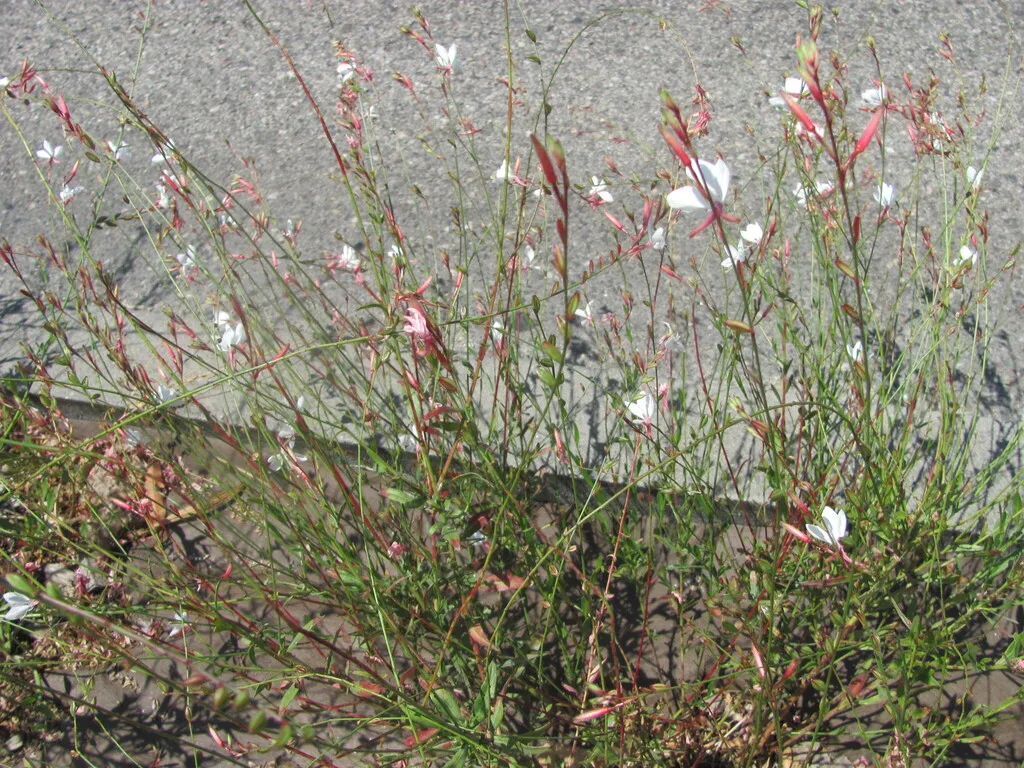
white gaura
Also known as: Lindheimer's beeblossom
A bushy perennial with slender erect stems bearing small lance-shaped leaves and starry white or pink-tinged flowers in loose racemes in summer and autumn
Scientific classification
- Species
- white gaura (Oenothera lindheimeri)
- Genus
- Oenothera
- Family
- Onagraceae
- Order
- Myrtales
- Class
- Magnoliopsida
- Phylum
- Magnoliophyta
- Information to be completed
- Toxicity
- Herbaceous Perennial
- Plant type
- 1-1.5 metres
- Height
- 0.5-1 metres
- Spread
- Deciduous
- Foliage
- Clump forming
- Habit
- Spring · Summer · Autumn
- Season of interest
- Full sun
- Sunlight
- 15 – 25 °C
- Ideal temperature









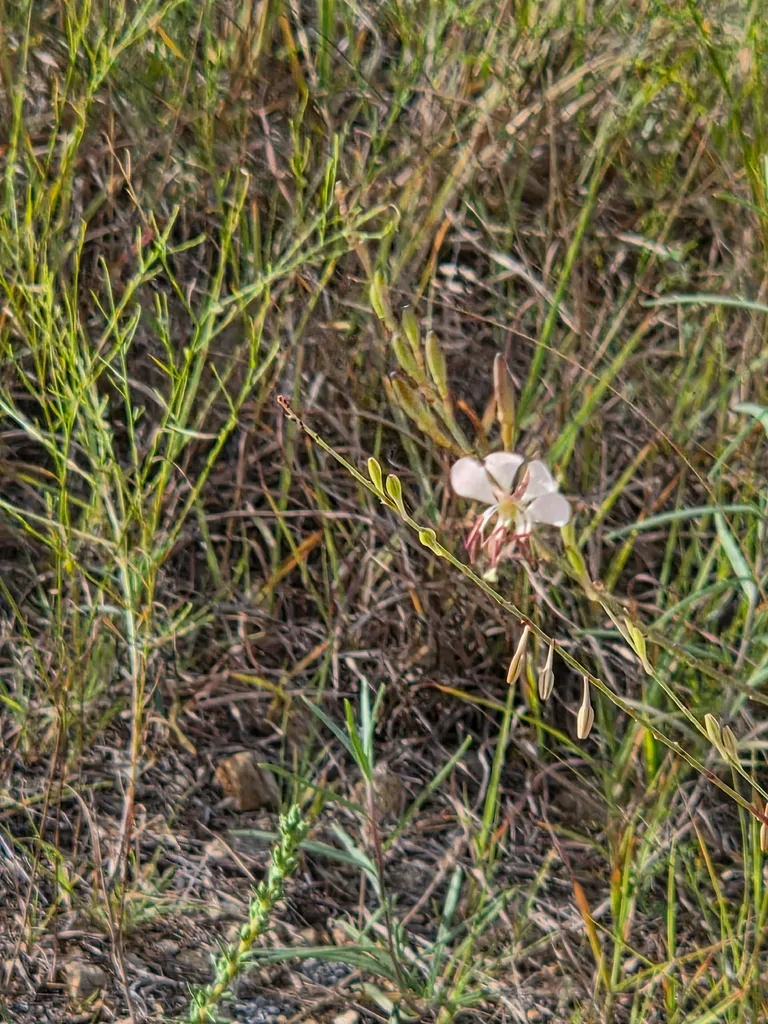
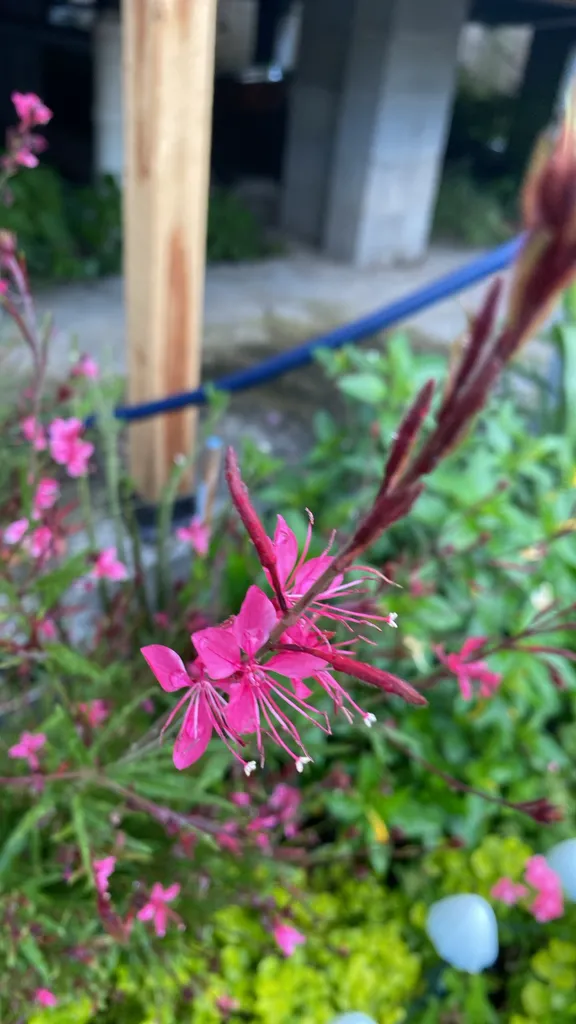
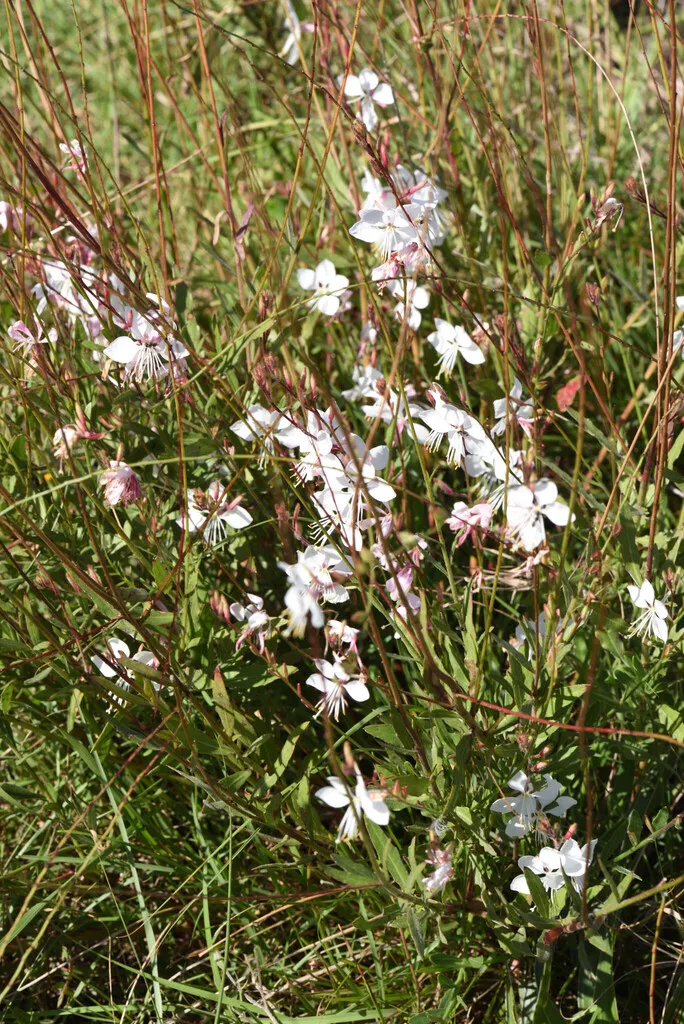
white gaura pictures
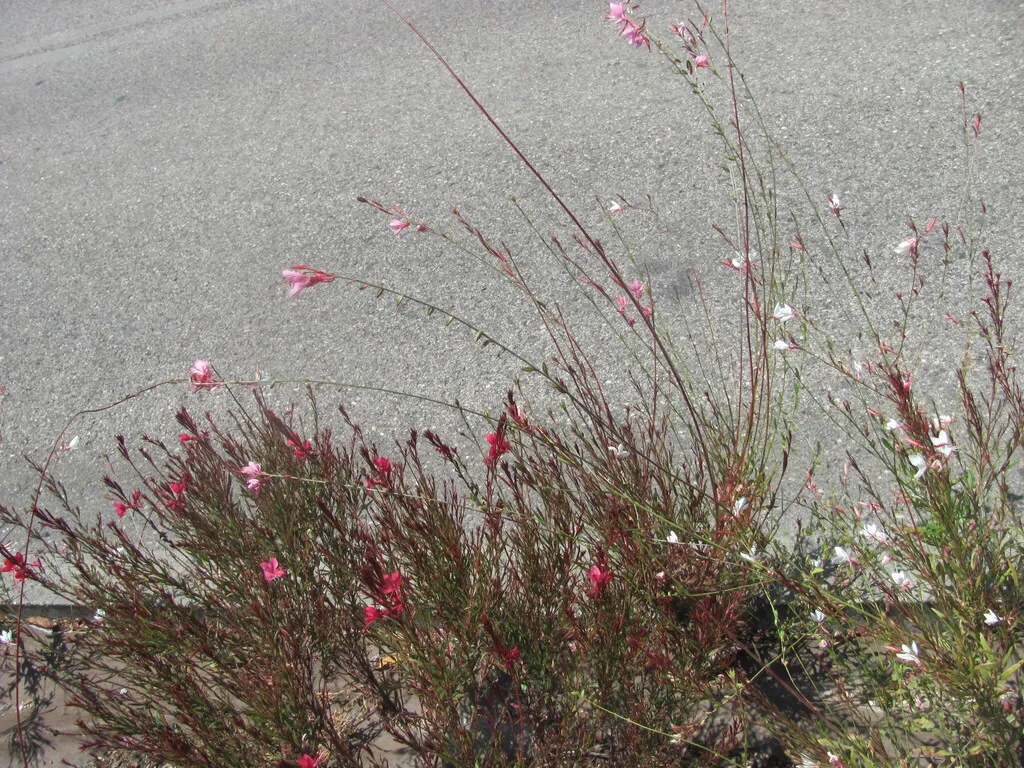
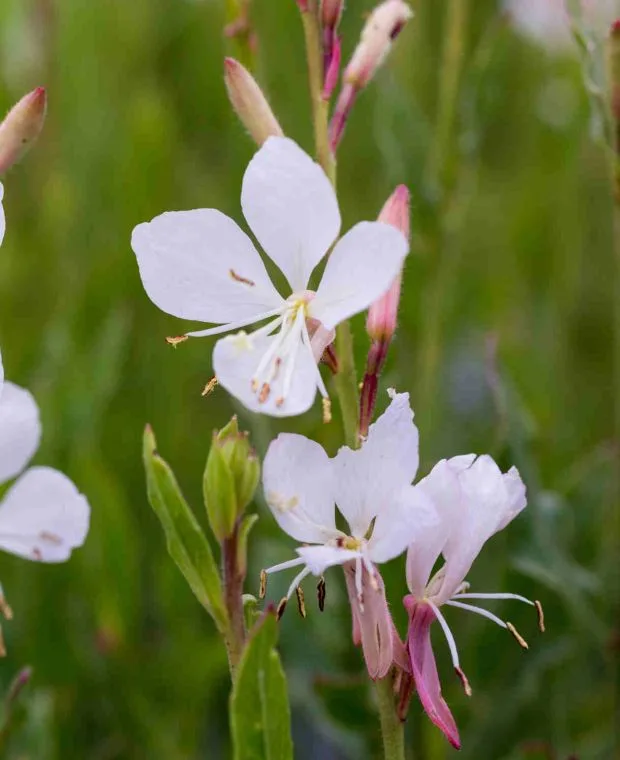
Distribution of white gaura
Distribution map
- Native
- Introduced
- Cultivated
Source:WCVP v16 · Royal Botanic Gardens, Kew · CC BY 3.0 · Boundaries:WGSRPD / TDWG
white gaura care guide
- Thorough watering once surface soil dries, drain all excess standing water
- Watering
- Full sun
- Sunlight
- 15 – 25 °C
- Ideal temperature

Watering
Thorough watering once surface soil dries, drain all excess standing water
Fertilizing
 Fertilizing
Balanced flowering liquid feed every three weeks spring through autumn
Pruning
 Pruning
Can produce autumn tints in cold weather so delay cutting back until spring
Propagation
 Propagation
Propagate by seed in pots in a cold frame from spring to early summer or propagate by basal cuttings or softwood cuttings in spring or semi-hardwood cuttings in summer
Growing
 Growing
Best grown in fertile, moist but well-drained soil in full sun; but dry soils and partial shade tolerated
Common pests and diseases
Diseases
Generally disease-free
Pests
Generally pest-free
Explore the plant health library →




