
anise hyssop 'Alabaster'
Also known as: Information to be completed
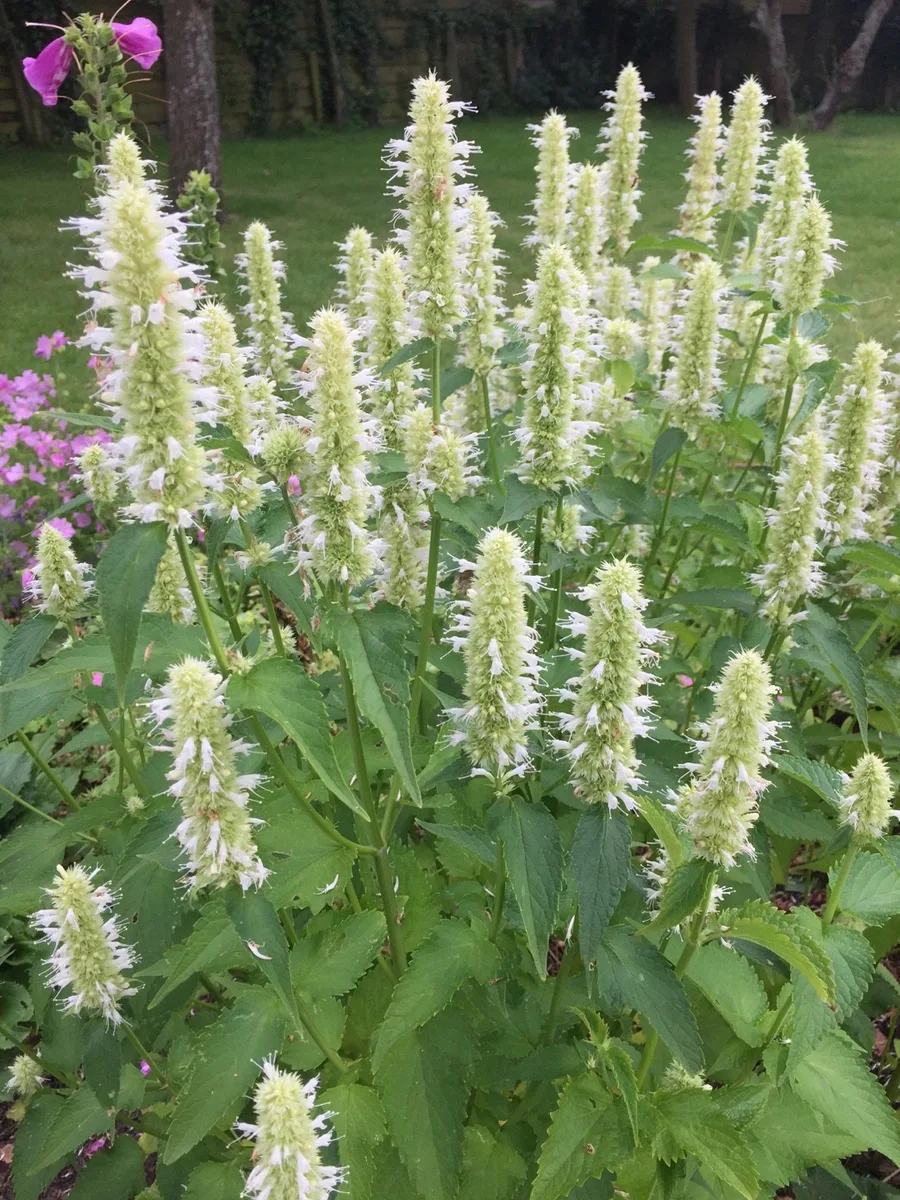
An upright, clump-forming deciduous herbaceous perennial with aromatic green, leafy stems. Slim bottlebrush-like spikes of white flowers appear from summer through until the autumn. Seedheads left during the winter provide architectural interest in flower borders, and a food source for birds
Scientific classification
- Species
- anise hyssop 'Alabaster' (Agastache foeniculum 'Alabaster')
- Genus
- Agastache
- Family
- Lamiaceae
- Order
- Lamiales
- Class
- Magnoliopsida
- Phylum
- Magnoliophyta
- Information to be completed
- Toxicity
- Herbaceous Perennial
- Plant type
- 0.5-1 metres
- Height
- 0.1-0.5 metres
- Spread
- Deciduous
- Foliage
- Clump forming · Columnar upright
- Habit
- Spring · Summer · Autumn
- Season of interest
- Full sun
- Sunlight
- Information to be completed
- Ideal temperature









anise hyssop 'Alabaster' pictures
Distribution of anise hyssop 'Alabaster'
Distribution map
- Native
- Introduced
- Cultivated
Source:WCVP v16 · Royal Botanic Gardens, Kew · CC BY 3.0 · Boundaries:WGSRPD / TDWG
anise hyssop 'Alabaster' care guide
- Keep soil consistently moist for steady leafy growth without drought stress
- Watering
- Full sun
- Sunlight

Watering
Keep soil consistently moist for steady leafy growth without drought stress
Fertilizing
 Fertilizing
Nitrogen-rich vegetable feed every two to three weeks in active growth
Pruning
 Pruning
Remove spent flowering spikes throughout season. Do not cut back in the autumn if you wish to leave the seedheads for wildlife
Propagation
 Propagation
Propagate by seed or by division in spring
Growing
 Growing
Grow in sharply drained, fertile soil in full sun
Common pests and diseases
Diseases
May be susceptible to powdery mildews
Pests
Generally pest-free
Explore the plant health library →




