
curly wood sage
Also known as: Information to be completed
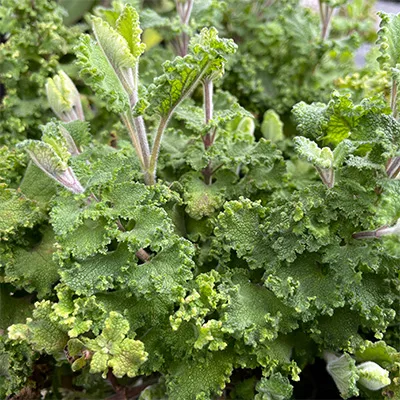
A hairy, semi-evergreen perennial or subshrub with mid-green waved crested leaf margins. Spikes of green-white, yellow tinted red flowers are produced in the summer
Scientific classification
- Species
- curly wood sage (Teucrium scorodonia 'Crispum')
- Genus
- Teucrium
- Family
- Lamiaceae
- Order
- Lamiales
- Class
- Magnoliopsida
- Phylum
- Magnoliophyta
- Harmful if eaten. Wear gloves and other protective equipment when handling LJD
- Toxicity
- Herbaceous Perennial
- Plant type
- 0.1-0.5 metres
- Height
- 0.1-0.5 metres
- Spread
- Semi evergreen
- Foliage
- Clump forming
- Habit
- Spring · Summer · Autumn · Winter
- Season of interest
- Full sun
- Sunlight
- Information to be completed
- Ideal temperature









curly wood sage pictures
Distribution of curly wood sage
Distribution map
- Native
- Introduced
- Cultivated
Source:WCVP v16 · Royal Botanic Gardens, Kew · CC BY 3.0 · Boundaries:WGSRPD / TDWG
Toxicity
Harmful if eaten. Wear gloves and other protective equipment when handling LJD
curly wood sage care guide
- Let top layer dry before watering deeply, well drained growing medium
- Watering
- Full sun
- Sunlight

Watering
Let top layer dry before watering deeply, well drained growing medium
Fertilizing
 Fertilizing
Weak all-purpose liquid feed every month in active growth months
Pruning
 Pruning
No pruning required. Tidy in spring when fresh growth appears
Propagation
 Propagation
Propagate by softwood cuttings in early summer or semi-ripe cuttings in mid-summer. Rooted cuttings will need protection in a greenhouse or cold frame through winter
Growing
 Growing
Grow in well-drained preferably neutral to alkaline soil in full sun
Common pests and diseases
Diseases
Generally disease-free
Pests
Generally pest-free
Explore the plant health library →




