
Vitex agnus-castus Pink Pinnacle ('V07-sc-op-4')
Also known as: Information to be completed
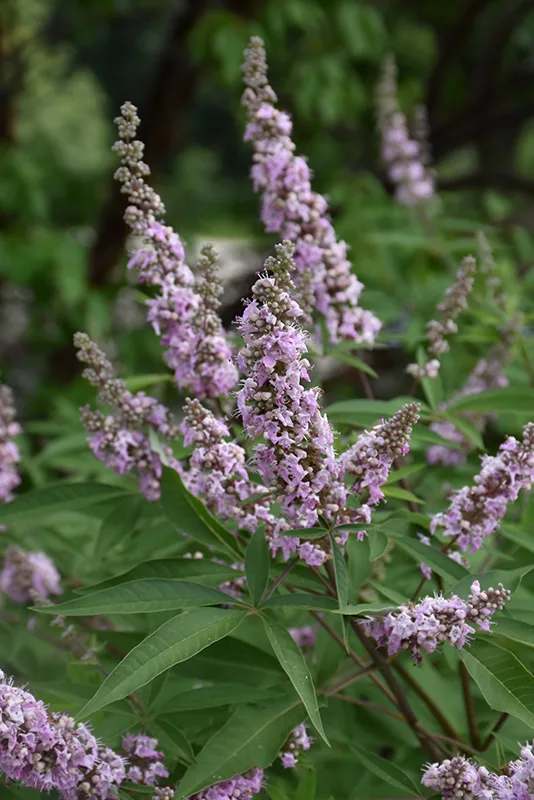
A compact, rounded, bushy deciduous shrub with a vigorous and open habit, reaching up to 2.5m, with divided, aromatic dark green foliage with 5-7 splayed leaflets. Upright spikes of masses of fragrant, pink flowers appear in summer and autumn. Can be kept smaller if desired by cutting back hard in spring
Scientific classification
- Species
- Vitex agnus-castus Pink Pinnacle ('V07-sc-op-4') (Vitex agnus-castus Pink Pinnacle ('V07-sc-op-4'))
- Genus
- Vitex
- Family
- Lamiaceae
- Order
- Lamiales
- Class
- Magnoliopsida
- Phylum
- Tracheophyta
- Information to be completed
- Toxicity
- Shrubs
- Plant type
- 1.5-2.5 metres
- Height
- 1.5-2.5 metres
- Spread
- Deciduous
- Foliage
- Bushy
- Habit
- Spring · Summer · Autumn
- Season of interest
- Full sun
- Sunlight
- Information to be completed
- Ideal temperature









Vitex agnus-castus Pink Pinnacle ('V07-sc-op-4') pictures
Vitex agnus-castus Pink Pinnacle ('V07-sc-op-4') care guide
- Moderate consistent irrigation, deep soak roots summer dry hot weather
- Watering
- Full sun
- Sunlight

Watering
Moderate consistent irrigation, deep soak roots summer dry hot weather
Fertilizing
 Fertilizing
Balanced flowering shrub feed once yearly early spring growth stage
Pruning
 Pruning
Shorten last year's flowering stems to one or two buds from the older woody framework. Remove thin, weak and dead shoots. Prune in early to mid-spring as growth resumes; avoid winter pruning that exposes new shoots to frost.
Propagation
 Propagation
Propagate by seed sown in autumn or spring, or take semi-ripe cuttings in summer
Growing
 Growing
Grow in any well-drained soil in full sun. In frost-prone areas shelter from cold, drying winds. Best grown near a south or west-facing wall
Common pests and diseases
Diseases
May be susceptible to honey fungus in gardens where it is present but insufficient data to determine degree of susceptibility
Pests
Generally pest-free
Explore the plant health library →




