
Bradbury's bergamot
Also known as: Bradbury's bee balm; Eastern bee balm
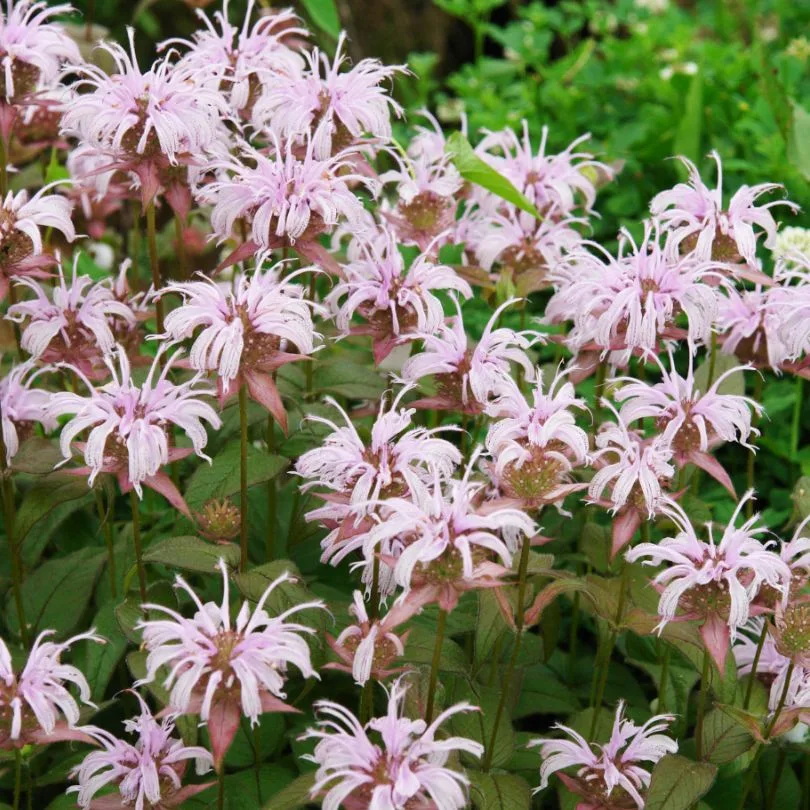
A clump-forming perennial from 30cm to 60cm tall, with dull greyish-green, aromatic, lance-shaped leaves in widely spaced pairs. In summer bears whorls of pale pink to white, two-lipped, tubular flowers with small, purple spots
Scientific classification
- Species
- Bradbury's bergamot (Monarda bradburiana)
- Genus
- Monarda
- Family
- Lamiaceae
- Order
- Lamiales
- Class
- Magnoliopsida
- Phylum
- Magnoliophyta
- Information to be completed
- Toxicity
- Herbaceous Perennial
- Plant type
- 0.5-1 metres
- Height
- 0.1-0.5 metres
- Spread
- Deciduous
- Foliage
- Clump forming
- Habit
- Spring · Summer · Autumn
- Season of interest
- Full sun
- Sunlight
- Information to be completed
- Ideal temperature









Bradbury's bergamot pictures
Bradbury's bergamot care guide
- Regular moderate watering, deep soak during hot dry weather
- Watering
- Full sun
- Sunlight

Watering
Regular moderate watering, deep soak during hot dry weather
Fertilizing
 Fertilizing
Weak mint family feed every month spring through early autumn
Pruning
 Pruning
Deadheading regularly should encourage more flowers. Cut stems down to the ground in autumn, or leave seed heads for winter structure
Propagation
 Propagation
Propagate by division in early spring, before new growth begins, or by basal softwood cuttings
Growing
 Growing
Grow in well-drained soil in full sun or partial shade. More tolerant of poor, dry soil than most monardas, but protect from excessive winter wet . Lift and divide every three years
Common pests and diseases
Diseases
Generally disease-free
Pests
May be susceptible to slugs, especially in spring
Explore the plant health library →




