
long-leaved Jerusalem sage
Also known as: Information to be completed
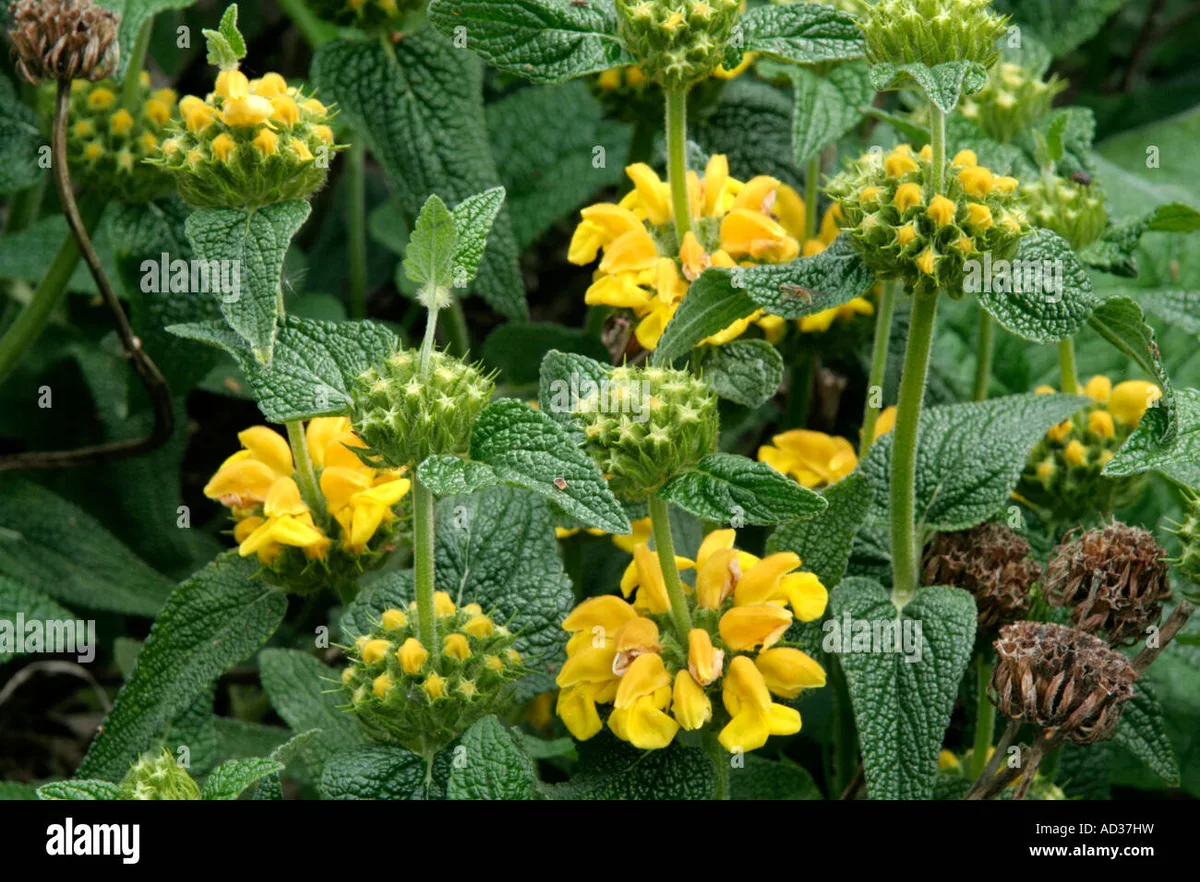
P. longifolia var. bailanica is a spreading, evergreen shrub with white, woolly young shoots. The mature leaves are oval; green and deeply veinedabove, grey andwoolly below. Spires of deep yellow, hooded flowers are produced in rings on upright stems in summer
Scientific classification
- Species
- long-leaved Jerusalem sage (Phlomis longifolia var. bailanica)
- Genus
- Phlomis
- Family
- Lamiaceae
- Order
- Lamiales
- Class
- Magnoliopsida
- Phylum
- Magnoliophyta
- Information to be completed
- Toxicity
- Shrubs
- Plant type
- 1-1.5 metres
- Height
- 1.5-2.5 metres
- Spread
- Evergreen
- Foliage
- Bushy
- Habit
- Spring · Summer · Autumn · Winter
- Season of interest
- Full sun
- Sunlight
- Information to be completed
- Ideal temperature









long-leaved Jerusalem sage pictures
Distribution of long-leaved Jerusalem sage
Distribution map
- Native
- Introduced
- Cultivated
Source:WCVP v16 · Royal Botanic Gardens, Kew · CC BY 3.0 · Boundaries:WGSRPD / TDWG
long-leaved Jerusalem sage care guide
- Tolerates mild drought, water deeply only after soil fully dries out
- Watering
- Full sun
- Sunlight

Watering
Tolerates mild drought, water deeply only after soil fully dries out
Fertilizing
 Fertilizing
Minimal diluted general fertilizer once monthly during active growth
Pruning
 Pruning
Use light pruning to remove unwanted or damaged growth. For early-flowering types, prune after flowering; for late-flowering types, prune in mid- to late spring.
Propagation
 Propagation
Propagate by softwood cuttings in summer or division in the spring. Propagate by seed in late spring under cover
Growing
 Growing
Needs well-drained soil in a sunny, sheltered position - will only tolerate a few degrees of frost
Common pests and diseases
Diseases
May be susceptible to honey fungus (rarely)
Pests
May be susceptible to leafhoppers
Explore the plant health library →




