
Euphorbia dendroides
Also known as: Information to be completed
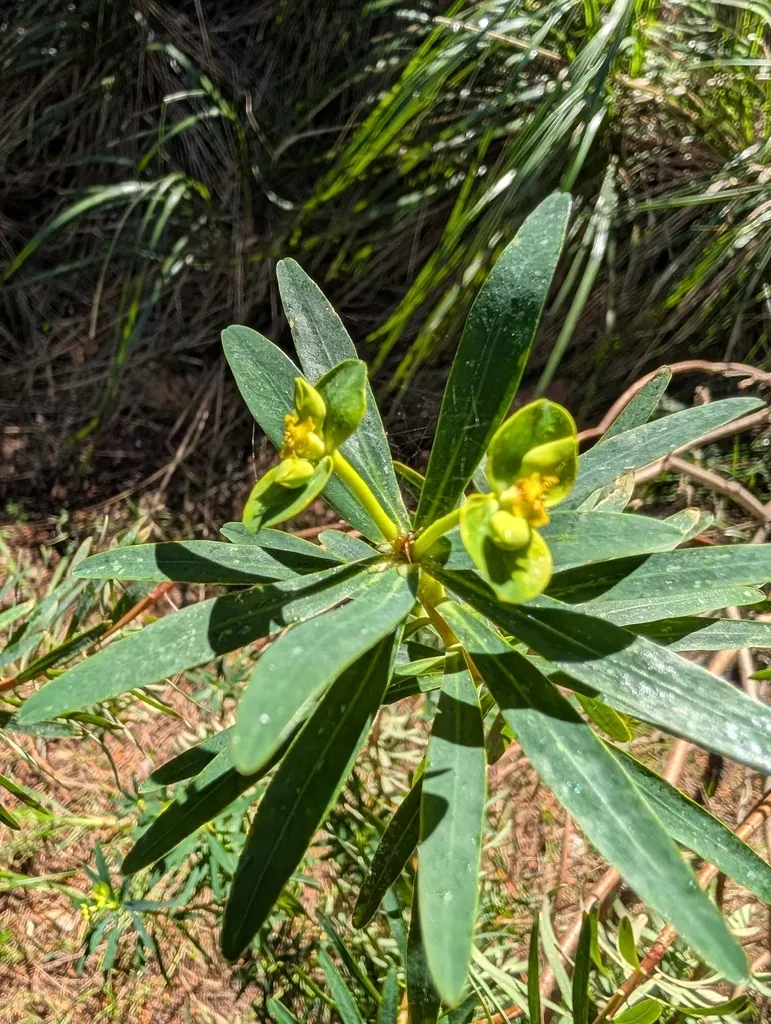
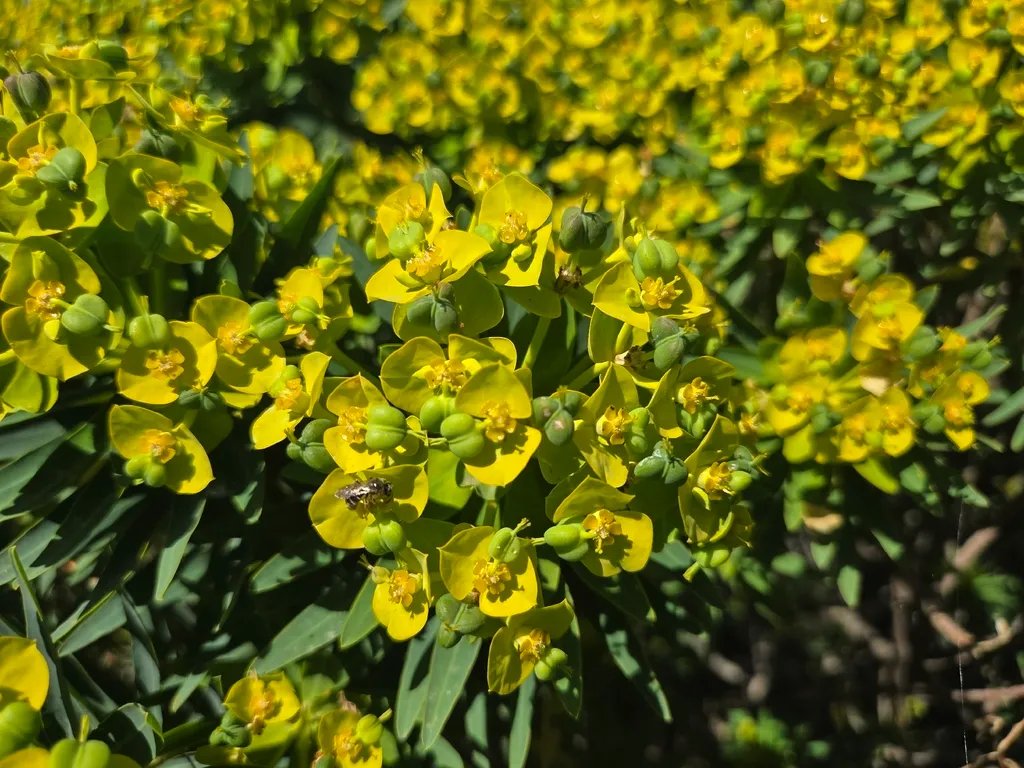
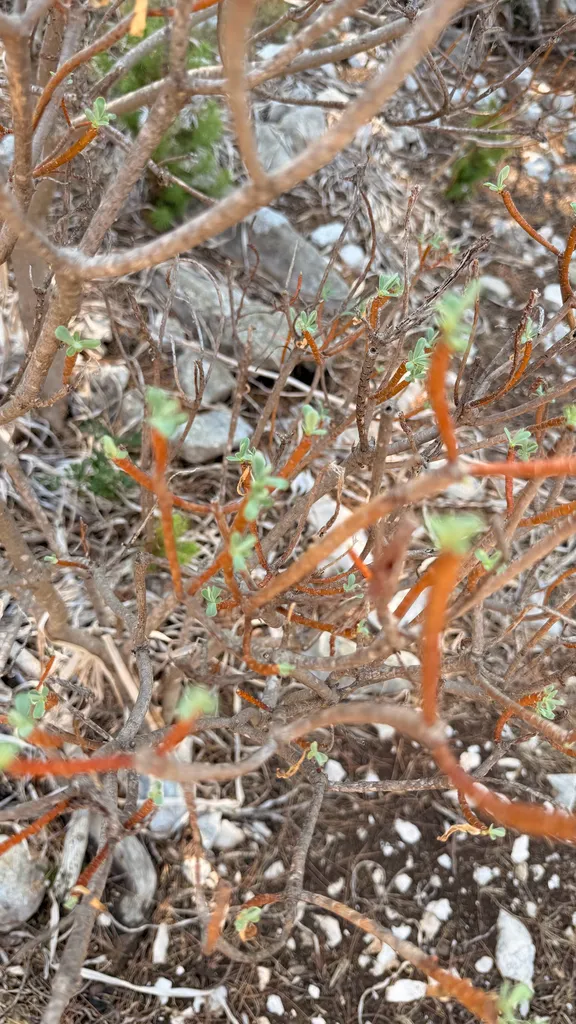
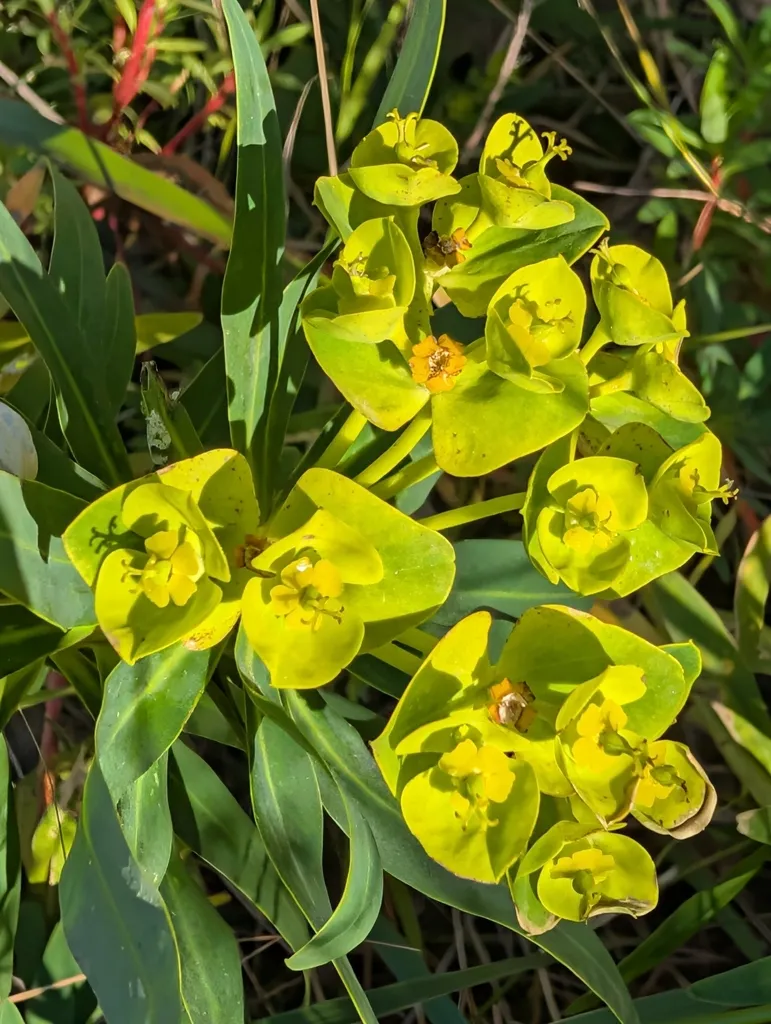
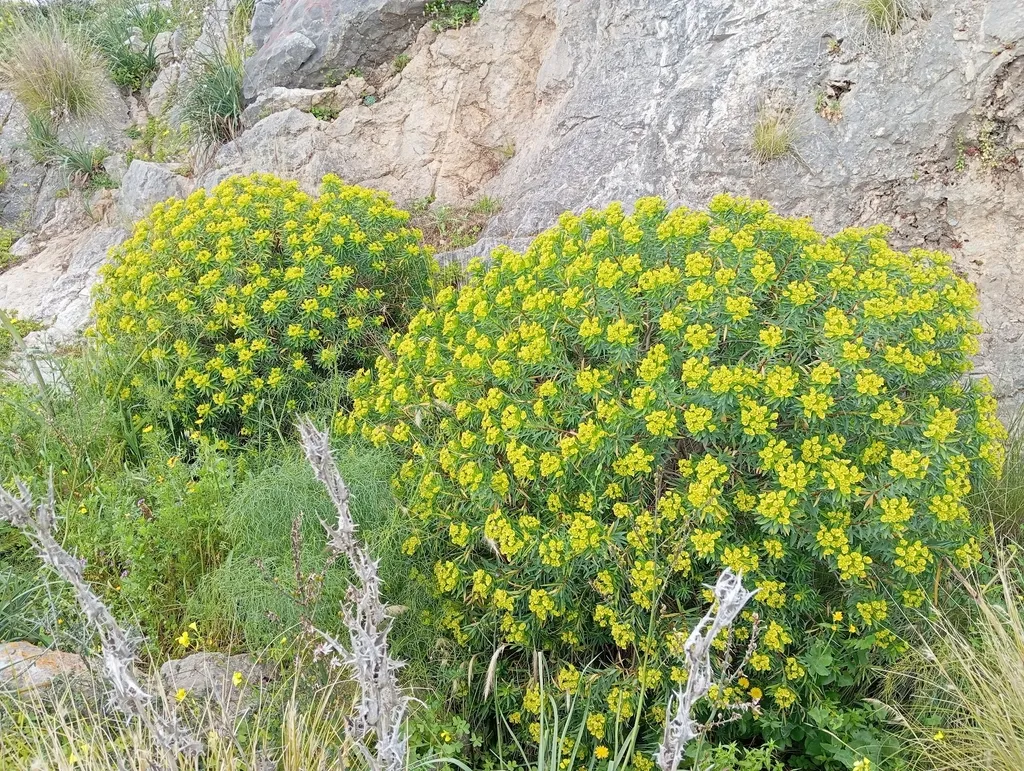
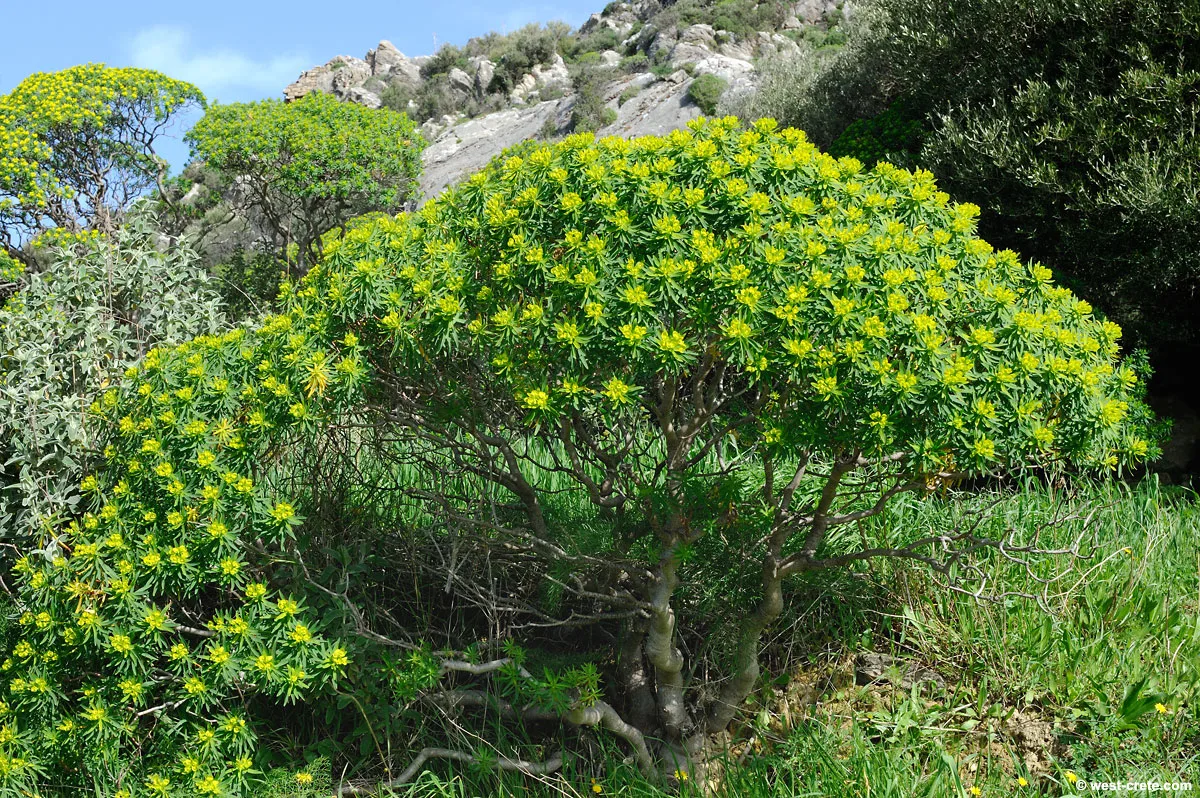
A tender, deciduous semi-succulent shrub with red, woody, branched stems to 2m (6½ft) high and across, forming a canopy when mature. The simple leaves are green and produced in whirls at the ends of the branches and change to fiery red and orange in autumn before falling. Clusters of bright green-yellow floral bracts are produced in spring on the tips of the stems, which then branch into two below the old flower heads, once flowering has finished. Being frost-tender and growing to a large size, this makes it useful for growing as an architectural specimen plant for a frost-free conservatory, greenhouse or large, sunny room indoors
Scientific classification
- Species
- Euphorbia dendroides (Euphorbia dendroides)
- Genus
- Euphorbia
- Family
- Euphorbiaceae
- Order
- Malpighiales
- Class
- Magnoliopsida
- Phylum
- Magnoliophyta
- IRRITANT to skin/eye, harmful if eaten. Wear gloves and other protective equipment when handling]
- Toxicity
- Shrubs
- Plant type
- 1.5-2.5 metres
- Height
- 1.5-2.5 metres
- Spread
- Deciduous
- Foliage
- Bushy
- Habit
- Autumn · Spring · Summer · Winter
- Season of interest
- Full sun
- Sunlight
- Information to be completed
- Ideal temperature









Euphorbia dendroides pictures
Distribution of Euphorbia dendroides
Distribution map
- Native
- Introduced
- Cultivated
Source:WCVP v16 · Royal Botanic Gardens, Kew · CC BY 3.0 · Boundaries:WGSRPD / TDWG
Toxicity
IRRITANT to skin/eye, harmful if eaten. Wear gloves and other protective equipment when handling]
Euphorbia dendroides care guide
- Moderate regular watering, allowing brief slight drying between soakings
- Watering
- Full sun
- Sunlight

Watering
Moderate regular watering, allowing brief slight drying between soakings
Fertilizing
 Fertilizing
Balanced perennial feed every four weeks from spring through summer
Pruning
 Pruning
Little pruning is needed. Remove diseased, damaged, crowded or crossing shoots and unwanted growth. Timing depends on the plant: generally late winter or early spring; plants prone to bleeding and deciduous magnolias need different timing, and deciduous azaleas and lilacs are pruned after flowering.
Propagation
 Propagation
Propagate by cuttings in spring or early summer; dip cut surfaces in charcoal or lukewarm water to prevent bleeding
Growing
 Growing
Grows best in containers in a frost-free location in well-drained soil, in full sun. Watering should be moderate over winter to avoid soil remaining too wet for too long and the roots rotting. See Euphorbia for further advice
Common pests and diseases
Diseases
Generally disease-free
Pests
Generally pest-free
Explore the plant health library →




