
chalk agave
Also known as: Information to be completed
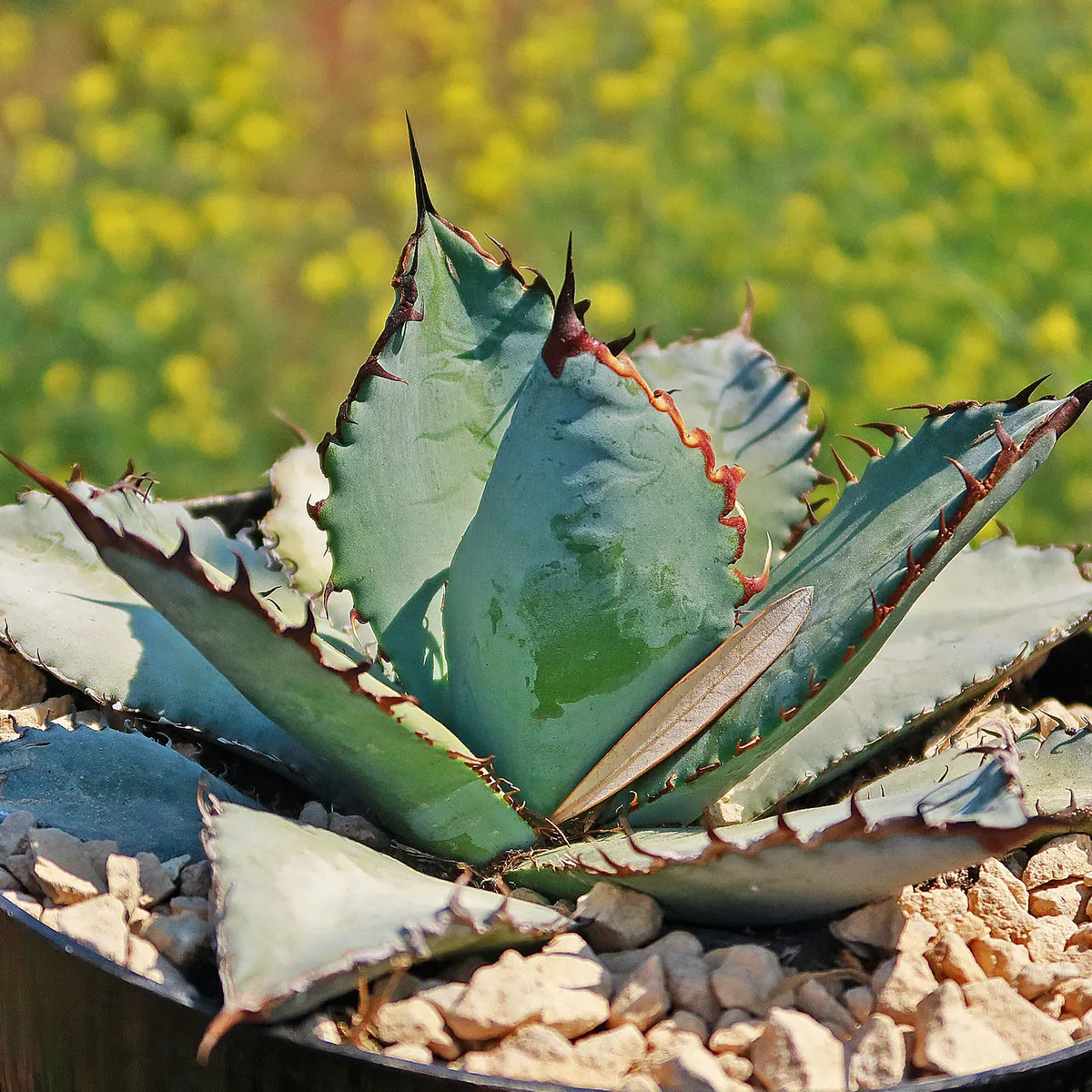
A medium-sized, evergreen, succulent plant, which forms a solitary rosette when young, but may produce offsets when mature. Leaves have ferocious-looking, curved and twisting light-brown, marginal spines, the bases of which often fuse along the leaf margins. There is also a long twisting spine at the leaf-tip. The plant is monocarpic and dies after flowering and setting seed. The flowers are yellow and are produced on a spike 3-6m in height
Scientific classification
- Species
- chalk agave (Agave titanota)
- Genus
- Agave
- Family
- Asparagaceae
- Order
- Asparagales
- Class
- Liliopsida
- Phylum
- Magnoliophyta
- Skin irritant. Wear gloves and other protective equipment when handling
- Toxicity
- Cactus Succulent
- Plant type
- 4-8 metres
- Height
- 0.5-1 metres
- Spread
- Evergreen
- Foliage
- Bushy
- Habit
- Spring · Summer · Autumn · Winter
- Season of interest
- Full sun
- Sunlight
- 18 – 28 °C
- Ideal temperature









chalk agave pictures
Distribution of chalk agave
Distribution map
- Native
- Introduced
- Cultivated
Source:WCVP v16 · Royal Botanic Gardens, Kew · CC BY 3.0 · Boundaries:WGSRPD / TDWG
Toxicity
Skin irritant. Wear gloves and other protective equipment when handling
chalk agave care guide
- Moderate regular watering, allowing brief slight drying between soakings
- Watering
- Full sun
- Sunlight
- 18 – 28 °C
- Ideal temperature

Watering
Moderate regular watering, allowing brief slight drying between soakings
Fertilizing
 Fertilizing
Balanced perennial feed every four weeks from spring through summer
Pruning
 Pruning
No pruning required
Propagation
 Propagation
Propagate by seed in spring at 21°C or from offsets in summer
Growing
 Growing
Under glass grow in a sharply-draining loam-based compost (JI No2) with extra perlite or sharp sand, or a proprietary cactus compost in full sunlight. Water freely during the growing season from spring to autumn but allowing the compost to dry out before watering again. Water more sparingly in winter when the plant is dormant. See houseplant cacti and succulent cultivation for further information
Common pests and diseases
Diseases
Generally trouble free except in wet or poorly drained soil when it could be susceptible to root rot
Pests
May be susceptible to scale insects
Explore the plant health library →




