
Kamchatka fritillary
Also known as: black lily; black sarana
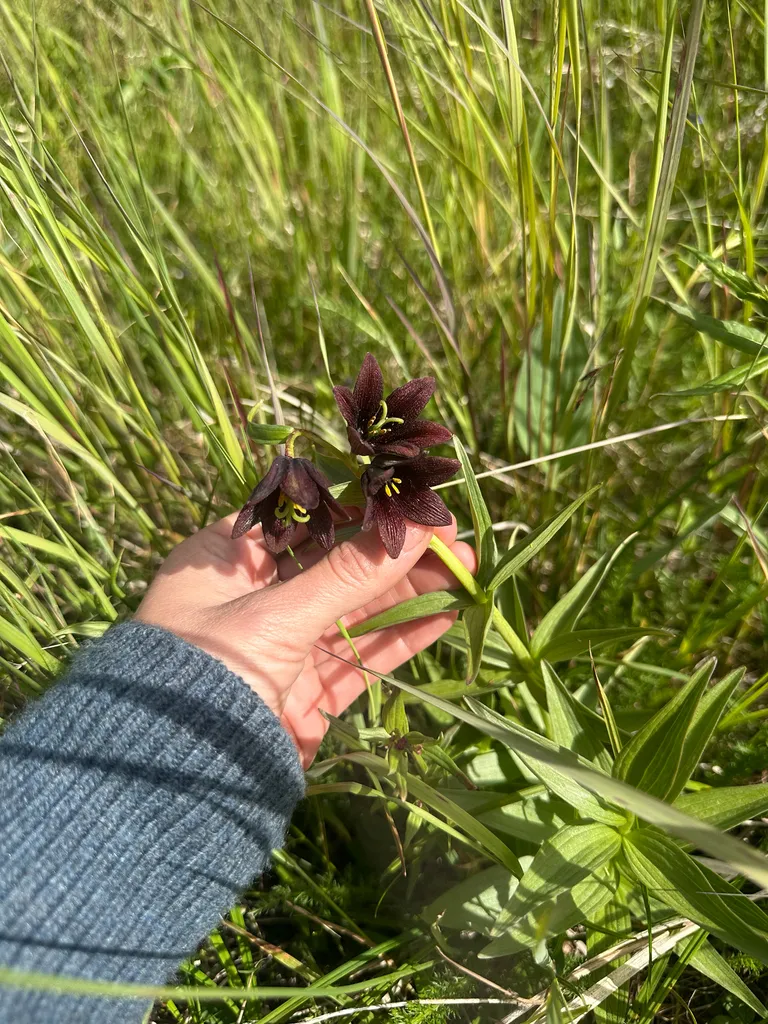
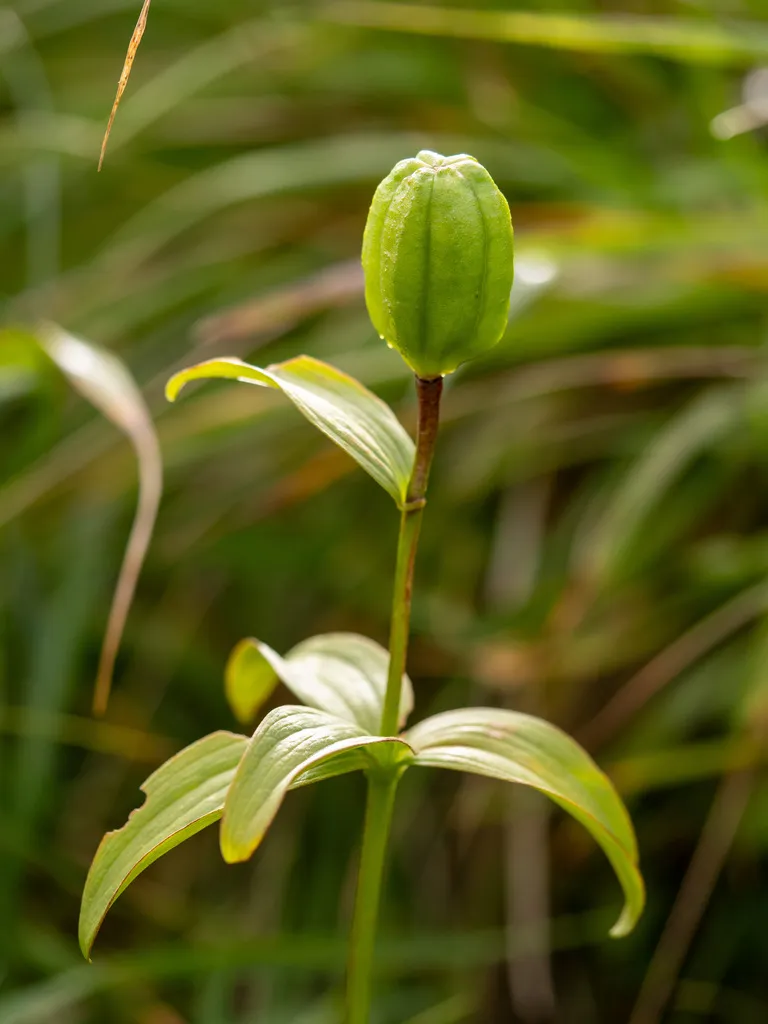
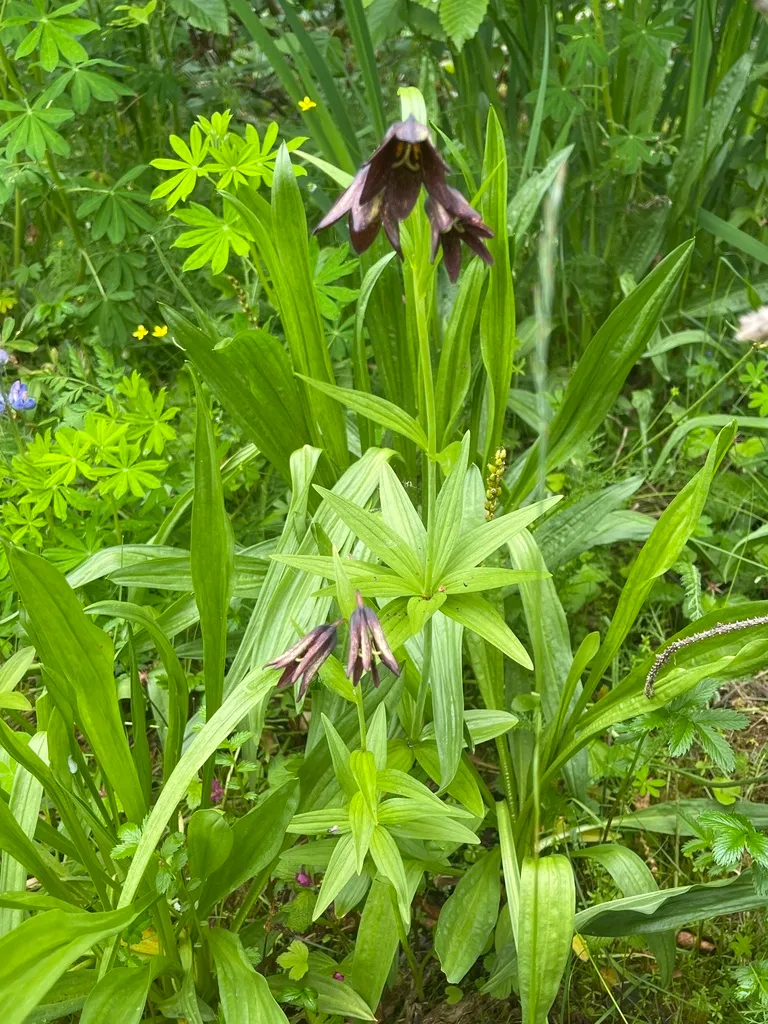
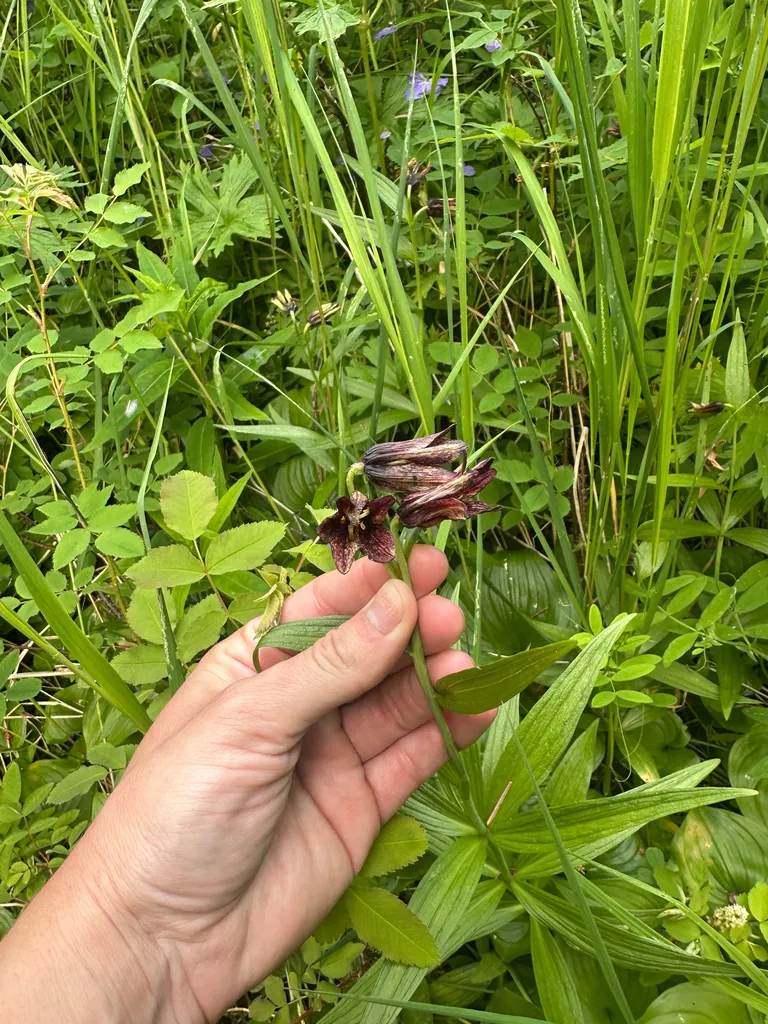
A bulbous perennial, 20-40cm tall, with whorls of shiny green linear-lanceolate leaves around the stem. Clusters of slightly nodding bell-shaped blooms, are a dramatic dark purple-black with contrasting yellow anthers, usually 3 per stem, in late spring early summer
Scientific classification
- Species
- Kamchatka fritillary (Fritillaria camschatcensis)
- Genus
- Fritillaria
- Family
- Liliaceae
- Order
- Liliales
- Class
- Liliopsida
- Phylum
- Tracheophyta
- Ornamental bulbs - not to be eaten. Wear gloves and other protective equipment when handling
- Toxicity
- Bulbs
- Plant type
- 0.1-0.5 metres
- Height
- 0.1-0.5 metres
- Spread
- Deciduous
- Foliage
- Columnar upright
- Habit
- Spring · Summer
- Season of interest
- Partial shade · Full sun
- Sunlight
- Information to be completed
- Ideal temperature









Kamchatka fritillary pictures
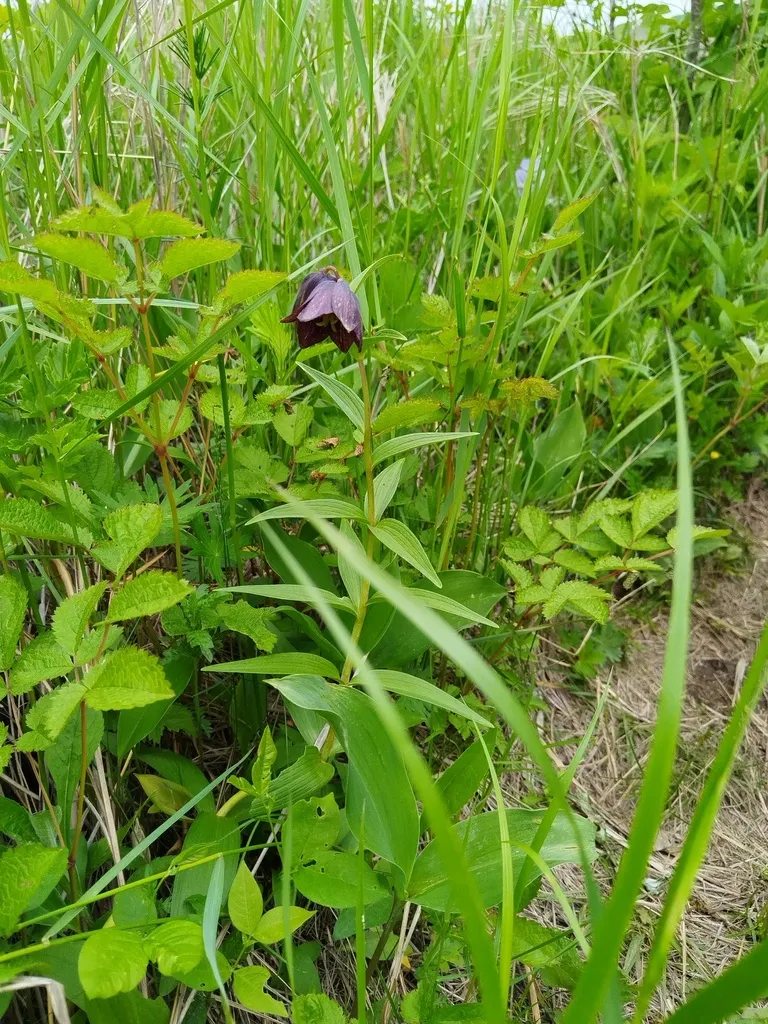
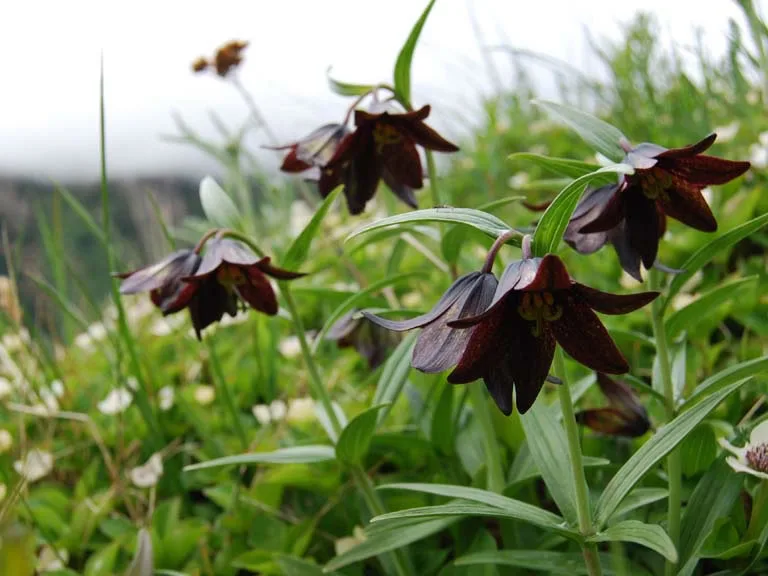
Distribution of Kamchatka fritillary
Distribution map
- Native
- Introduced
- Cultivated
Source:WCVP v16 · Royal Botanic Gardens, Kew · CC BY 3.0 · Boundaries:WGSRPD / TDWG
Toxicity
Ornamental bulbs - not to be eaten. Wear gloves and other protective equipment when handling
Kamchatka fritillary care guide
- Moderate regular watering, avoid prolonged drought or waterlogging
- Watering
- Partial shade · Full sun
- Sunlight

Watering
Moderate regular watering, avoid prolonged drought or waterlogging
Fertilizing
 Fertilizing
Balanced feed in spring and light repeat in growth season
Pruning
 Pruning
No pruning required
Propagation
 Propagation
Propagate by seed, sown in pots in a cold frame in autumn. Needs exposure to winter cold for germination in spring. Division of offsets can be done in late summer
Growing
 Growing
Grows well in most fertile, humus-rich, well-drained soils, for a full sun location the soil needs to be damp through the summer. Handle the fragile bulbs carefully and plant at four times own depth
Common pests and diseases
Diseases
Generally disease-free
Pests
May be susceptible to slugs and lily beetle
Explore the plant health library →




