
Nepenthes alata
Also known as: Information to be completed
An evergreen, carnivorous perennial, with strap-shaded leaves with a prolonged midrib, which acts as a tendril and may end in a hanging, hollow pitcher, with two vertical ridges or "wings" at the front. The pitchers are slender expanding into a bulbous lower third, closest to the tendril, with a thickened rim and an apical lid. Pitchers vary in colour even on the same plant, ranging from yellow-green, to red, speckled, orange, purple, and a variety of combinations and range in size from 18cm, for lower pitchers to 23cm for those higher up the plant. Tiny petalless male and female flowers, with green or brown sepals, are borne in spike-like racemes.
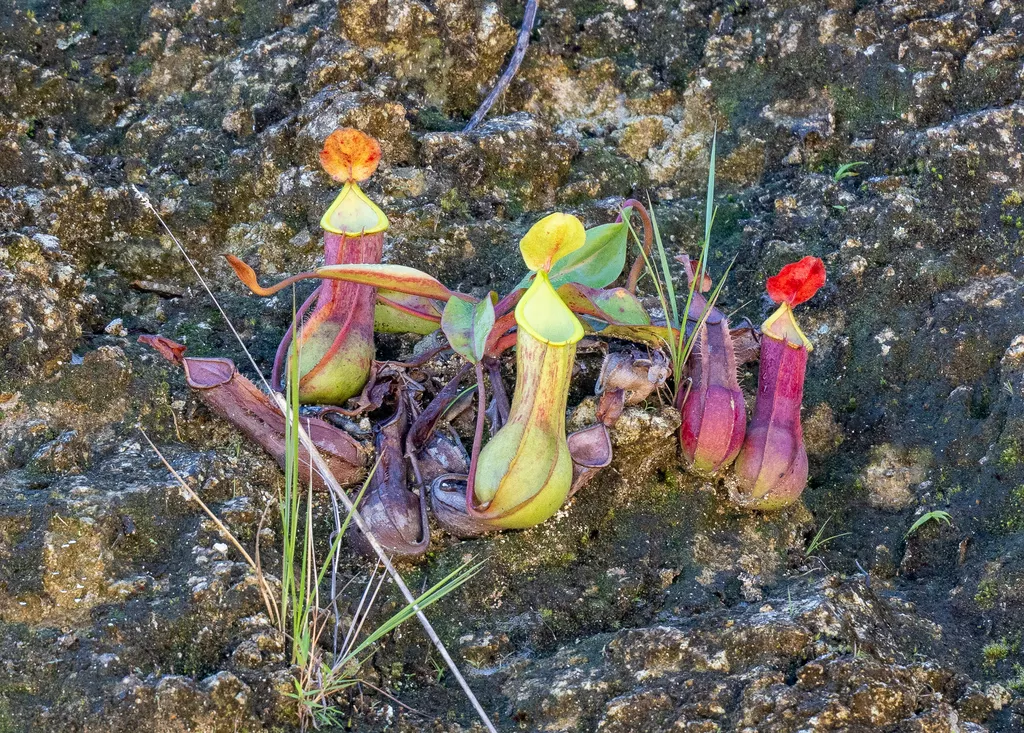
Scientific classification
- Species
- Nepenthes alata (Nepenthes alata)
- Genus
- Nepenthes
- Family
- Nepenthaceae
- Order
- Caryophyllales
- Class
- Magnoliopsida
- Phylum
- Magnoliophyta
- Information to be completed
- Toxicity
- Houseplants · Conservatory Greenhouse · Herbaceous Perennial
- Plant type
- 0.1-0.5 metres
- Height
- 0.1-0.5 metres
- Spread
- Evergreen
- Foliage
- Pendulous weeping
- Habit
- Autumn · Spring · Summer · Winter
- Season of interest
- Partial shade
- Sunlight
- Information to be completed
- Ideal temperature









Nepenthes alata pictures
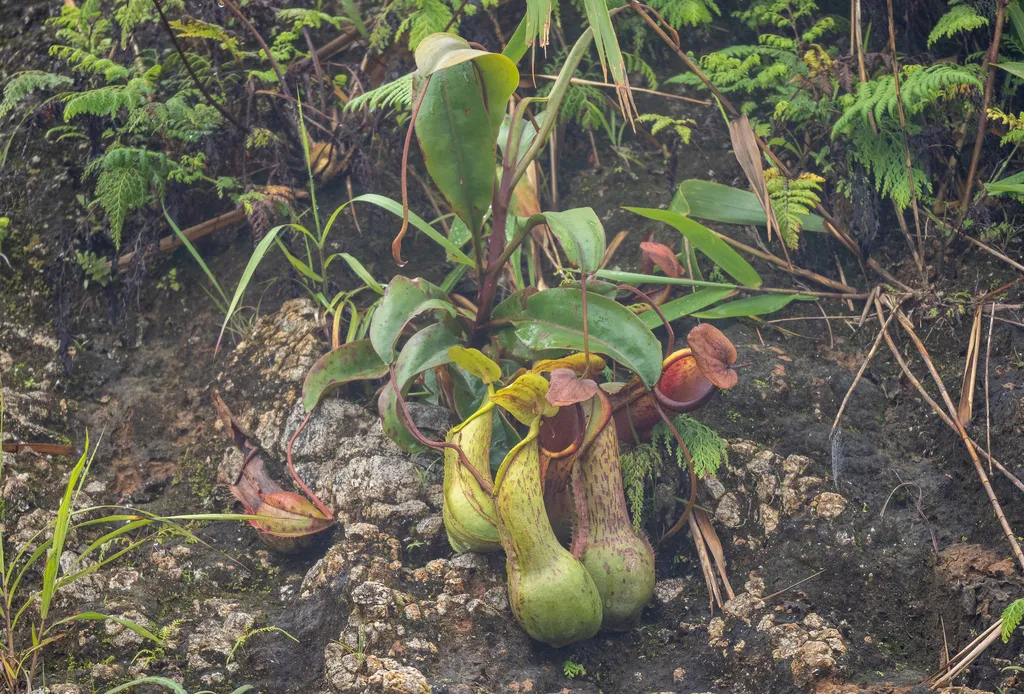
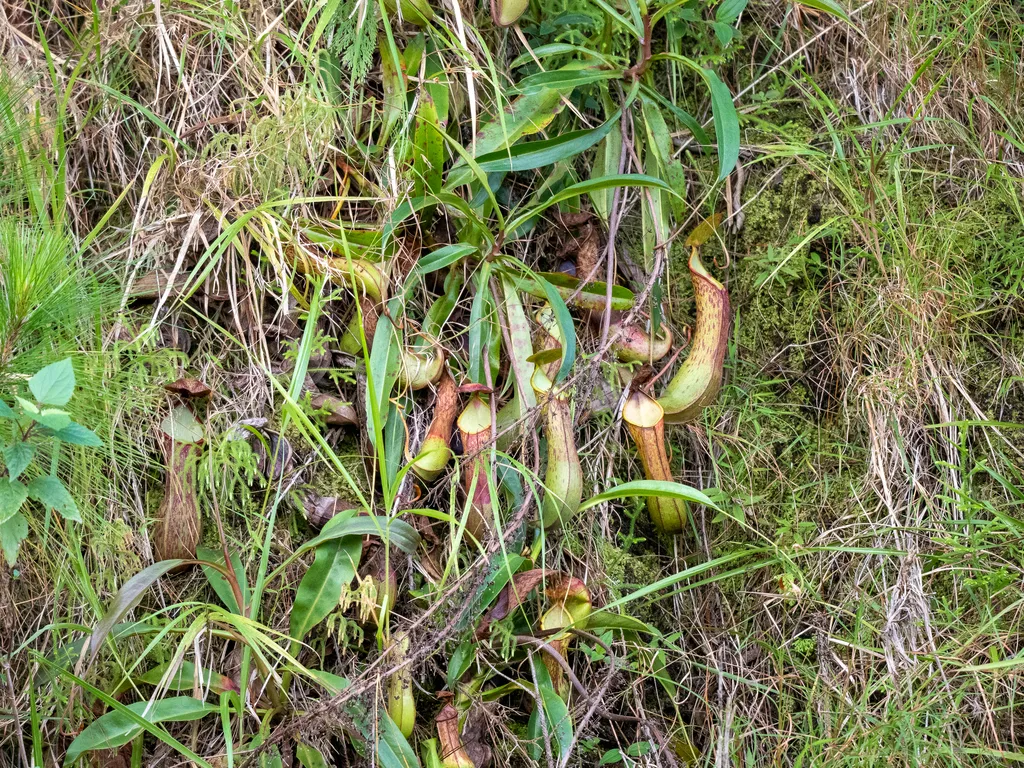
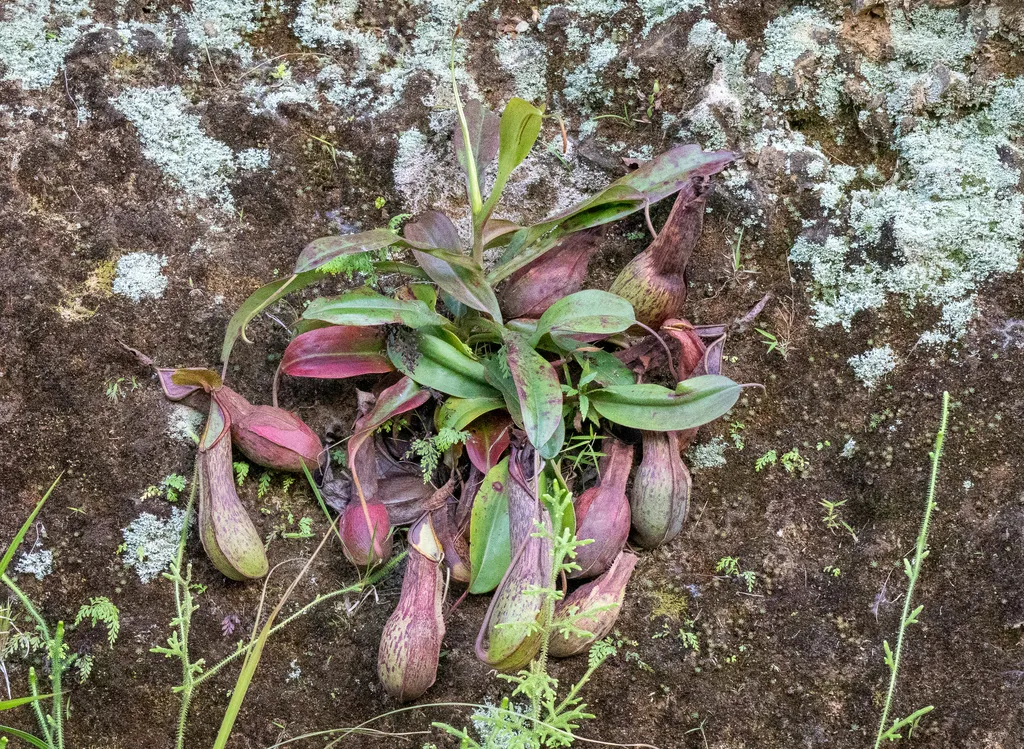
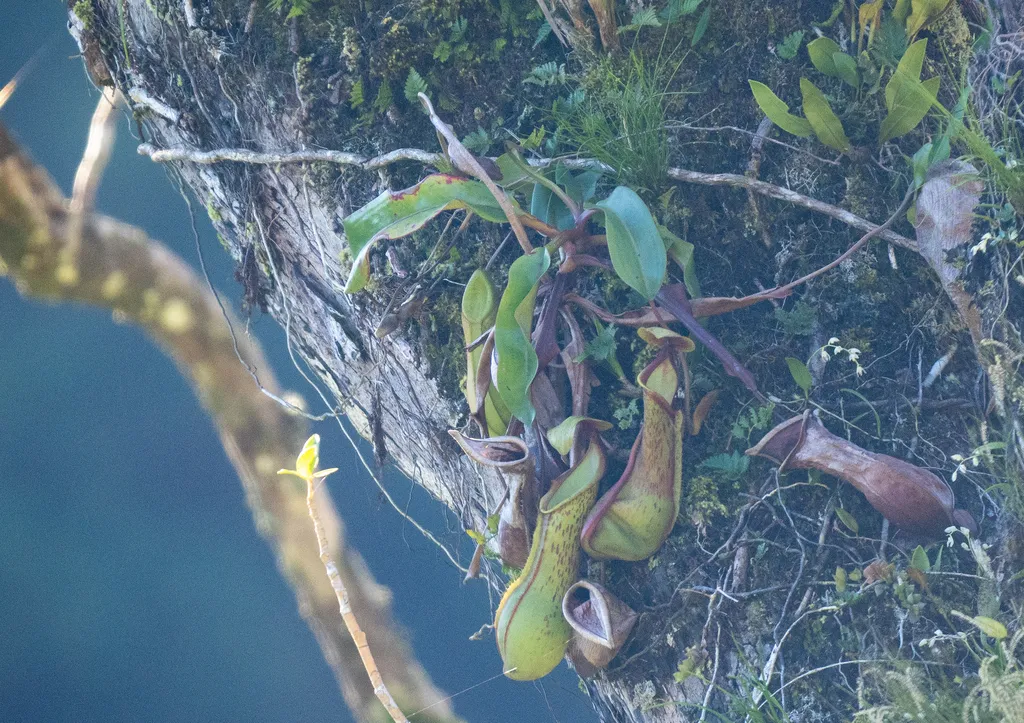
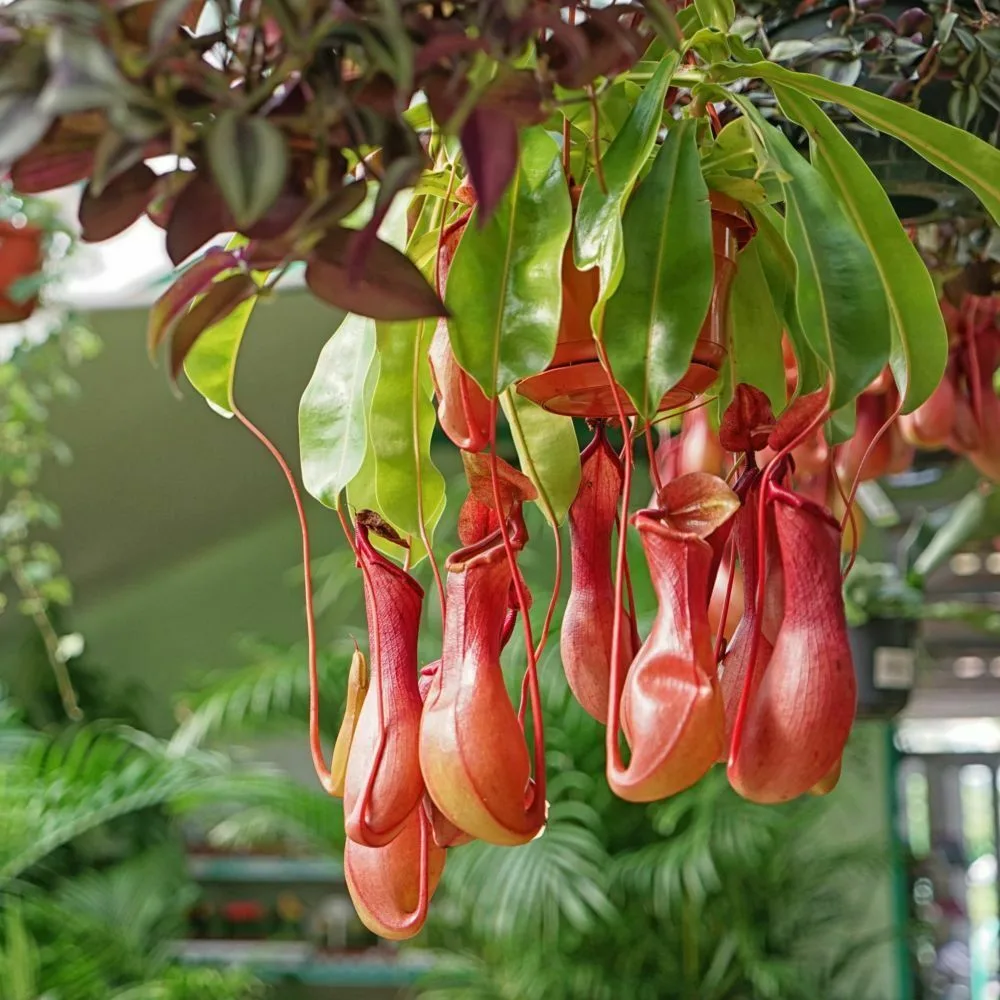
Distribution of Nepenthes alata
Distribution map
- Native
- Introduced
- Cultivated
Source:WCVP v16 · Royal Botanic Gardens, Kew · CC BY 3.0 · Boundaries:WGSRPD / TDWG
Nepenthes alata care guide
- Keep pitcher medium constantly damp, use pure rainwater for irrigation supply
- Watering
- Partial shade
- Sunlight

Watering
Keep pitcher medium constantly damp, use pure rainwater for irrigation supply
Fertilizing
 Fertilizing
No fertilizer needed, obtain nutrients naturally from captured insect prey
Pruning
 Pruning
Trim out spent pitchers
Propagation
 Propagation
Propagate from stem cuttings in February or sow seeds
Growing
 Growing
Grow indoors in hanging baskets in a acidic, low nutrient specialist mix in bright filtered light with high humidity. See Carnivorous plant cultivation
Common pests and diseases
Diseases
Generally disease-free
Pests
May be susceptible to mealybugs and aphids
Explore the plant health library →




