
Newman's coneflower
Also known as: showy coneflower
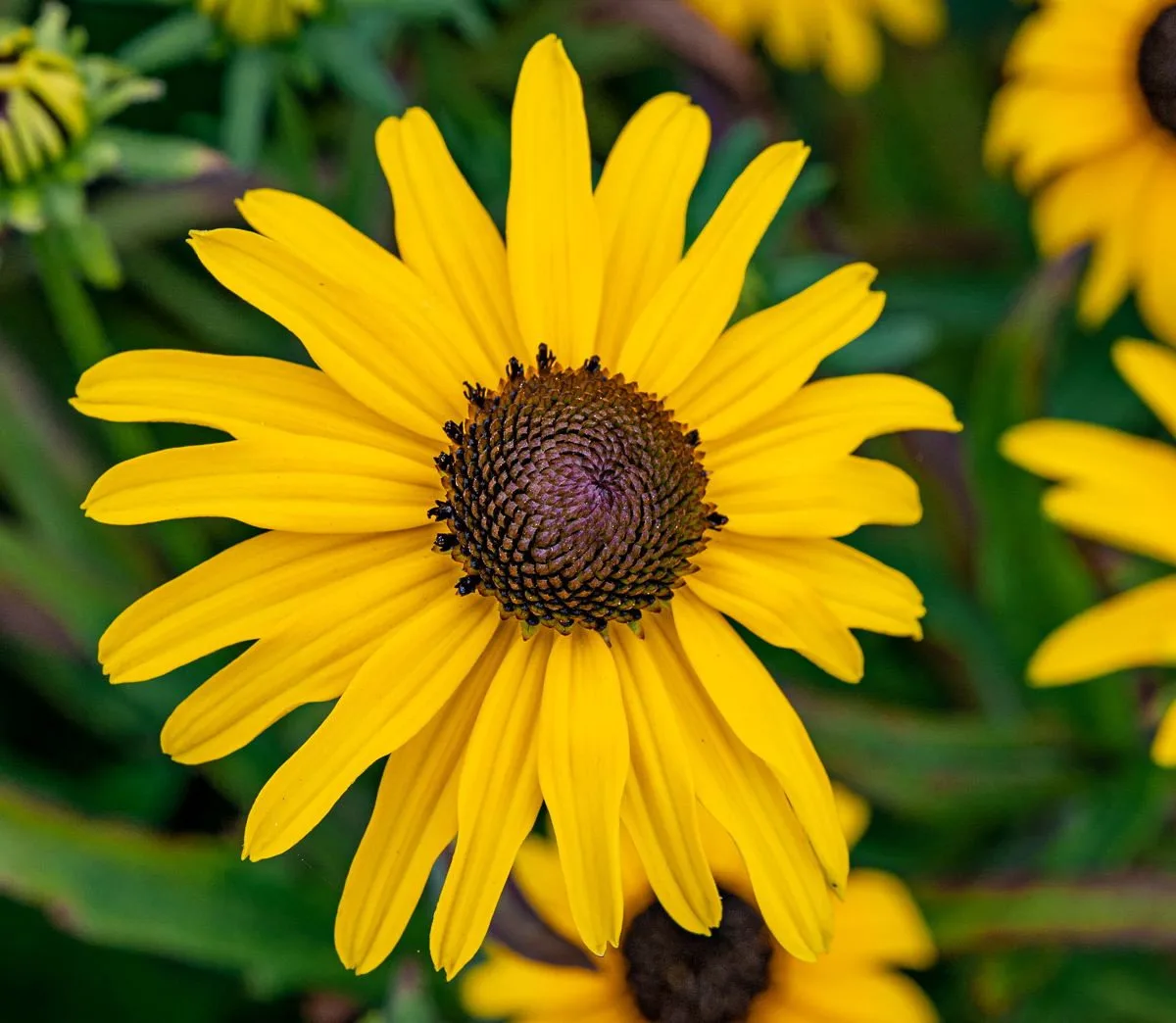
A clump-forming, rhizomatous perennial to 1.4m high, with ovate basal leaves, and branching stems with narrow, serrated stem leaves. Produces flowers to 8cm across with deep-brown central cones and golden yellow ray florets, from late summer to early autumn
Scientific classification
- Species
- Newman's coneflower (Rudbeckia fulgida var. speciosa)
- Genus
- Rudbeckia
- Family
- Asteraceae
- Order
- Asterales
- Class
- Magnoliopsida
- Phylum
- Magnoliophyta
- Information to be completed
- Toxicity
- Herbaceous Perennial
- Plant type
- 1-1.5 metres
- Height
- 1-1.5 metres
- Spread
- Deciduous
- Foliage
- Clump forming
- Habit
- Autumn · Spring · Summer
- Season of interest
- Full sun · Partial shade
- Sunlight
- Information to be completed
- Ideal temperature









Newman's coneflower pictures
Distribution of Newman's coneflower
Distribution map
- Native
- Introduced
- Cultivated
Source:WCVP v16 · Royal Botanic Gardens, Kew · CC BY 3.0 · Boundaries:WGSRPD / TDWG
Newman's coneflower care guide
- Water regularly, keeping the soil moist but not waterlogged; water more in dry spells.
- Watering
- Full sun · Partial shade
- Sunlight

Watering
Water regularly, keeping the soil moist but not waterlogged; water more in dry spells.
Fertilizing
 Fertilizing
Apply a balanced fertilizer monthly during the growing season.
Pruning
 Pruning
Deadhead regularly. Can be cut back in autumn, though stems and seedheads persist well and can provide structure in winter
Propagation
 Propagation
Propagate by seed, surface-sown in early spring in containers in a cold frame, or by division of established clumps in autumn or spring
Growing
 Growing
Grow in humus rich, moist but well-drained soil in full sun or partial shade. Able to tolerate drought once established. See rudbeckia cultivation for further advice
Common pests and diseases
Diseases
Generally disease-free
Pests
May be susceptible to aphids and slugs
Explore the plant health library →




