
tiger tooth aloe
Also known as: Information to be completed
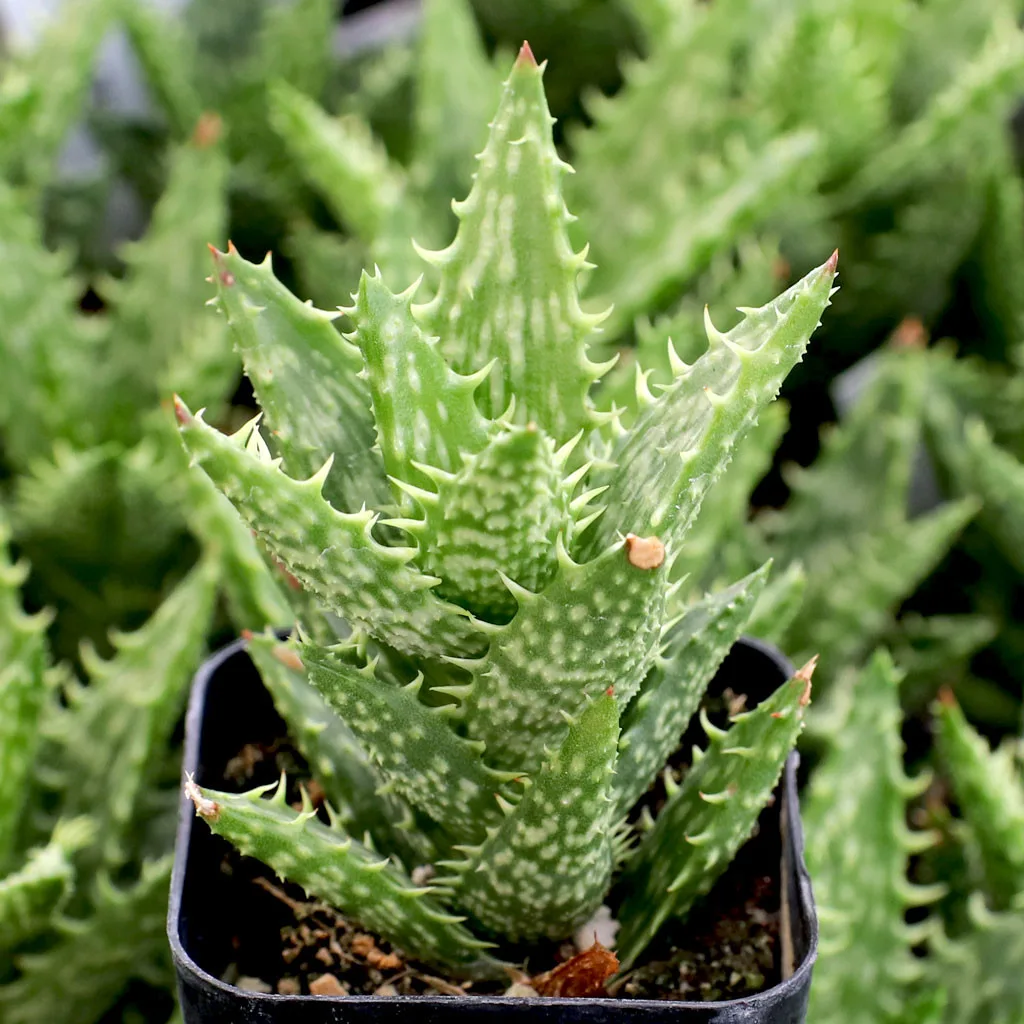
A branching, mound-forming succulent that has fleshy green leaves with toothed margins and decorative white flecks. The leaves are arranged in a starry formation around the stems. In summer it produces tubular, orangey-red flowers on slender stalks to 25cm
Scientific classification
- Species
- tiger tooth aloe (Aloe juvenna)
- Genus
- Aloe
- Family
- Asphodelaceae
- Harmful if eaten. Wear gloves and other protective equipment when handling
- Toxicity
- Cactus Succulent · Houseplants · Conservatory Greenhouse
- Plant type
- 0.1-0.5 metres
- Height
- 0.1-0.5 metres
- Spread
- Evergreen
- Foliage
- Clump forming
- Habit
- Spring · Summer · Autumn · Winter
- Season of interest
- Full sun
- Sunlight
- 18 – 28 °C
- Ideal temperature









tiger tooth aloe pictures
Distribution of tiger tooth aloe
Distribution map
- Native
- Introduced
- Cultivated
Source:WCVP v16 · Royal Botanic Gardens, Kew · CC BY 3.0 · Boundaries:WGSRPD / TDWG
Culture
Information to be completed
Toxicity
Harmful if eaten. Wear gloves and other protective equipment when handling
Quick identification of tiger tooth aloe
Information to be completed
tiger tooth aloe care guide
- Let gritty substrate dry completely before giving another full soaking
- Watering
- Full sun
- Sunlight
- 18 – 28 °C
- Ideal temperature

Watering
Let gritty substrate dry completely before giving another full soaking
Fertilizing
 Fertilizing
Ultra-diluted low-nitrogen succulent feed monthly warm summer only
Pruning
 Pruning
No pruning required
Propagation
 Propagation
Propagate from stem cuttings or by division
Growing
 Growing
In containers grow in a loam-based potting compost with extra added sharp sand or horticultural grit. Position plants in bright, filtered light. Water freely in growth and apply a balanced liqid fertiliser every month during the growing season. Water sparingly in winter. See houseplant cacti and succulent cultivation for further advice
People also ask
Information to be completed
Common pests and diseases
Diseases
Generally disease-free
Pests
May be susceptible to scale insects and mealybugs
Explore the plant health library →




