



Planting and Growing African milk tree

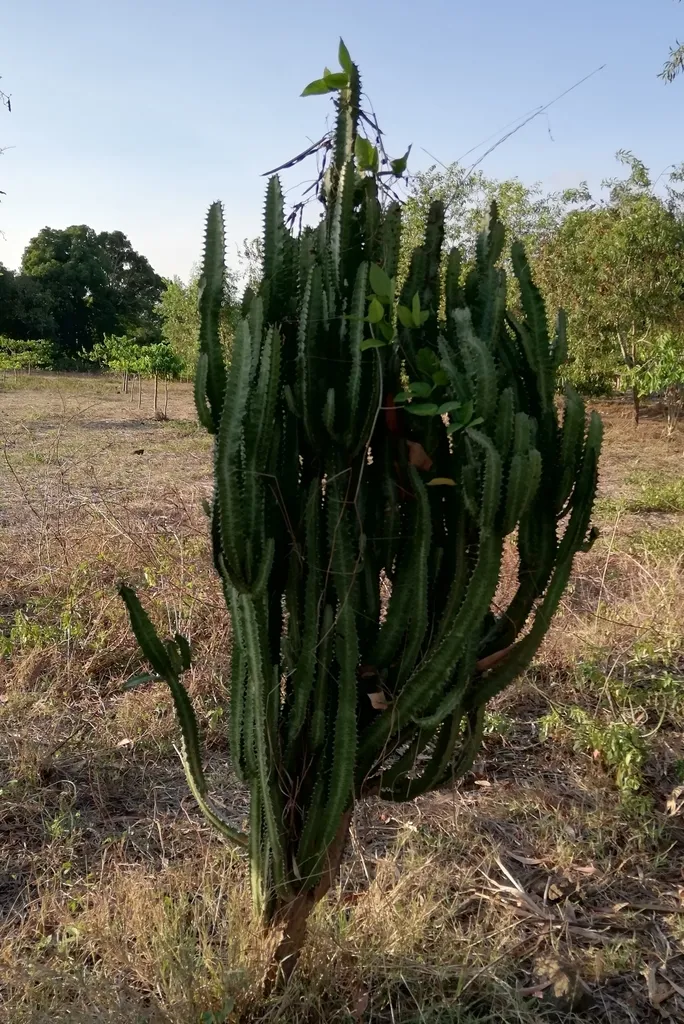
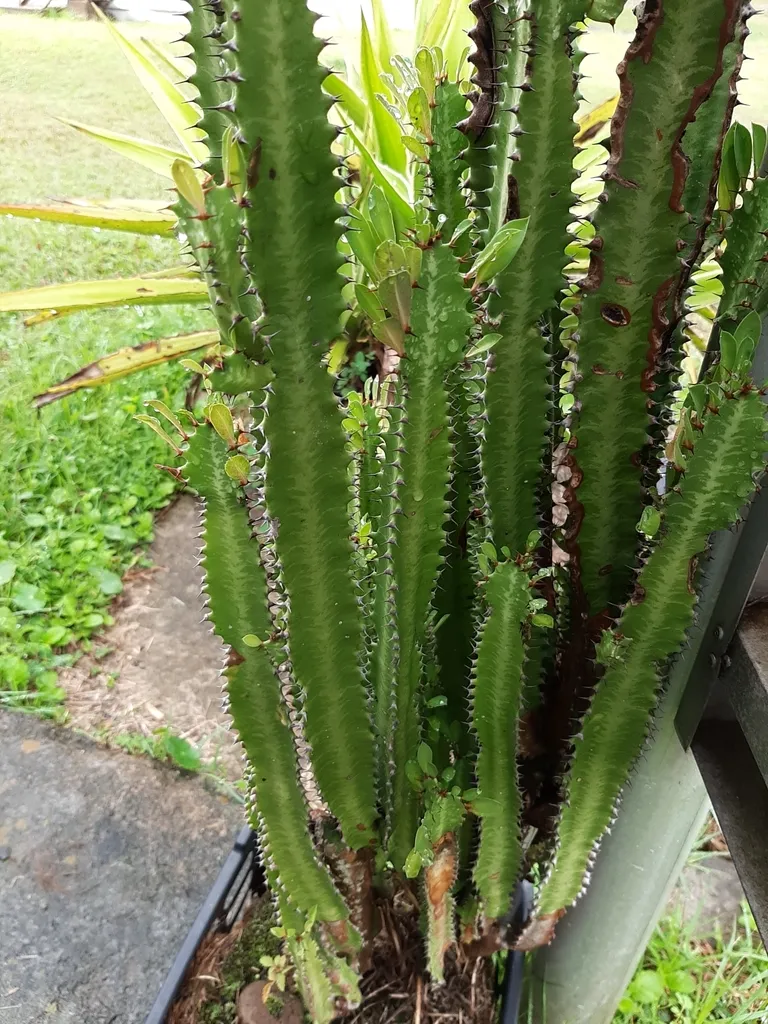
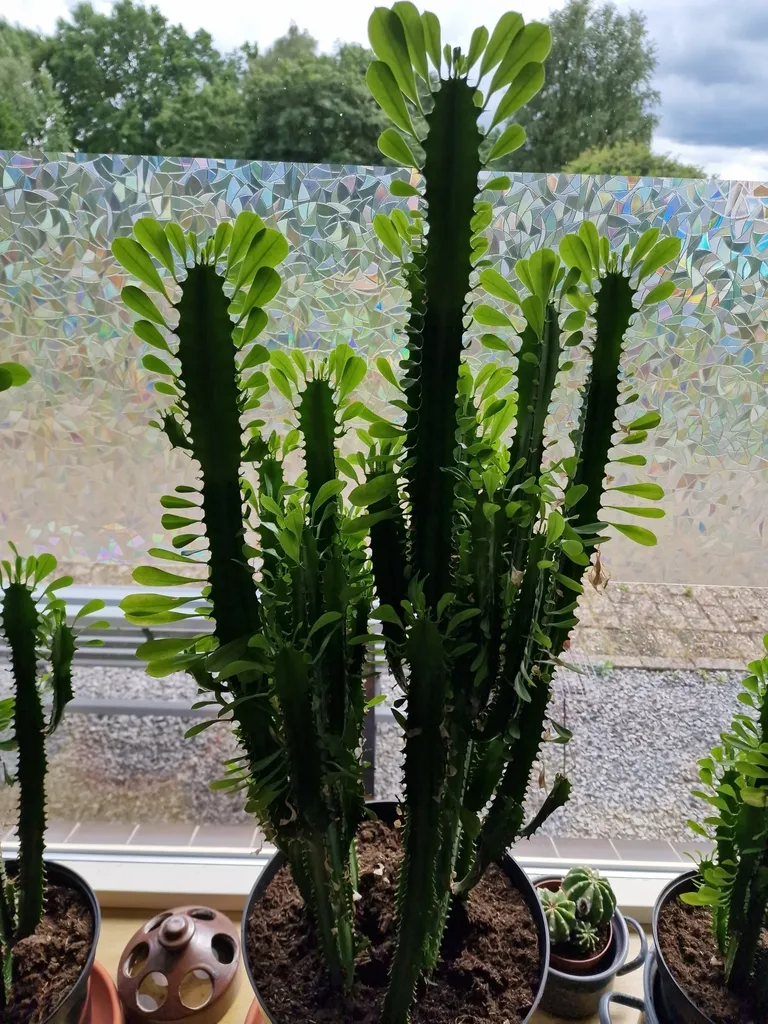
| Care difficulty | 2 / 5 |
|---|---|
| Watering schedule | Infrequent watering, wait full substrate dryness before soaking |
| Sunlight requirements | Full sun · Partial shade |
| Ideal temperature | 18 – 28 °C |
| Soil type | Loam · Sand |
| Soil pH | Acid · Alkaline · Neutral |
| Soil moisture | Well drained |
| Fertilizing | Weak low-nitrogen succulent feed once every seven weeks summer |
| Toxicity | IRRITANT to skin/eye, harmful if eaten. Wear gloves and other protective equipment when handling] |
How to Water African milk tree?
Thriving in its native arid environments, african milk tree has adapted to store water efficiently, making it highly drought-tolerant. Its succulent nature allows for infrequent watering, aligning with its preference for drier conditions. For optimal care, african milk tree should be watered once every four weeks. As an indoor plant often admired for its sculptural form, african milk tree benefits from a well-draining soil mix to prevent root rot and mimic its natural dry habitat.
Learn more →What Are the Sunlight Requirements for African milk tree?
African milk tree thrives in full sun exposure, favoring a bright, undiluted light throughout the day to maintain its vigorous growth and health. While tolerating partial sun, this can sometimes lead to reduced growth rates and vitality. African milk tree may exhibit resilience by adjusting its leaf orientation or developing richer coloration as a response to intense light. For outdoor growth, african milk tree is best situated in a location that receives ample sunlight for most of the day. Indoors, it should be placed by a window that allows substantial natural light. Adequate illumination is essential for the characteristic robust and upright form of african milk tree.
Learn more →What Is the Ideal Temperature Range for African milk tree?

African milk tree is resilient to temperature variations, enduring cold temperatures down to 5℃ (41℉) and heat up to 43℃ (109℉). This broad tolerance makes it suitable for diverse environments, though in colder climates, it requires protection from frost and freezing conditions. Symptoms of cold stress include darkening or softening leaves, while overheating may cause leaf drop and stem discoloration. To mitigate overcooling, ensure the plant is indoors or covered during cold snaps. For overheating, provide shade and increase humidity. These measures are crucial for maintaining the plant’s health and longevity.
Learn more →What Soil Is Best for African milk tree?
African milk tree thrives in well-draining, airy soil. For a suitable mix, blend three parts succulent and cactus mix with one part perlite. This combination promotes drainage, preventing root rot. In regions where specialty soil isn't available, substitute with equal parts potting soil and coarse sand. Amend with slow-release fertilizer during the growing season to enhance growth, applying it according to product instructions.
- Soil type
- Loam · Sand
- Soil pH
- Acid · Alkaline · Neutral
What Are the Moisture Requirements for African milk tree?
Well drained
Learn more →How to Fertilize African milk tree?

For optimal growth, african milk tree benefits from fertilization with succulent and cacti-specific food every 2-3 months during the growing season. A light application as per product instructions encourages vigor without risk of overfeeding. Seasonal adjustments are key; feed african milk tree in spring and summer, while withholding fertilizer in fall and winter to mimic its natural cycle. Avoid fertilizing newly potted or stressed african milk tree to prevent root burn. Always water african milk tree thoroughly before and after applying fertilizer to aid absorption and prevent damage.
Learn more →How to Prune African milk tree?

Prune when necessary to reduce size in early spring
Learn more →How to Propagate African milk tree?

African milk tree is an ornamental succulent with distinctive upright growth and deep green foliage edged with short spines. It thrives when propagated by cuttings, a method well-suited to its structure. For successful propagation, a healthy, non-flowering stem section should be chosen and cut with a clean, sharp tool to minimize damage. The cutting needs to dry for several days until the cut end calluses over, reducing the risk of rot when planted. Once callused, the cutting should be placed in well-draining soil with indirect light to encourage root development, ensuring the medium stays moist but not waterlogged.
Learn more →How to Transplant African milk tree?
During the prime window of mid-spring to early summer, african milk tree thrives best when transplanted, thanks to its enhanced root growth in warm temperatures. Choose a location with well-draining soil and a sun-drenched spot, taking care to ease african milk tree's root system gently to minimize transplant shock.
Learn more →How to Care for African milk tree in Winter?

Native to the arid climes of West Africa, african milk tree naturally endures a semi-tropical winter with ease. Naturally suited to droughtlike conditions, african milk tree requires minimal watering in winter. Indoor air can be quite dry during colder months, so maintaining humidity around the plant is crucial. Be cognizant of the temperature, stark drops can lead to discolored leaves or worse. Yet, with just careful placement, occasional misting, and controlled watering, african milk tree's vibrant silhouette adds a tropical respite to the winter grey.
Learn more →How to Plant African milk tree?
Indoors-potted: In a cozy indoor setting, african milk tree thrives with minimal fuss; just ensure ample space as it loves to stretch upwards, creating an intriguing vertical accent. Outdoors-potted: African milk tree, when outdoor in pots, demands attention for stability – its rapid growth can lead to top-heaviness, so secure its base! Outdoors-in the ground: Planted in the garden, african milk tree becomes a sculptural piece, requiring little care but beware - it can grow quite tall, transforming spaces dramatically.
Learn more →How to Repot African milk tree?
For the african milk tree, repot every 2-3 years in spring, when active growth resumes. This vertical grower can reach up to 9 feet, favoring larger pots for stability. Opt for well-draining soil in a pot only slightly larger than the previous. Post-repotting, water sparingly to aid recovery. A consistent routine will ensure your african milk tree thrives.
Learn more →How to Harvest African milk tree?

Some species of Euphorbia can be cut for fresh flowers or foliage, such as snow-on-the-mountain (Euphorbia marginata), Euphorbia fulgens and Euphorbiaformosana. When harvesting cuttings, remember to wear gloves, as the sap can be irritating to the skin. It can be cut from the base of the stem. Soak the end of the cutting in hot water for 10 seconds to stop the milky sap from oozing. The vase life of for the cutting will be about 5-7 days, and some flower food can extend its life. When the fruits of Euphorbia plants are ripe, they burst and scatter the seeds over a large surface area. In order to harvest all the seeds, the individual fruits or the entire plant must be wrapped in in nylon, gauze, or similar material before the ripe fruit bursts and releases the seeds.
Learn more →Common Pests & Diseases

Diseases
Generally disease-free
Pests
May be susceptible to mealybugs
Explore the plant health library →Troubleshooting
Leaf Drop During Dormancy vs. Basal Stem Rot
African milk tree (Euphorbia trigona) is a succulent Euphorbia that naturally sheds its small leaves during dry rest periods, but turns soft and dark if overwatered.
| What you notice | Possible explanation | What to check next |
|---|---|---|
| Small green leaves along stems or crown apex turn yellow and drop while the stem remains hard and green | Normal seasonal dormancy or dry-period leaf shedding to conserve water | Check that the main caudex or ribbed stems remain firm and upright |
| Stem base turns dark brown/black and feels soft or water-soaked | Root or stem rot caused by overwatering, dense soil, or cold damp weather | Inspect drainage holes and test stem firmness near the soil line with a blunt stick |
- Pot in a sharply drained, gritty cactus/succulent compost and water thoroughly only after the soil has dried completely.
- Keep nearly dry during cool winter dormancy while maintaining frost-free temperatures above 10°C (50°F).
- Provide bright light or full sun (with light afternoon shade in extreme heat) to maintain compact stem form.
CRITICAL SAFETY NOTE: Wear gloves and eye protection when cutting or handling Euphorbia stems—the milky white latex sap is severely irritating to skin and eyes and toxic if ingested.
Etiolated Stems or Mealybugs/Scale Insects
Insufficient sunlight causes thin, pale stem elongation, while mealybugs and spider mites can colonize stem tips and tubercles.
| What you notice | Possible explanation | What to check next |
|---|---|---|
| New stem segments grow unusually thin, pale, and stretched | Insufficient bright light | Assess daily direct sun or bright window exposure |
| White cottony clusters or fine webbing at stem tips and ridges | Mealybugs, scale, or spider mites | Inspect stem apex and ridge crevices closely |
- Move gradually to a brighter sunny windowsill or sheltered outdoor summer spot.
- Isolate pest-affected plants and dab visible mealybugs with a cotton swab dipped in rubbing alcohol.
- If propagating cuttings in spring or summer, wear gloves, dip cut ends in cool water or let them dry to stop latex bleeding, and allow several days to callous before planting.
Wash skin immediately with soap and water if milky sap makes contact, and seek immediate medical attention if sap gets in eyes.
The Toxicity of African milk tree
IRRITANT to skin/eye, harmful if eaten. Wear gloves and other protective equipment when handling]