



Planting and Growing poinsettia

| Care difficulty | 3 / 5 |
|---|---|
| Watering schedule | Moderate regular watering, allowing brief slight drying between soakings |
| Sunlight requirements | Full sun · Partial shade |
| Ideal temperature | 18 – 28 °C |
| Soil type | Loam |
| Soil pH | Alkaline · Neutral |
| Soil moisture | Well drained |
| Fertilizing | Balanced perennial feed every four weeks from spring through summer |
| Toxicity | Information to be completed |
How to Water poinsettia?
Originating from the tropical deciduous forests, poinsettia thrives in environments with high humidity and consistent moisture. It exhibits a moderate drought tolerance but prefers a steady water supply to mimic its native habitat's conditions. Watering should occur once every 1-2 weeks, ensuring the soil remains moist but not waterlogged. As an indoor plant, poinsettia benefits significantly from regular misting to maintain ambient humidity, reflecting its preference for the humid climates of its origin.
Learn more →What Are the Sunlight Requirements for poinsettia?
Poinsettia flourishes under full sunlight, where it requires long periods of bright and indirect sunlight to grow healthily and produce vibrant blooms. It tolerates partial sun, although such suboptimal exposure may lead to less vigorous growth and diminished flowering potential. Poinsettia displays photoperiodism, meaning its flowering is triggered by shorter daylight hours. When grown indoors, it thrives near south-facing windows. Outdoors, poinsettia should be planted where it can receive ample sunlight during the day, yet be protected from the harshest midday rays.
Learn more →What Is the Ideal Temperature Range for poinsettia?

Poinsettia demonstrates a moderate tolerance to temperature variations. It can endure temperatures as low as 5℃ (41℉) and up to 43℃ (109℉). Despite this range, poinsettia is sensitive to both cold and heat extremes. In cold conditions, leaves may wilt, drop, or develop spots, indicating stress. During heat stress, yellowing or scorched leaves are common symptoms. To protect poinsettia, use frost cloths in cold weather or provide shade and adequate watering in hot conditions. This temperature sensitivity necessitates careful placement and monitoring when grown in climates with harsh temperature fluctuations.
Learn more →What Soil Is Best for poinsettia?
Spurges aren’t picky when it comes to soil type. They can grow in a variety of soils. Some species of Euphorbia can even thrive in nutrient-poor soils, requiring only that the soil be well drained. If the soil is full of moisture and is prone to water retention, it will most likely cause root rot.
- Soil type
- Loam
- Soil pH
- Alkaline · Neutral
What Are the Moisture Requirements for poinsettia?
Well drained
Learn more →How to Fertilize poinsettia?

To maintain poinsettia's vibrancy, apply a balanced, all-purpose fertilizer every two weeks during active growth periods; reduce to once monthly in winter. Use half the recommended strength to promote robust growth and brilliant bracts without causing nutrient burn. During key growth stages, adjust fertilization to support budding and blooming. Always water poinsettia before applying fertilizer to protect its roots. For best results, ensure the solution is evenly distributed around the plant's base.
Learn more →How to Prune poinsettia?

Well-known for its vibrant, festive bracts, poinsettia requires regular pruning to maintain health and shape. Prune after blooming, typically in late spring or early summer, by pinching back new growth to encourage bushiness. Remove dead or damaged branches at the base. Pruning not only promotes a more compact, aesthetically pleasing plant but also enhances its blooming capacity for the following season. Sterilize tools to prevent disease spread. Avoid over-pruning as this can reduce flowering.
Learn more →How to Propagate poinsettia?

This vibrant and popular ornamental poinsettia is best propagated through cuttings. Take healthy stem pieces and dip them in rooting hormone to enhance success. Plant the cuttings in well-draining soil, ensuring a humid environment for optimal root development. Regularly monitor moisture levels, keeping the substrate consistently moist but not waterlogged to prevent rot. Once roots establish, transition poinsettia gradually to normal growing conditions, allowing acclimatization.
Learn more →How to Transplant poinsettia?
The perfect time to transplant poinsettia is when the warm season emerges, during late spring and early summer. Choose a well-draining location with partial to full sun exposure. If needed, add some organic matter for nutrient-rich soil. Remember, a successful transplant depends on a gentle touch!
Learn more →How to Care for poinsettia in Winter?

Originally from warm, sub-tropical climates, poinsettia shows remarkable adaptation to winter by entering a dormant state. During this period, watering should be reduced to prevent root rot, while ensuring it's not exposed to freezing temperatures. Soil must be kept dry, and minimal light is required, replicating poinsettia's natural cycle within its Mexican home. Fostering these conditions creates a healthy wintering environment, allowing poinsettia to bloom again under the spring sun.
Learn more →How to Plant poinsettia?
Indoors-potted: In an indoor setting, poinsettia thrives with ample ambient light and careful watering to prevent soggy soil which can lead to root issues. Outdoors-potted: When potted outdoors, poinsettia benefits from protection against wind which could damage its delicate bracts and foliage. Outdoors-in the ground: Poinsettia is not typically suited for cold outdoor climates; if grown in-ground, ensure a warm environment to foster healthy growth.
Learn more →How to Repot poinsettia?
Repot poinsettia when it becomes root-bound, typically every 2-3 years to encourage healthy growth. Spring's warm weather nurtures recovery, making it the ideal time. Transition poinsettia to a container 2-3 inches wider for ample space. Use well-draining soil and provide bright indirect light after repotting. Avoid watering for a few days to prevent root rot in the newly potted poinsettia.
Learn more →How to Harvest poinsettia?

When having cuttings to appreciate in the vase, remember to wear gloves, as the sap can be irritating to the skin. It can be cut from the base of the stem. Soak the end of the cutting in hot water for 10 seconds to stop the milky sap from oozing. Seed collecting and sowing is also interesting that worth a try. When the fruits of poinsettia are ripe, pick their seed pods and store them in dry condition. They will pop open inside the bag when the pods dry out.
Learn more →Common Pests & Diseases

Diseases
May be susceptible to grey moulds
Pests
May be susceptible to glasshouse red spider mite, glasshouse whitefly and mealybugs
Explore the plant health library →Troubleshooting
Sudden Leaf Drop or Wilting After Bringing Indoors
poinsettia (Euphorbia pulcherrima) reacts to cold drafts, abrupt light changes, or soggy roots by shedding lower green leaves.
| What you notice | Possible explanation | What to check next |
|---|---|---|
| Green leaves drop rapidly shortly after purchase or placement near a door/window | Cold chill exposure (below 10–13°C / 50–55°F) or hot/cold air drafts | Check proximity to exterior doors, drafty windows, and heating vents |
| Lower leaves turn yellow and drop while the potting mix stays wet | Overwatering or foil pot wrap trapping standing water around roots | Remove decorative foil wrap or check drainage holes immediately |
| Leaves droop dramatically while the pot feels very light | Dry potting mix needing thorough hydration | Feel the top inch of soil and lift the pot to check weight |
- Remove or pierce decorative foil sleeves so excess water drains freely after watering.
- Water thoroughly when the top inch of potting mix feels dry to the touch, never letting the pot stand in water.
- Place in bright, indirect light at stable room temperatures around 16–21°C (60–70°F) away from drafts.
Stop watering if stems turn black and mushy at the base, and discard severely rotted plants.
Failure of Bracts to Turn Red Again Next Year
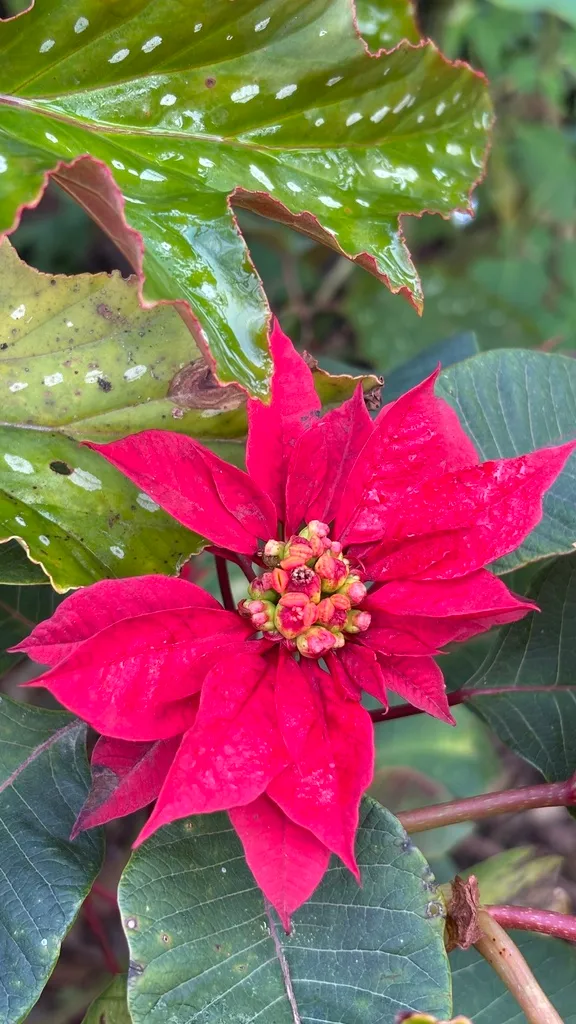
The colorful red, pink, or white parts of poinsettia are modified leaves (bracts) triggered by strict short-day photoperiods.
| What you notice | Possible explanation | What to check next |
|---|---|---|
| Plant grows lush green leaves all summer and autumn but bracts stay green in winter | Uninterrupted night darkness was broken by indoor lamps, streetlights, or window light | Check whether the plant receives complete darkness each night in autumn |
| Sticky leaves or tiny white insects fluttering when the plant is touched | Greenhouse whiteflies or spider mites | Inspect leaf undersides closely for whitefly nymphs or webbing |
- Prune stems back to about 10–15 cm (4–6 inches) in spring after bracts fade, repot into fresh well-drained compost, and grow in bright light over summer.
- Starting in early October, give the plant 13 to 14 hours of complete, uninterrupted darkness every night (such as inside a dark closet or under a light-tight box) and 10 to 11 hours of bright daytime light for 8 to 10 weeks until bracts color up.
- Isolate and wipe or treat with insecticidal soap per label directions if whiteflies or spider mites appear.
Wear gloves when pruning poinsettia, as the milky white sap can irritate skin and eyes.