



Planting and Growing Velvet-leaf Anthurium

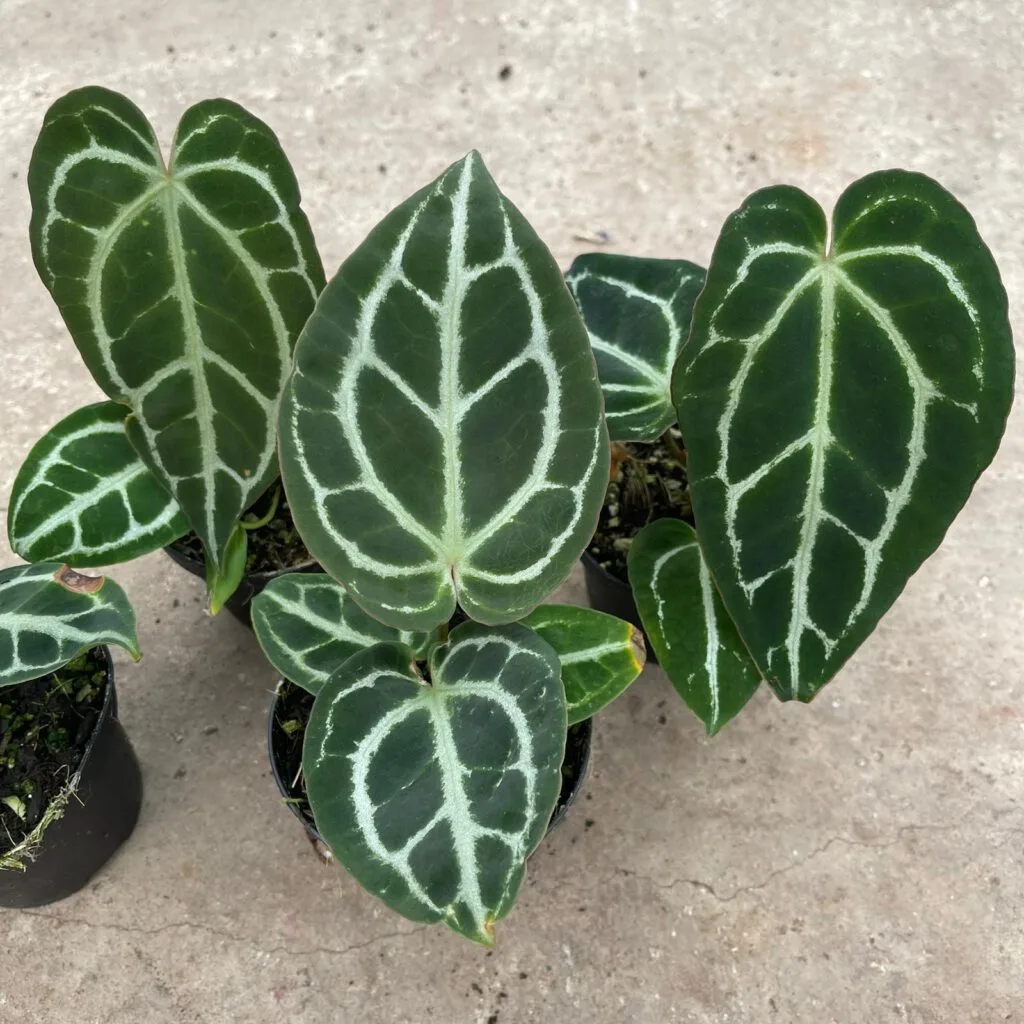
| Care difficulty | 3 / 5 |
|---|---|
| Watering schedule | Keep soil evenly moist; water when top layer feels dry; avoid waterlogging. |
| Sunlight requirements | Bright indirect light |
| Ideal temperature | Information to be completed |
| Soil type | Peat · Loam |
| Soil pH | Acid |
| Soil moisture | Moist but well drained |
| Fertilizing | Every 2-4 weeks during the growing season with a diluted fertilizer. |
| Toxicity | Toxic if ingested, due to calcium oxalate crystals; keep away from pets and children. |
How to Water Velvet-leaf Anthurium?
Keep soil evenly moist; water when top layer feels dry; avoid waterlogging.
Learn more →What Are the Sunlight Requirements for Velvet-leaf Anthurium?
Bright indirect light
Learn more →What Is the Ideal Temperature Range for Velvet-leaf Anthurium?

Information to be completed
Learn more →What Soil Is Best for Velvet-leaf Anthurium?
- Soil type
- Peat · Loam
- Soil pH
- Acid
What Are the Moisture Requirements for Velvet-leaf Anthurium?
Moist but well drained
Learn more →How to Fertilize Velvet-leaf Anthurium?

Every 2-4 weeks during the growing season with a diluted fertilizer.
Learn more →How to Prune Velvet-leaf Anthurium?

Remove yellowed or damaged leaves at the base as needed. Spent flower spathes can be cut off to redirect energy to foliage growth.
Learn more →How to Propagate Velvet-leaf Anthurium?

Propagate by division of established clumps during repotting in spring, ensuring each division has at least 3-4 leaves and healthy roots. Alternatively, stem cuttings can be rooted in moist sphagnum moss or water at 22-25°C with high humidity.
Learn more →How to Transplant Velvet-leaf Anthurium?
Information to be completed
Learn more →How to Care for Velvet-leaf Anthurium in Winter?

Information to be completed
Learn more →How to Plant Velvet-leaf Anthurium?
Grow in a well-draining, peat-based potting mix with added perlite for aeration. Maintain high humidity (above 60%) and consistent moisture, but avoid waterlogging. Use lukewarm rainwater or distilled water to prevent leaf tip burn. Fertilize monthly during the growing season (spring to autumn) with a balanced liquid fertilizer diluted to half strength. Keep temperatures between 18-28°C and protect from drafts and cold. Repot every 2-3 years or when roots become overcrowded.
Learn more →How to Repot Velvet-leaf Anthurium?
Information to be completed
Learn more →How to Harvest Velvet-leaf Anthurium?

Information to be completed
Learn more →Common Pests & Diseases

Diseases
Susceptible to root rot if overwatered or grown in poorly draining soil. Leaf spot and anthracnose may occur in low light or stagnant air.
Pests
Common pests include spider mites, mealybugs, and scale insects, especially in dry indoor conditions.
Explore the plant health library →The Toxicity of Velvet-leaf Anthurium
Toxic if ingested, due to calcium oxalate crystals; keep away from pets and children.