



Planting and Growing flamingo flower

| Care difficulty | 3 / 5 |
|---|---|
| Watering schedule | Keep soil evenly moist but not soggy |
| Sunlight requirements | Full sun · Partial shade |
| Ideal temperature | 18 – 27 °C |
| Soil type | Loam · Sand |
| Soil pH | Acid · Alkaline · Neutral |
| Soil moisture | Moist but well drained |
| Fertilizing | Weekly during growing season with quarter-strength fertilizer |
| Toxicity | Harmful if eaten, skin/eye irritant. Wear gloves and other protective equipment when handling] |
How to Water flamingo flower?
Thriving in the humid conditions of its tropical rainforest origins, flamingo flower has adapted to require consistent moisture. It is a plant that prefers a stable environment with high humidity and regular watering to mimic its natural habitat. The ideal watering frequency for flamingo flower is once every week, ensuring the soil remains moist but not waterlogged. As an evergreen, flamingo flower maintains its lush foliage year-round when provided with adequate water and humidity levels. To optimize growth and maintain vibrant leaves, it's best grown indoors where environmental conditions can be controlled.
Learn more →What Are the Sunlight Requirements for flamingo flower?
Flamingo flower thrives in bright, indirect light but can also adapt to lower-light conditions. Ideally, it should not be exposed to direct sunlight, as this can damage its foliage. It prefers consistent light but can tolerate partial sun exposure, especially when acclimatized gradually. Too little light can lead to leggy growth and poor flowering, while too much light might scorch its leaves. Flamingo flower's leaves may exhibit a lighter green color when in low light, signaling a need for more light. When grown indoors, place flamingo flower near east or south-facing windows with filtered light; outdoors, flamingo flower should be under the cover of trees or a shaded patio.
Learn more →What Is the Ideal Temperature Range for flamingo flower?

Flamingo flower is moderately sensitive to temperature fluctuations. It can tolerate temperatures as low as 5℃ (41℉) and as high as 43℃ (109℉). In colder conditions, flamingo flower may show signs of stress such as leaf yellowing or wilting. Excessive heat can cause leaf scorching or drooping. To maintain plant health, protective measures, like using frost cloths during cold snaps or ensuring adequate shade during heatwaves, are essential. This adaptability allows flamingo flower to thrive in varied environments, though careful monitoring is vital to prevent damage from extreme temperatures. Promptly addressing temperature-related symptoms can help mitigate potential harm.
Learn more →What Soil Is Best for flamingo flower?
Flamingo flower requires well-drained but moist culture media that is rich in organic matter, with a pH of 5.5 to 6.5. Flamingo flower has semi-fleshy aerial roots that are prone to rot in standing water, so it is recommended that permeable and loose culture media is used to plant them in, such as sphagnum moss or coco coir. Appropriate garden soil and organic matter can be added to improve the water retention of this culture media. An appropriate mixture would be 1/2 sphagnum moss plus 1/4 coco coir plus 1/4 garden soil, for example. Compost that is suitable for anthurium or orchids can also be purchased. It is recommended to repot once a year and replace the soil at least every two years to prevent water accumulation in the pot affecting plant growth.
- Soil type
- Loam · Sand
- Soil pH
- Acid · Alkaline · Neutral
What Are the Moisture Requirements for flamingo flower?
Moist but well drained
Learn more →How to Fertilize flamingo flower?

For flamingo flower, use high phosphorus fertilizers to bolster bloom production, enhancing appearance and vigor. During the growing season, fertilize bimonthly with a solution diluted to half the recommended strength. Reduce to quarterly in fall and winter, mimicking flamingo flower's natural resting phase. Always water flamingo flower before applying fertilizer to prevent root burn. Over-fertilization can lead to salt buildup, so flush the soil every few months. Novice or experienced, note flamingo flower's cues—lush foliage and vibrant blooms signal appropriate feeding.
Learn more →How to Prune flamingo flower?

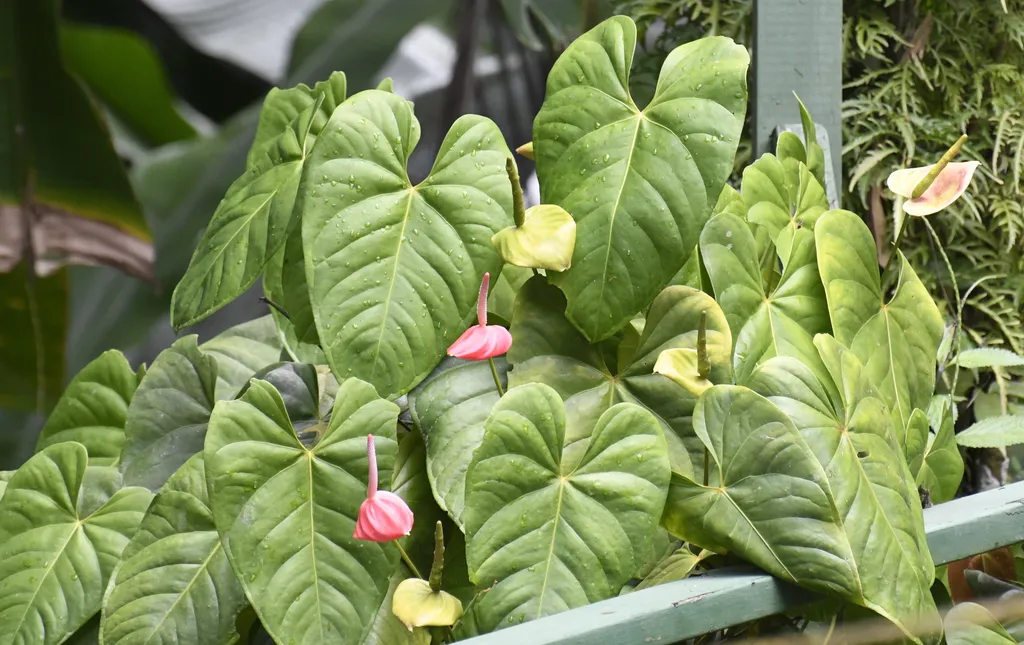
This tropical plant has glossy, heart-shaped leaves and vibrant, long-lasting flowers. Prune flamingo flower in early spring to late winter to encourage new growth and remove dead or yellowing leaves. Use clean, sharp tools to make precise cuts close to the base of the plant. Regular pruning helps maintain its shape, improves air circulation, and promotes flowering. Avoid over-pruning as it can stress the plant.
Learn more →How to Propagate flamingo flower?

Flamingo flower's ideal propagation occurs through cuttings during the spring and summer seasons. The process is moderately easy, and successful roots can be observed in a few weeks. Be cautious about root rot and maintain higher humidity for optimal results.
Learn more →How to Transplant flamingo flower?
The ideal season for transplanting flamingo flower is mid-spring to late spring or mid-fall to late fall, as the plant can establish itself in moderate temperatures. Flamingo flower thrives in well-draining soil and partial shade. Remember to handle its delicate roots with care during transplant for best growth results.
Learn more →How to Care for flamingo flower in Winter?

Flamingo flower hails from the tropical rainforests of Colombia and Ecuador, naturally experiencing warm, moist conditions year-round rather than a distinct winter. As such, flamingo flower has limited cold tolerance. Its winter care involves mimicking its tropical origins - keeping it in indirect light, maintaining indoor temperatures between 65 and 70 degrees Fahrenheit, and ensuring ample humidity. It's also essential to reduce watering, allowing the surface of the soil to dry out between applications.
Learn more →How to Plant flamingo flower?
Indoors-potted: Thriving indoors, flamingo flower appreciates a humid environment to maintain its vibrant foliage and blooms. Outdoors-potted: In outdoor pots, flamingo flower requires shelter from harsh conditions to protect its delicate flowers. Outdoors-in the ground: When planted in the ground outdoors, flamingo flower may struggle with cold climates and needs a warm, protected spot.
Learn more →How to Repot flamingo flower?
For a thriving flamingo flower, repot annually, as it's a fast-growing, medium-sized bush. Best replanted during spring to capitalize on its growth spurt. Choose a slightly larger pot with good drainage to encourage root health. Post-repotting, keep flamingo flower in indirect light and maintain slightly elevated humidity for optimum recovery and growth.
Learn more →How to Harvest flamingo flower?

Given a suitable environment, flamingo flower can bloom all year round, every three months. Flowering may decrease during the winter due to the reduction in light. However, as the light levels gradually increase in the spring, flamingo flower will wake up from its dormancy and the dark green leaves will appear, followed by another flowering period. The ornamental period of the flowers is relatively long. Each flower/spathe can be appreciated for one or two months before being cut. They then have a vase life of between 20 and 40 days. When picking the flowers, use sharp garden secateurs and cut the entire stalk. Prune the bottom of the stem at a 45° angle to increase the area for water absorption. Then, to avoid water loss, promptly put it in a vase with clean water.
Learn more →Common Pests & Diseases

Diseases
May be susceptible to leaf spot
Pests
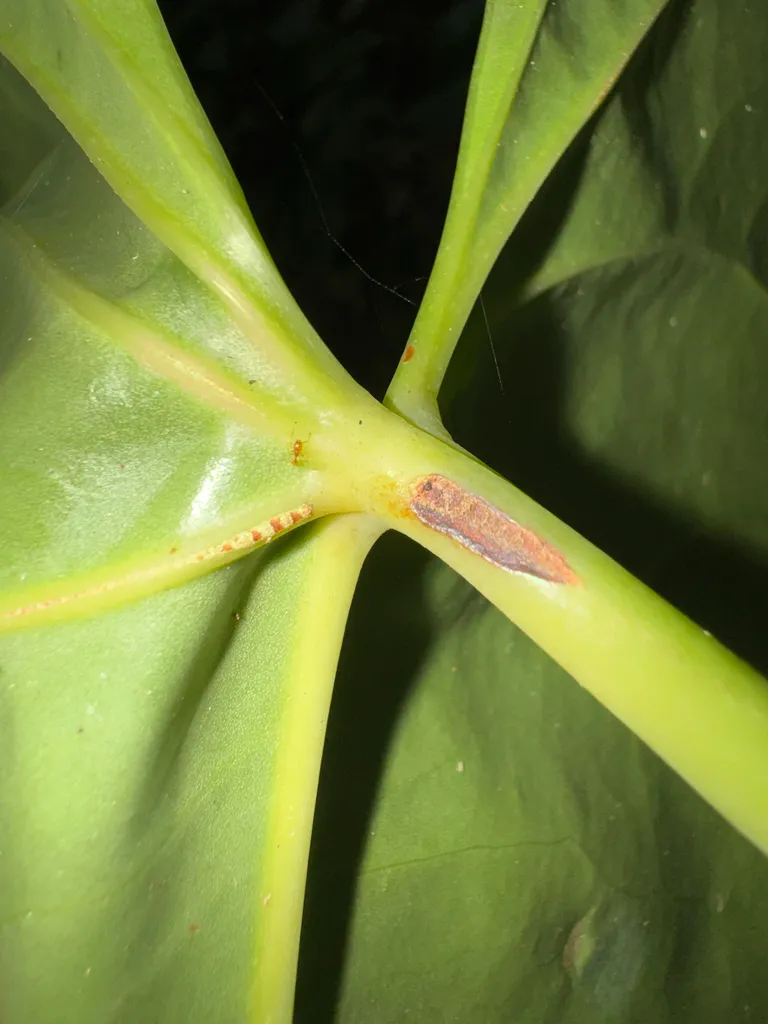
May be susceptible to mealybugs and scale insects
Explore the plant health library →Troubleshooting
Yellowing Leaves and Root or Stem Rot
Anthurium andraeanum (flamingo flower) is an epiphytic or semi-terrestrial aroid with thick, fleshy roots that require abundant air around them. Yellowing leaves most commonly signal overly dense, waterlogged potting mix or cold drafts.
| What you notice | Possible explanation | What to check next |
|---|---|---|
| Lower leaves turn yellow while the potting mix stays wet, heavy, or compacted | Overwatering, poor drainage, or root rot | Empty standing water and inspect the thick roots; healthy roots are firm and pale, while rotted roots are brown and mushy. |
| One oldest lower leaf yellows gradually while new leaves and spathes emerge normally | Natural aging of an older leaf | Cut the spent leaf cleanly near the base and monitor the rest of the plant. |
| Brown or yellow blotches appear after chilly temperatures below 15°C (60°F) | Chilling injury | Move the plant away from drafty windows or exterior doors into steady warmth. |
- Allow the top 1 to 2 inches of potting mix to dry slightly before watering thoroughly, and never let the pot stand in water.
- Grow Anthurium andraeanum in a chunky, fast-draining aroid or orchid-amended mix (such as peat/coir mixed with bark and perlite).
- If roots are rotted, trim damaged roots with clean tools and repot into fresh, airy mix.
- Keep temperatures between 18°C and 27°C (65°F to 80°F) away from cold drafts.
Wear gloves when pruning or repotting, as Anthurium sap contains irritating calcium oxalate crystals.
Green or Absent Flowers and Brown Leaf Tips
Colorful Anthurium spathes depend on bright indirect light, while crispy leaf tips reflect dry indoor air or tap water salts.
| What you notice | Possible explanation | What to check next |
|---|---|---|
| Plant grows leaves but produces few blooms, or new spathes stay small and greenish | Insufficient light | Move the plant closer to a window with bright, filtered light out of direct sun. |
| Older red or pink spathes gradually fade to green over several months | Normal aging of long-lasting flower bracts | Trim faded flower stalks down near the base once they lose color or dry. |
| Leaf tips turn brown and dry in a heated or dry room | Low indoor humidity or mineral/fertilizer salt buildup | Check proximity to heaters and review water quality and fertilizer strength. |
- Place in bright, indirect light (such as near an east-facing window or filtered south/west window) to support continuous blooming.
- Maintain moderate to high humidity with a humidifier, pebble tray, or grouping plants, and water with rainwater or filtered water if tap water is hard.
- Feed lightly during spring and summer with a diluted balanced or bloom-supporting fertilizer, and flush the potting mix occasionally.
Anthurium spathes naturally last 6 to 8 weeks or longer before fading to green or brown.
The Toxicity of flamingo flower
Harmful if eaten, skin/eye irritant. Wear gloves and other protective equipment when handling]