



Planting and Growing jade plant

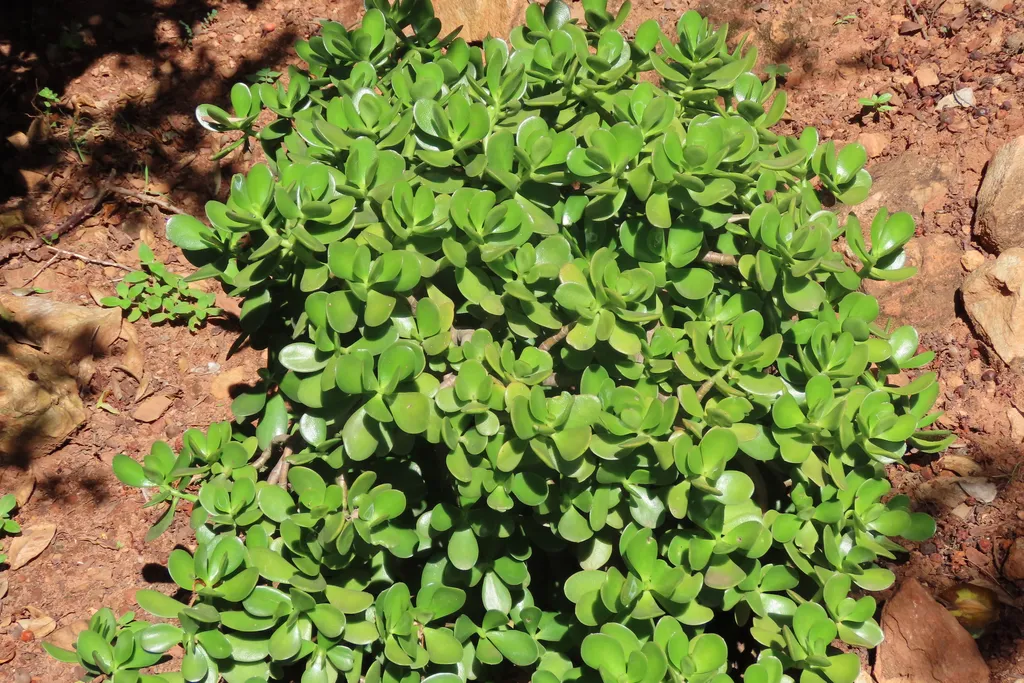
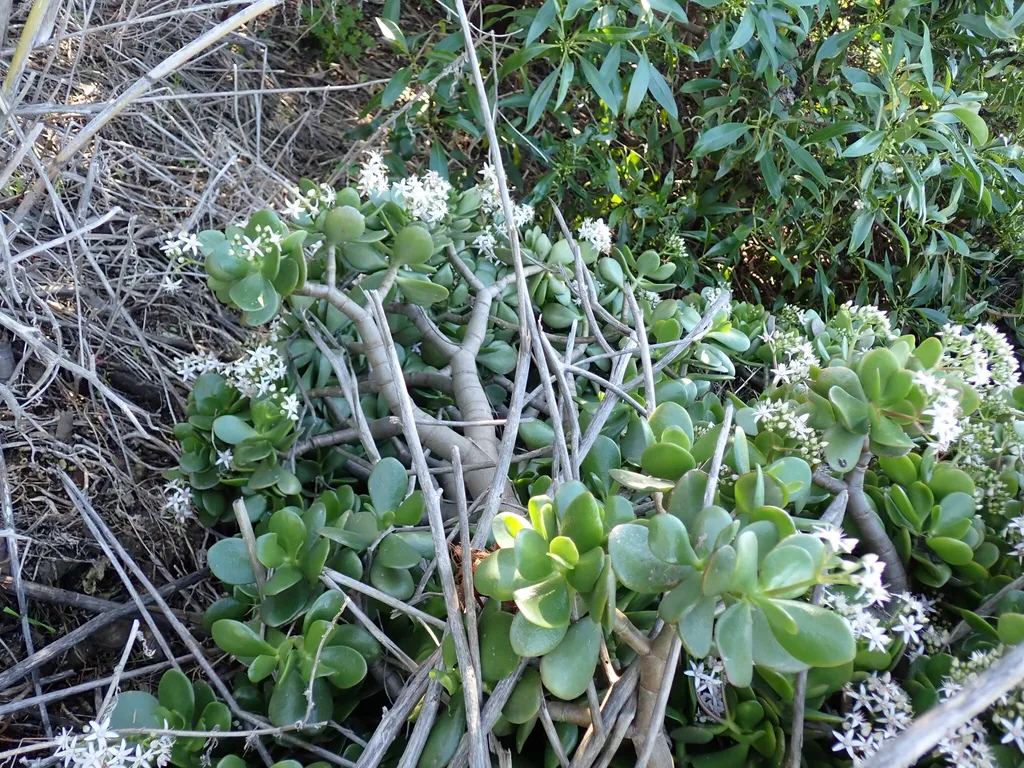
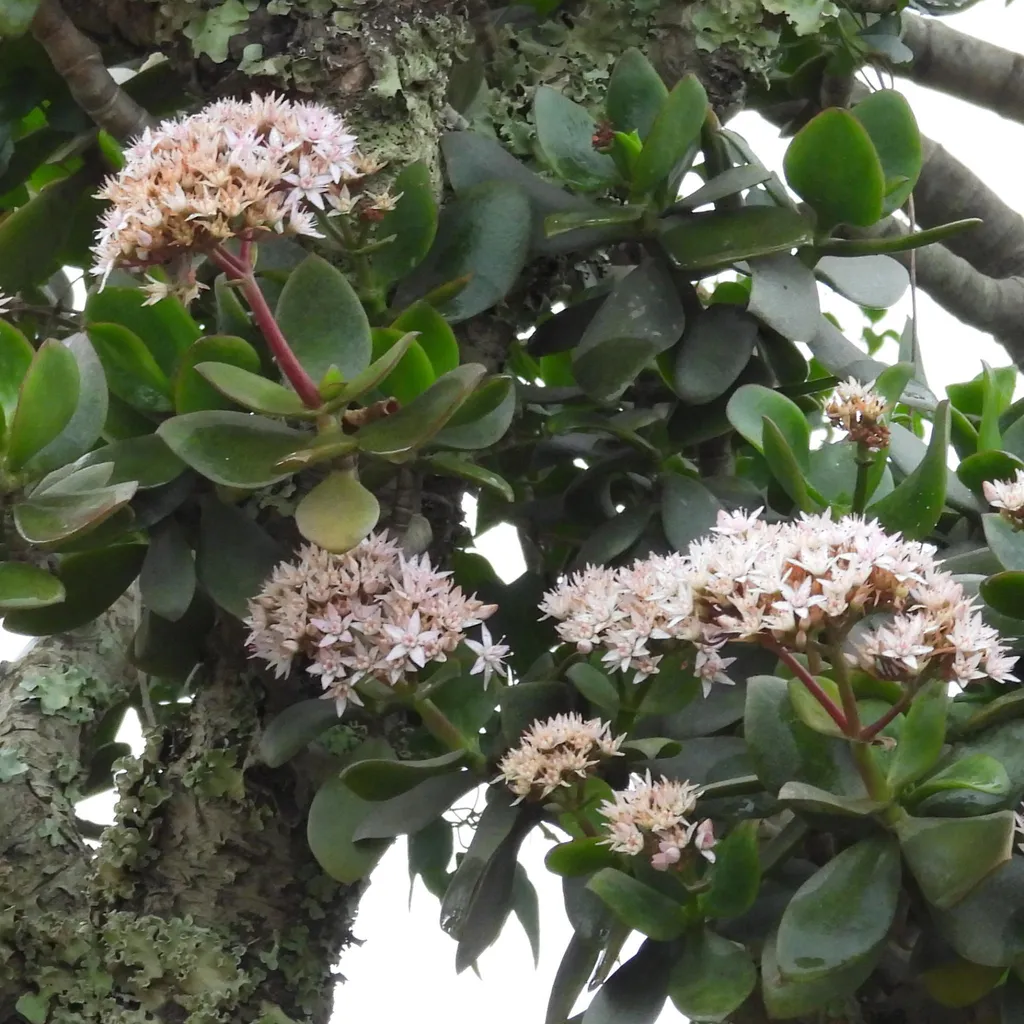
| Care difficulty | 2 / 5 |
|---|---|
| Watering schedule | Water thoroughly when soil is dry, allow to drain |
| Sunlight requirements | Full sun |
| Ideal temperature | 18 – 28 °C |
| Soil type | Loam · Sand |
| Soil pH | Acid · Alkaline · Neutral |
| Soil moisture | Well drained |
| Fertilizing | Monthly during growing season |
| Toxicity | Information to be completed |
How to Water jade plant?
Jade plant thrives in arid conditions, mirroring its native habitat's low water availability. This succulent has evolved to store water in its fleshy leaves, exhibiting a high drought tolerance and requiring minimal supplemental moisture. Watering should be sparse, with the plant needing hydration only once every three weeks. As an indoor plant often prized for its ease of care and ability to tolerate dry indoor air, jade plant is particularly well-suited to environments where humidity levels are low. Its waxy, glossy leaves indicate a preference for periods of dryness between watering, ensuring it does not sit in overly moist soil which could lead to root rot.
Learn more →What Are the Sunlight Requirements for jade plant?
Jade plant flourishes under partial sun conditions which involve exposure to bright, indirect light for several hours a day while avoiding intense midday sun. It tolerates full sun, adapting by deepening leaf color to protect from excess light; however, prolonged exposure can lead to scorching. Conversely, jade plant can survive in full shade, but with a potential reduction in growth vigor and leaf vibrancy. Ideally placed by a sunny window indoors, jade plant's adaptability allows it to prosper in varying light environments, given that they align with its tolerance for light diversity.
Learn more →What Is the Ideal Temperature Range for jade plant?

Your plant originates from hot, dry environments but prefers cooler temperatures. It can tolerate a range of temperatures but does best in moderate conditions. Avoid exposing it to extreme temperatures, and protect it from frost and freezing.
Learn more →What Soil Is Best for jade plant?
A well-draining soil mix is pivotal for jade plant's health. Mix equal parts of succulent & cactus soil with perlite or coarse sand to enhance aeration. Excellent drainage is crucial to prevent root rot. Include controlled-release fertilizer during the growing season for an added boost. If succulent mix isn't available, blend potting soil with pumice or bark chips. Regularly inspect the soil's moisture to avoid overwatering.
- Soil type
- Loam · Sand
- Soil pH
- Acid · Alkaline · Neutral
What Are the Moisture Requirements for jade plant?
Well drained
Learn more →How to Fertilize jade plant?

For jade plant, use a balanced succulents and cacti fertilizer during the growing season, spring through fall, to enhance growth and support robust health. Apply every 2-3 months, adhering to manufacturer's guidance on quantity. Fertilization during this period promotes leaf development and may encourage flowering. Cease feeding in winter as jade plant enters dormancy. Over-fertilizing can harm jade plant, leading to root burn, so ensure not to exceed recommendations. Always water jade plant before and after applying fertilizer to avoid root damage. Seasonal adjustments in care will optimize jade plant's vitality and longevity.
Learn more →How to Prune jade plant?

In order to keep beautiful shape, some large succulent plants may need pruning. For example, in California, for echeveria planted in the garden, some redundant branches and branches that are too dense need to be cut off in spring and autumn. This depends on what you think and what the succulent plant is used for. Tools for pruning mainly include knife, scissors, and some medicines (such as sulfur powder). In order to propagate new plants, we can also cut some leaves in spring and autumn for cutting. Stout stems with 5-6 leaves are often selected: cut it off with a knife, then smear the wound with sulfur powder, and plant it after the wound is healed. At this time, it is recommended to use a watering can to slightly wet the soil used for cutting.
Learn more →How to Propagate jade plant?

Jade plant thrives best when propagated through cuttings. This method ensures genetic consistency and robust growth. For successful propagation, choose a healthy, mature stem. Cuttings should include several leaf pairs, which improve the chances of rooting. Drying the cut edges for a few days before planting helps prevent rot. Using a well-draining soil mix, such as one tailored for succulents, maximizes the chances of success. Position the stem firmly in the soil and maintain minimal watering until roots develop to encourage strong root growth.
Learn more →How to Transplant jade plant?
Transplant jade plant ideally during mid-spring to late spring, or mid-fall to late fall for optimal growth. Ensure it's placed in a sunny, well-draining location. Take care not to overwater, keeping it just moist enough to thrive.
Learn more →How to Care for jade plant in Winter?

Native to South Africa, jade plant is acclimated to dry winters. Its fleshy leaves store water, an adaptation to affiliated arid climates. Winter care involves indoor protection from frost as jade plant is a frost-tender species. Ensure minimal watering as dampness promotes root rot. A cool, well-lit location around 12-15°C is ideal. Foster a desert winter for your jade plant with these pointers, mimicking its natural habitat.
Learn more →How to Plant jade plant?
Indoors-potted: Ensure your jade plant isn't leaning; rotate the pot periodically for balanced growth due to its tendency to grow towards light sources. Outdoors-potted: In outdoor pots, protect your jade plant from heavy rain which can oversaturate the soil and lead to root issues. Outdoors-in the ground: While jade plant thrives outdoors, beware of frost; as a succulent, it stores water in leaves that can freeze, damaging the plant.
Learn more →How to Repot jade plant?
When repotting jade plant, a succulent with a stout, tree-like form, choose early spring for the task. Every 2 years is ideal, aligning with its slow growth cycle. A slightly larger pot encourages root expansion and supports its thick, fleshy leaves. After repotting, water sparingly to prevent root rot and place in bright, indirect light to recuperate and thrive.
Learn more →Common Pests & Diseases

Diseases
Generally disease free
Pests
Can be attacked by mealybugs, aphids and vine weevils
Explore the plant health library →Troubleshooting
Soft, Dropping Leaves and Stem Rot
Crassula ovata (jade plant) stores water in thick fleshy leaves and woody stems. Leaf drop accompanied by soft stems or dark mushy tissue almost always points to excess water, poor drainage, or cold injury.
| What you notice | Possible explanation | What to check next |
|---|---|---|
| Leaves feel soft, translucent, or water-soaked and drop easily when touched | Overwatering or poorly draining potting mix | Check whether the potting mix is damp or compacted and feel the base of the stems for softness. |
| Stems turn dark brown or black and collapse at the base | Basal stem or root rot | Unpot the plant immediately to see whether any firm, healthy upper branches remain for cuttings. |
| Leaves blister, turn mushy, or drop after chilly night temperatures | Cold or frost damage combined with damp soil | Check night temperatures near windows or outdoors and move the plant to a frost-free, bright location. |
- Stop watering immediately and inspect the roots and lower trunk for soft, blackened decay.
- If roots are soggy but stems remain firm, remove wet soil, trim rotted roots, and repot into a gritty, fast-draining succulent mix in a pot with drainage holes.
- If basal stem rot is spreading upward, cut healthy upper stem tips well above any discolored tissue, let the cuts dry and callous for several days, and root them in dry-to-lightly-moist gritty mix.
- Wait several days after repotting before watering lightly, then allow the soil to dry out completely between waterings.
Jade plants tolerate dryness far better than wet soil; never leave the pot sitting in a water-filled saucer.
Note that Crassula ovata is toxic to cats and dogs if ingested.
Wrinkled Leaves or Leggy, Stretching Stems
Shriveled leaves and stretched, drooping branches reflect underwatering and insufficient light respectively—check leaf firmness and light exposure before adjusting care.
| What you notice | Possible explanation | What to check next |
|---|---|---|
| Leaves look thin, deflated, and wrinkled while the potting mix is completely dry | Underwatering / depletion of stored leaf moisture | Verify that the mix is dry all the way down before giving a thorough soak. |
| Stems grow long and weak with wide gaps between small, pale green leaves | Insufficient light causing etiolated (stretched) growth | Check whether the plant sits away from a sunny window and move it gradually into brighter light. |
| White cottony tufts appear in leaf axils or sticky residue coats leaves | Mealybugs or scale insects | Inspect stem joints and leaf undersides closely before isolating and treating. |
- When the potting mix is fully dry and leaves feel slightly soft or wrinkled, water deeply until excess drains from the bottom, then empty the saucer.
- Move the jade plant to a bright window receiving several hours of direct or very bright filtered sun; acclimate gradually to prevent sunburn.
- Pinch or prune back overly long, top-heavy stems in spring or early summer to encourage a sturdy, compact branching framework.
- In winter, keep the plant cool and bright and reduce watering frequency significantly.
Reddish margins on jade leaves in bright sun are a normal pigment response rather than a sign of distress.