
Lemon
Also known as: Lemon
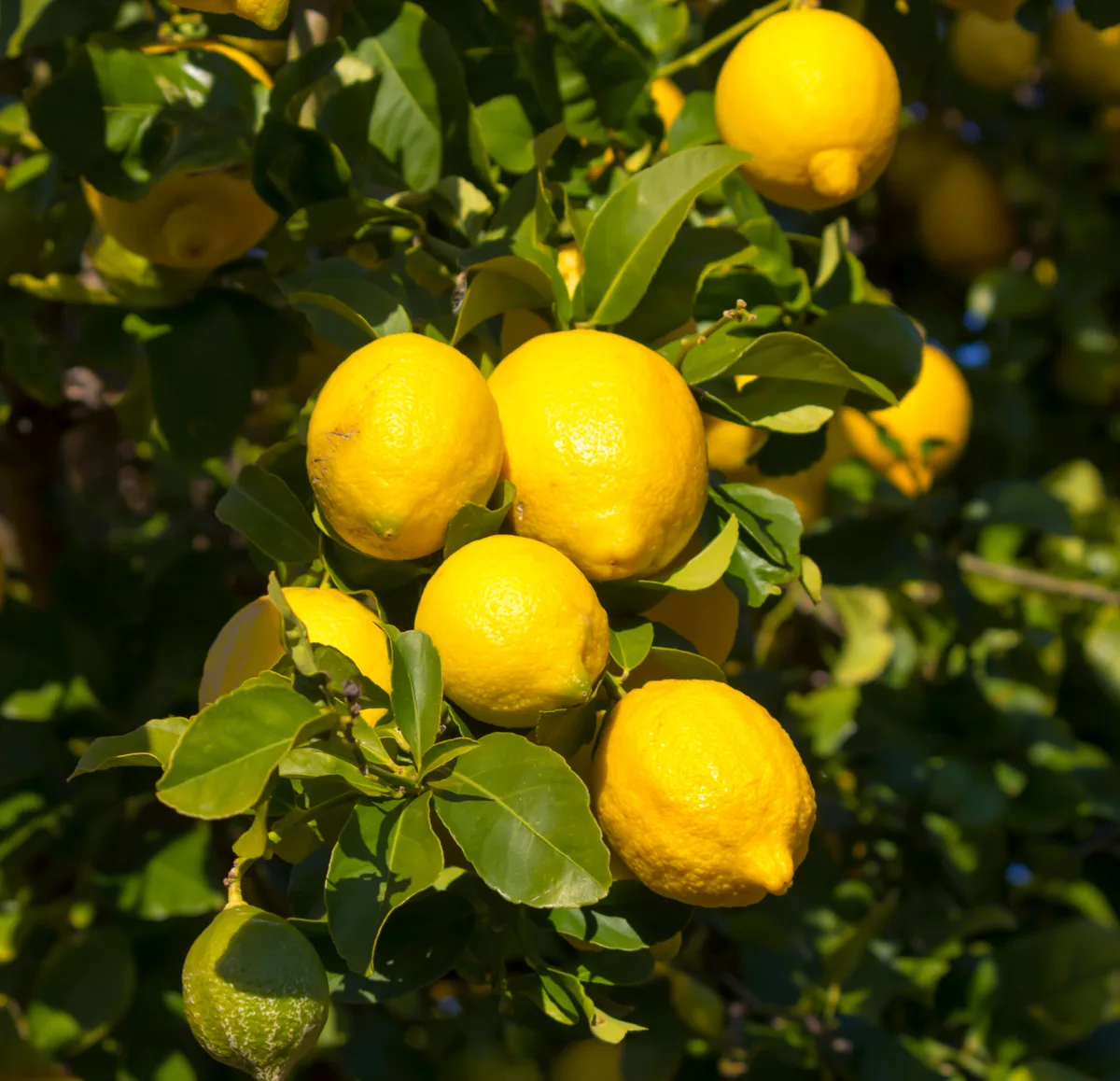
An evergreen small tree or shrub with spiny stems, ovate to elliptic leaves, and strongly fragrant white flowers tinged with purple. The oval yellow fruit is juicy and acidic, maturing in autumn. It has a rounded, open canopy and glossy dark green foliage, offering year-round ornamental appeal.
Scientific classification
- Species
- Lemon (Citrus limon)
- Genus
- Information to be completed
- Family
- Rutaceae
- Non-toxic to humans and pets, though the essential oils in the peel may cause mild skin irritation in sensitive individuals.
- Toxicity
- Tree · Fruit Edible
- Plant type
- 2 - 3 metres
- Height
- 1.5 - 2.5 metres
- Spread
- Evergreen
- Foliage
- Upright · Bushy
- Habit
- Spring · Summer · Autumn
- Season of interest
- Full sun
- Sunlight
- 15 – 25 °C
- Ideal temperature









Lemon pictures
Distribution of Lemon
Distribution map
Southeast Asia (probably northern India, Myanmar, and southern China)
Information to be completed
Culture
Information to be completed
Toxicity
Non-toxic to humans and pets, though the essential oils in the peel may cause mild skin irritation in sensitive individuals.
Quick identification of Lemon
Information to be completed
Lemon care guide
- Keep soil moist but not waterlogged; allow surface to dry slightly between waterings.
- Watering
- Full sun
- Sunlight
- 15 – 25 °C
- Ideal temperature

Watering
Keep soil moist but not waterlogged; allow surface to dry slightly between waterings.
Fertilizing
 Fertilizing
Every 2 weeks during growing season (spring to early autumn).
Pruning
 Pruning
Prune in late winter to remove dead, diseased, or crossing branches, and to shape the tree. Light pruning can be done after harvest to maintain size.
Propagation
 Propagation
Propagate by semi-ripe cuttings in summer, using bottom heat (20-25°C) and rooting hormone for best results. Alternatively, grafting onto compatible rootstocks is common for commercial production.
Growing
 Growing
Plant in a sheltered, sunny position in well-drained, slightly acidic soil. Water regularly during the growing season, allowing the top of the compost to dry slightly between waterings. Feed with a balanced liquid fertilizer every two weeks from spring to early autumn. Protect from frost by overwintering indoors or in a cool greenhouse in cold regions. Prune in late winter to maintain shape and remove dead or crossing branches.
People also ask
Information to be completed
Common pests and diseases
Diseases
Susceptible to root rot and collar rot in waterlogged soil, and to citrus canker and greening disease in some regions.
Pests
Common pests include aphids, scale insects, mealybugs, and spider mites, especially under cover or in dry conditions.
Explore the plant health library →




